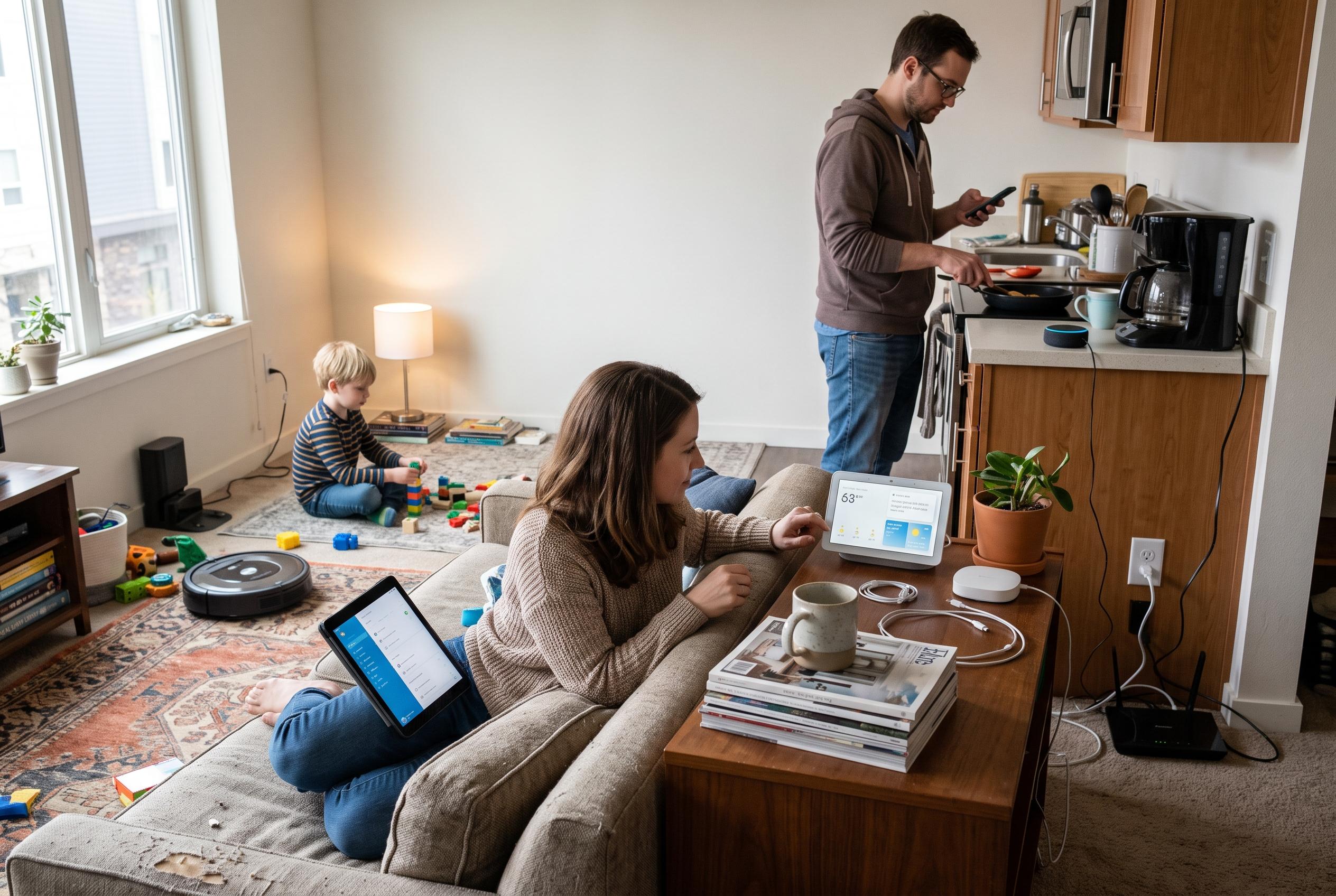

The evolution towards a next-gen digital lifestyle is unfolding in fragments, with practical adoption outpacing marketing promises. From AI tools and smart homes to wearables, the journey is marked by gradual integration, cost barriers, and evolving user behaviours, reshaping expectations and realities.
The idea of a “next-gen digital lifestyle” is often presented as if it were already fully formed. In practice, it is arriving in fragments. The most advanced parts are the tools people already use to save time, mainly AI assistants for writing, summarising, planning and troubleshooting. According to the lead article, that shift is real, but it is uneven and still far from the seamless, always-on experience often promised in product marketing.
That pattern is visible in enterprise adoption as well. TechRadar has reported that only 15% of organisations fully deploy AI projects, a reminder that even where the technology is available, the hard part is implementation. Vendors increasingly act as integration partners, offering training and support rather than simply selling software. That helps explain why AI is gaining ground first in practical, text-based tasks on phones and computers rather than in the ambient voice assistant model once imagined for connected homes.
The smart home market shows a similar gap between promise and reality. A 2025 Smart Home Technology Trends Survey reported by LightNOW said adoption rose from 49% in 2024 to 59% in 2025, with entertainment systems leading household use at 55% penetration. Smart thermostats, security alarms and connected lighting followed. Even so, the same survey found cost remained the main barrier, cited by 46% of adopters and 52% of non-adopters. Research published in ScienceDirect also points to home security, energy efficiency and improved quality of life as key drivers, while distrust, privacy concerns and financial worries continue to slow broader uptake.
Wearables are further evidence that the digital lifestyle is becoming more data-rich, but not necessarily more transformative. Smartwatches and fitness trackers now routinely measure sleep, heart rate variability and blood oxygen, yet ownership does not always translate into lasting behaviour change. The lead article notes that many users engage intensely at first and then drift away from the data. That matches a wider pattern in connected technology: people often value the convenience, but not always the discipline required to act on the information they receive.
The cost of this convenience is easy to overlook. More devices mean more accounts, more subscriptions, more setup and more maintenance. In some cases, they also mean more data collection and more screen time, because managing a thermostat, checking a camera or reviewing health metrics still usually happens in an app. Studies on smart home systems also highlight integration problems and concerns about how devices interact with each other and with human behaviour. The result is a more measured reality than the slogan suggests. For most households, the next-generation digital lifestyle is not a single, dramatic leap. It is a slow accumulation of useful tools, adopted selectively and on practical terms rather than all at once.
Disclaimer: This content is intended for informational purposes only. Readers are advised to exercise their own judgement, conduct due diligence, or consult a qualified expert before acting on any information provided.