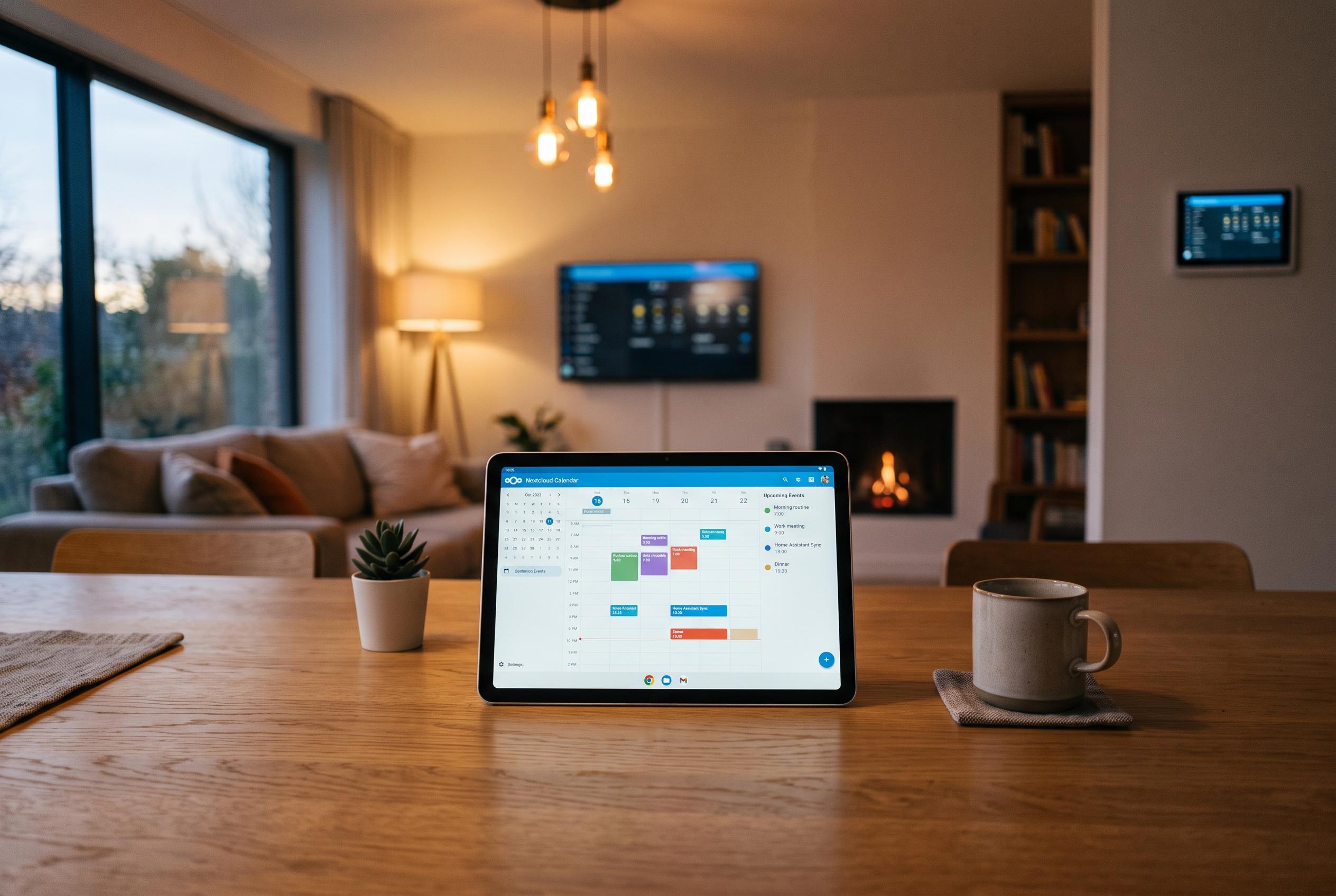

Nextcloud now serves as a control centre for smart-home routines through its Calendar app, integrating with Home Assistant to automate tasks based on personal schedules and device statuses, redefining private data and home management.
Nextcloud has become more than a private file store for users who want to move work off public clouds. According to XDA Developers, the platform can now sit at the centre of a broader self-hosted setup, with its Calendar app used as a control point for smart-home routines rather than just appointments. That approach builds on Nextcloud’s wider office suite, which includes tools such as Tasks, Notes, Deck, Contacts and Collabora-based editing, all designed to keep everyday productivity inside the same environment.
The appeal of that arrangement is partly practical and partly about data control. Nextcloud’s Calendar supports appointments, invitations and birthday calendars, while the surrounding app ecosystem lets users pull in related work from tasks and team notes into a single interface, as described in Nextcloud’s documentation and app catalogue. Collectives, one of the adjacent tools, is built around shared, Markdown-based collaboration for groups that want editable knowledge without a heavy hierarchy.
Home Assistant is what turns that calendar data into automation. Its CalDAV integration can connect to services such as Nextcloud and expose calendar events as entities that trigger actions, from switching on lights to sending reminders before an event begins. Home Assistant also supports to-do entities through the same integration, which makes it possible to treat scheduled chores and deadlines as automation inputs rather than passive entries on a diary.
The same link works in reverse. Home Assistant’s Nextcloud integration can surface information from a Nextcloud instance through server status data, while the CalDAV connection lets Home Assistant write events back to the same calendar. That means a smart-home fault can become a dated record in Nextcloud, giving the user a timeline of when equipment went offline and when it was fixed. In practice, the result is a tighter loop between personal scheduling, home monitoring and private data storage than either platform offers on its own.
Disclaimer: This content is intended for informational purposes only. Readers are advised to exercise their own judgement, conduct due diligence, or consult a qualified expert before acting on any information provided.