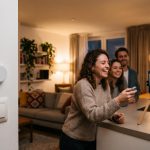
A Brinks Home survey finds that most older users feel confident managing their security systems alone, but many want simpler technology and professional support.
Older adults who use smart home security systems are far more self-reliant than the stereotype suggests. In a survey commissioned by Brinks Home and conducted by Centiment, 88% of 714 Americans aged 61 and over said they felt at least somewhat confident operating their system on their own. More than a third said they had never needed help at all, and only one in five had turned to a family member for support in the previous year.
That confidence, however, has not translated into enthusiasm for complexity. Brinks Home found that 43% of respondents believed their systems contained more features than they actually need for everyday reassurance, and the complaint was almost as common among the most confident users. The survey, carried out between 5 August and 10 August 2026, suggests that the problem for many older customers is not capability but fit: they want systems that are easier to understand and better aligned with how they live.
The feature-by-feature results point in the same direction. Most respondents felt comfortable using video cameras or doorbells, and a majority were also confident with smartphone app controls. Confidence dropped sharply for smart locks and wearable panic buttons, indicating that willingness to use a technology is not evenly distributed across the system. That pattern helps explain why respondents placed a premium on simpler, easier-to-use technology and why professionally installed systems were trusted far more than do-it-yourself alternatives. Brinks Home said older adults trusted professional installation by more than six to one, with 45% favouring it and only 7% preferring DIY, while 48% trusted both equally.
The survey also shows that older adults see home security as a personal tool rather than a family management system. Screening visitors or deliveries ranked first among the main uses of their systems, followed by protecting the home while away and deterring intruders. Giving adult children peace of mind finished bottom of the list. Even among respondents whose relatives received alerts, reassurance for family members remained well behind self-directed uses. Older adults were also more likely to want real-time alerts sent directly to them than routed elsewhere, reinforcing the idea that the system is primarily about maintaining control over their own home.
Affordability remained the top factor that would improve peace of mind, followed closely by direct alerts, simpler technology and round-the-clock professional monitoring. The preference for independence became more pronounced with age: among those aged 71 and older, a larger share said their system helped them remain in their own home than did respondents aged 61 to 70. Research on older adults’ use of new technologies, including AI-enabled devices and voice assistants, has repeatedly shown that adoption tends to improve when products are designed around accessible learning and straightforward use. In that context, Brinks Home’s findings point to a practical conclusion: older users do not necessarily want more technology, but better-shaped technology, backed by service that removes complexity without taking away control.
Disclaimer: This content is intended for informational purposes only. Readers are advised to exercise their own judgement, conduct due diligence, or consult a qualified expert before acting on any information provided.