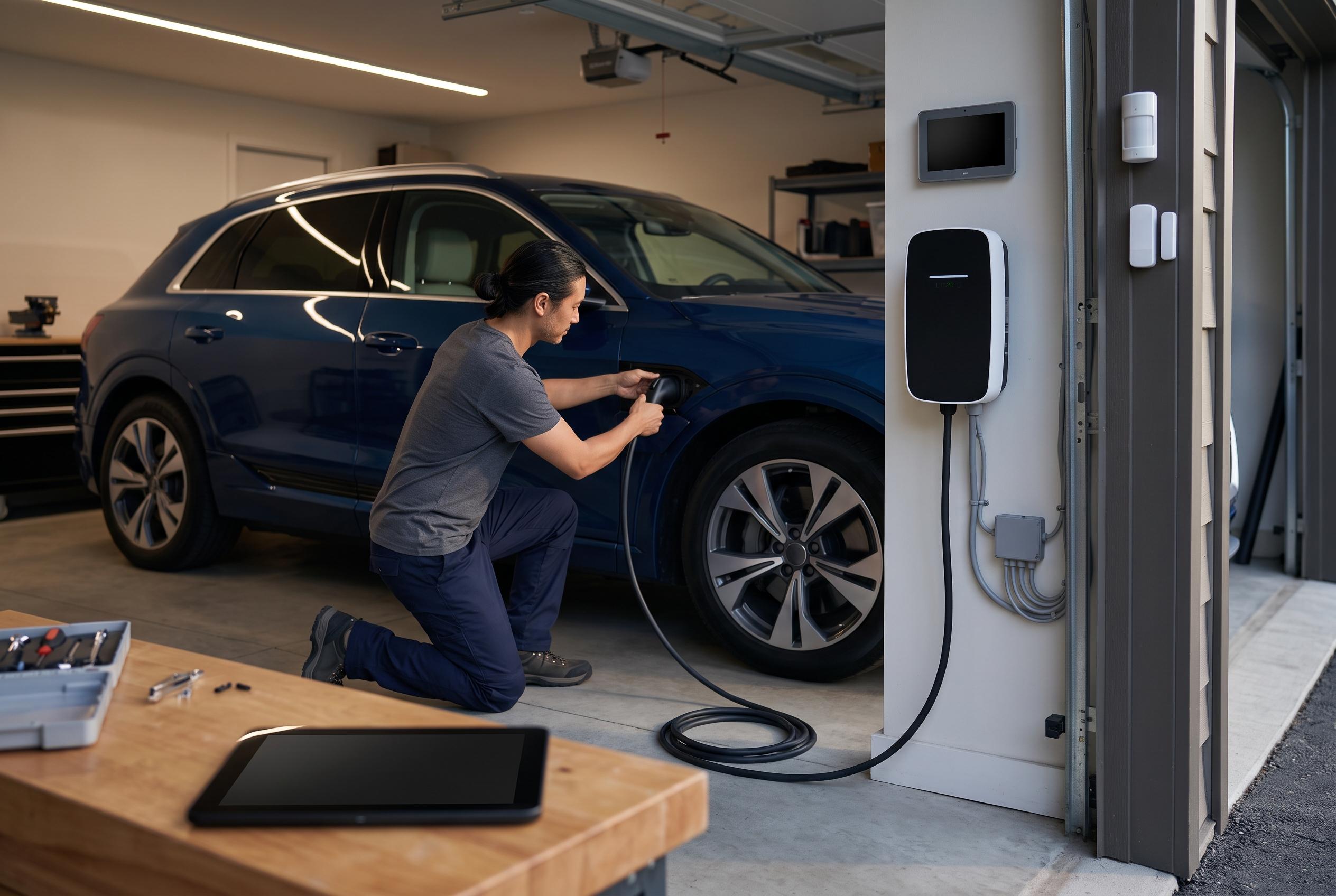

A new wave of open-source hardware and software enables drivers to extract and utilise vehicle data directly within their smart home ecosystems, making cars more integrated and controllable than ever before.
Modern cars generate a steady stream of usable data, and a growing number of open-source tools can bring that information into a home automation setup. In practice, that means a vehicle can be treated less like a sealed appliance and more like another connected device in a Home Assistant environment. For owners who already rely on automations for lighting, heating or security, the same logic can extend to the driveway, the road and even the cabin itself.
One of the most direct ways to do that is through WiCAN, an open-source CAN adapter built around an ESP32-C3. According to project listings and product pages, it comes in OBD-II and USB-CAN variants, can connect over Wi-Fi or Bluetooth, and includes a web interface for configuring network and CAN settings. The attraction is simple: once plugged into the vehicle’s OBD-II port, it can expose information already being collected by the car’s electronic control units, from battery voltage and fuel status to other diagnostic data, without relying on a proprietary cloud service.
For drivers who want vehicle data while they are away from home, OBD2-MQTT offers a different model. The project uses an OBD-II adapter together with an ESP32 board fitted with a cellular modem and SIM card, then forwards vehicle telemetry to an MQTT broker for Home Assistant to consume. That approach makes the setup more useful on the move, because the car does not need to be near a home Wi-Fi network for the data to reach a dashboard or automation. Related open-source implementations have also been built around ELM327-style adapters for specific use cases, including live state-of-charge readings and other basic vehicle metrics.
Location tracking is another area where open software can reduce dependence on commercial platforms. Traccar is a free and open-source GPS tracking system that can run on a self-hosted server and work with compatible trackers in a vehicle. It still depends on satellite positioning and, for remote reporting, cellular connectivity, but it allows owners to keep control of the tracking infrastructure rather than handing that role to a vendor’s cloud service.
Not all useful car data has to come from the drivetrain or the tracker. A RuuviTag, which measures temperature, humidity, air pressure and motion, can be used to monitor cabin conditions over Bluetooth. The hardware design files are public, the firmware is open source and the data format is open, so the sensor can be integrated into Home Assistant without tying the owner to a proprietary app. With a Bluetooth proxy in the right place, it can provide a practical answer to a simple question: how hot, cold or damp is the car before anyone gets in?
Disclaimer: This content is intended for informational purposes only. Readers are advised to exercise their own judgement, conduct due diligence, or consult a qualified expert before acting on any information provided.