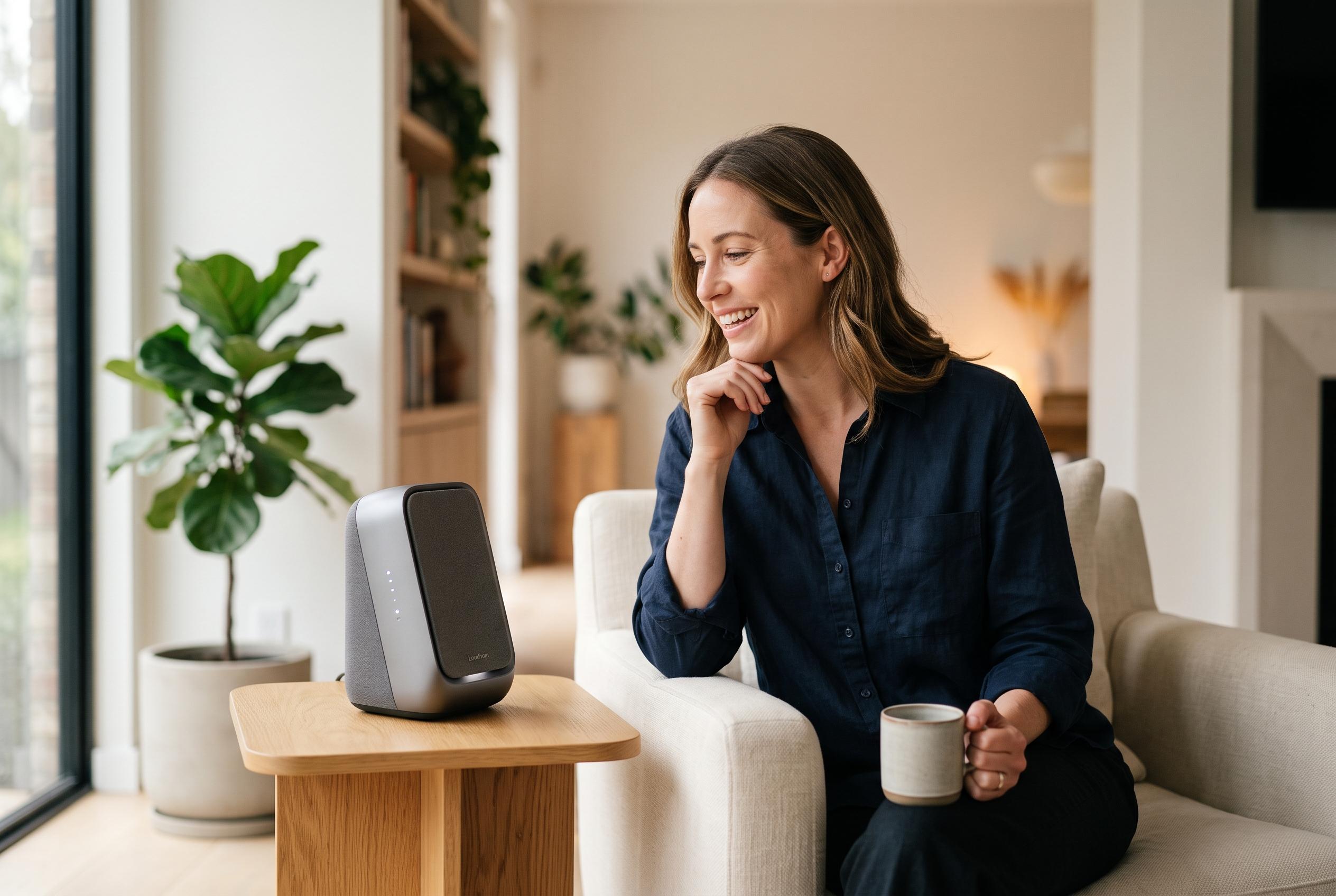

OpenAI’s first consumer device, a premium, voice-centred AI companion developed with Jony Ive’s LoveFrom studio, is now expected to launch in 2027, highlighting its shift towards a new category of personal computing amid privacy and market challenges.
OpenAI’s first consumer device is now widely reported to be heading for 2027, with the launch window slipping from an earlier target of late 2026. MacRumors said the product has not yet reached the packaging or marketing stage, suggesting the hardware is still in active development rather than nearing a public unveiling.
The device is being built with Jony Ive’s design studio, LoveFrom, as part of a broader push to create what some reports describe as a “third core device” alongside a laptop and smartphone. That framing suggests OpenAI sees the product as a new category of personal computing rather than a simple accessory for ChatGPT.
Bloomberg’s latest reporting adds the clearest picture yet of the hardware itself. The device is said to have a rounded, donut-like form, a premium metal finish and moving components, with a likely price of $300 to $400. That would put it well above most mainstream smart speakers and point to a more ambitious product.
Earlier reports have described the machine as screen-free and centred on voice interaction, with some accounts saying it could be pocket-sized and context-aware. Other leaks have gone further, suggesting an integrated camera and facial recognition features, though those details remain unconfirmed and should be treated cautiously.
If those accounts prove accurate, OpenAI would be trying to build something closer to an AI companion than a traditional speaker. The idea appears to be a device that can respond conversationally, retain useful context and move more naturally through daily life than a phone app opened only when needed.
That would still leave OpenAI with a difficult commercial task. Amazon’s Echo range is entrenched, inexpensive and already familiar to consumers, while phone makers are adding their own AI features. A premium-priced OpenAI device would need to offer clear advantages in memory, persistence and hands-free use to justify its cost.
Privacy is likely to be one of the largest hurdles. A home device that listens continuously for voice input and may use cameras or other sensors would raise obvious questions about recordings, data handling and user control. OpenAI has not yet set out final specifications, so the true balance between capability and intrusion remains unknown.
OpenAI’s hardware push also fits a larger strategy. Reports suggest the company is considering a wider family of devices, including smart glasses and other accessories, while its acquisition of Ive’s io startup in 2025 shows how seriously it is treating the effort. For now, though, the first test is whether it can make a dedicated AI device feel more useful than the same software on a phone.
Disclaimer: This content is intended for informational purposes only. Readers are advised to exercise their own judgement, conduct due diligence, or consult a qualified expert before acting on any information provided.