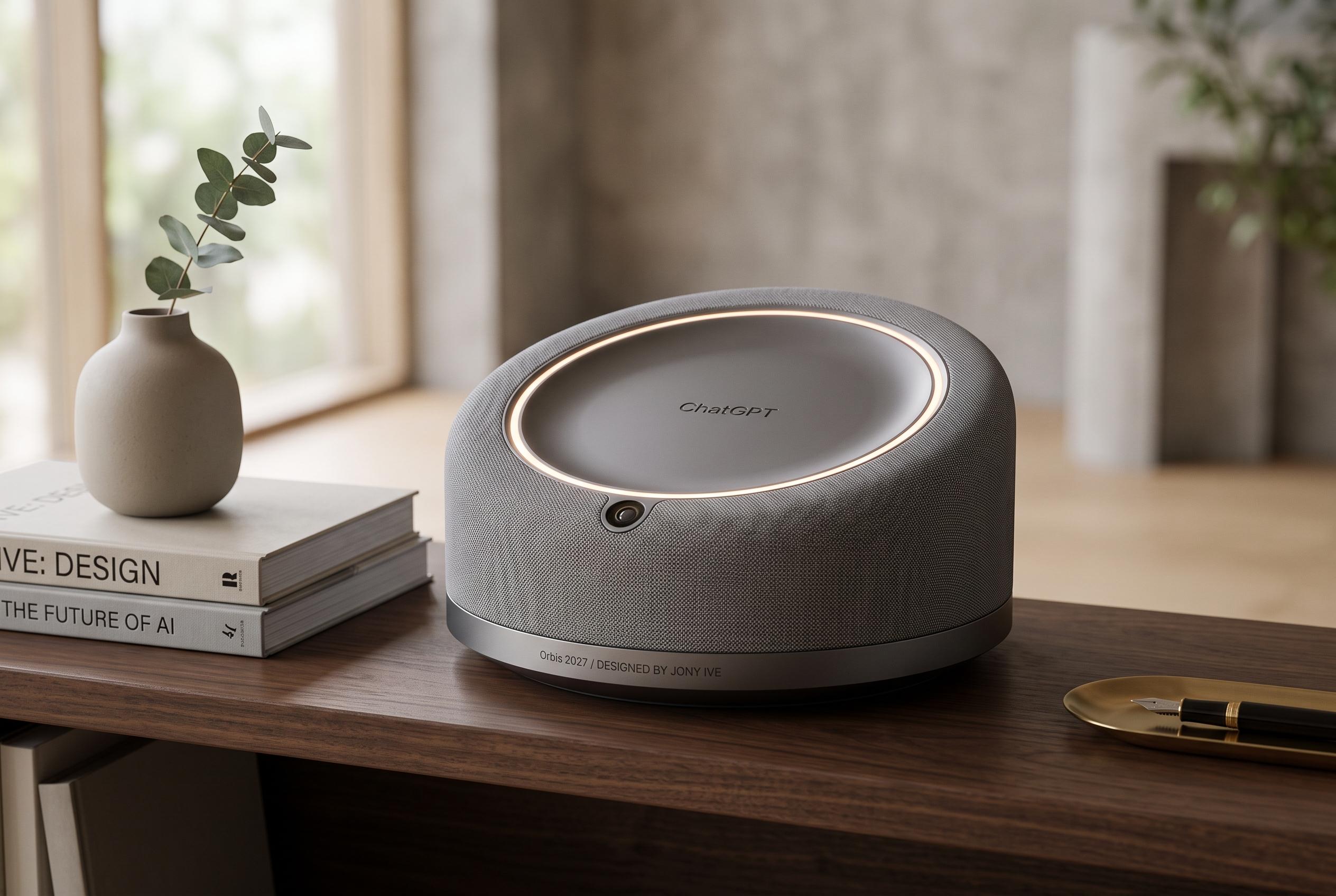

OpenAI is developing a premium, display-free smart speaker designed by Jony Ive, signalling its move beyond software into dedicated hardware. Expected to feature ChatGPT voice integration, facial recognition, and a unique circular design, the device aims for a 2027 release amidst high price points and evolving AI personalisation.
OpenAI is preparing a consumer hardware push that now appears to centre on a small, screenless smart speaker, according to reporting by Bloomberg and MacRumors. The device is expected to act as a home-based AI companion, using ChatGPT’s voice mode to answer questions, handle basic requests and connect with smart-home accessories. Bloomberg’s Mark Gurman has indicated that the product is being developed with Jony Ive and his hardware team, underlining OpenAI’s ambition to move beyond software into dedicated devices.
The hardware is said to take the form of a compact circular puck with a hole through the middle, a design that would distinguish it from early Amazon Echo models while also making it easier to carry around the house. Gurman reported that the speaker will be roughly 7.6cm across and will not include a display. Instead, it is expected to rely on movement in some of its components to signal when it is listening or responding. MacRumors has separately reported that the device may include an integrated camera for facial recognition and AI personalisation, although the exact feature set remains unconfirmed.
Pricing could be a major obstacle. Gurman’s latest reporting suggests the speaker may cost between $300 and $400, which would place it above many mainstream smart speakers and reinforce the view that OpenAI is aiming at a premium market. MacRumors had earlier cited a lower estimate of $200 to $300, showing that the final retail price is still unsettled. Either way, the product would require users to pay for ChatGPT voice access as well, making total ownership costs significantly higher than those of conventional home assistants.
The device is now widely expected to arrive in 2027. MacRumors reported in February that OpenAI’s first hardware product had slipped from a previously expected 2026 timetable because of legal pressure, including a trademark dispute involving audio startup iyO. Later reporting in July described the speaker as a mobile, display-free companion intended to become more personalised over time, learning from users and becoming more proactive. Bloomberg’s earlier reporting also said OpenAI acquired Jony Ive’s hardware firm in a nearly $6.5 billion all-stock deal in 2025, giving the company a dedicated hardware operation as it tries to compete more directly with Amazon and Google in the connected-home market.
Disclaimer: This content is intended for informational purposes only. Readers are advised to exercise their own judgement, conduct due diligence, or consult a qualified expert before acting on any information provided.