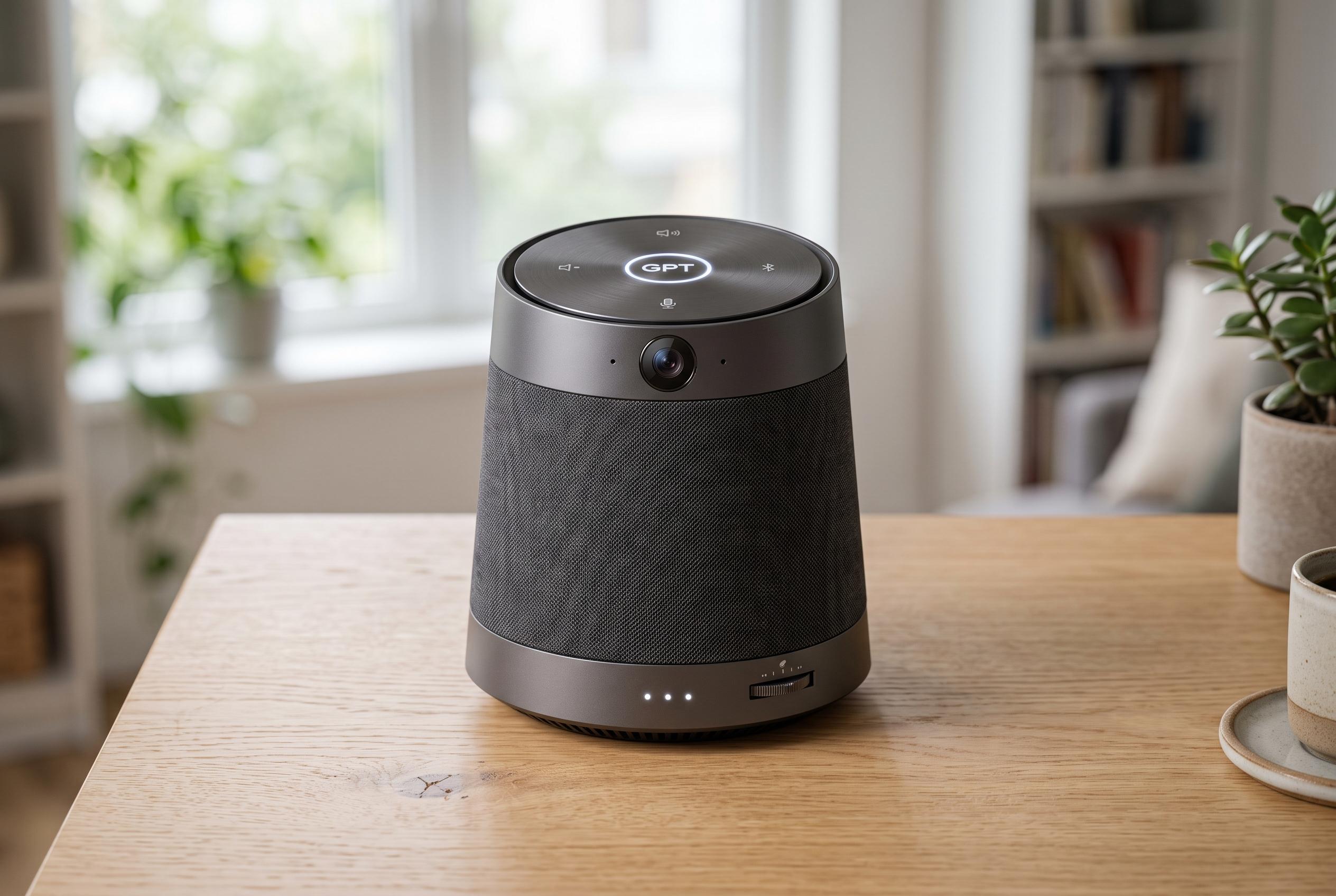

OpenAI is developing a novel, premium, screenless ChatGPT-powered smart speaker equipped with mechanical signals and a camera, aiming to redefine AI home assistants and explore new revenue streams beyond software.
OpenAI is preparing to move beyond software and into consumer hardware, with its first device expected to be a screen-free smart speaker built around ChatGPT. According to reporting cited by Bloomberg and repeated by several technology outlets, the product is designed to act as a home-based AI companion, able to answer questions, play media, control smart-home devices and adapt to its user over time. The move comes as OpenAI looks for new revenue streams beyond its core chatbot business. MacRumors and TechCrunch reported that the device is being developed with help from former Apple engineers, including people who worked on the iPhone and Mac.
The most detailed early descriptions suggest a compact speaker without a display, though with enough motion in its hardware to give it a more lifelike feel. Bloomberg journalist Mark Gurman reported that the unit could include moving mechanical elements intended to signal when it is actively engaging with a user. The design is said to be distinct from existing smart speakers, with a more premium build that may use materials such as metal. The device is also expected to include a camera, allowing the system to observe elements of the user’s surroundings and respond in a more contextual way.
OpenAI’s aim appears to be a more natural voice-first experience than the one offered by today’s assistants. The device is reportedly meant to rely on ChatGPT while offering access to more advanced models, giving it greater conversational depth and a more proactive manner. That would place it closer to an ambient household assistant than a conventional speaker, and help OpenAI test consumer appetite for AI hardware before moving to more ambitious products.
Pricing is one of the few concrete details that has emerged. According to the Bloomberg account repeated by Presse-citron, the device could sell in the United States for between $300 and $400. That would put it above many mainstream smart speakers but below the cost of an iPhone, positioning it as a premium entry into the market rather than a mass-market commodity product.
The hardware push also fits with comments OpenAI made when it announced its plans to enter the category. The company argued that although computers can now “see, think and understand”, most people still interact with them through traditional interfaces and devices. Reuters-style reporting on the wider project has suggested this first speaker would be only a starting point, with later products potentially including an AI-optimised smartphone built around agents and task execution rather than conventional apps. For now, however, those plans remain unconfirmed and should be treated as speculation.
Disclaimer: This content is intended for informational purposes only. Readers are advised to exercise their own judgement, conduct due diligence, or consult a qualified expert before acting on any information provided.