
OpenAI is developing a groundbreaking, portable, screenless smart speaker featuring advanced sensors, mechanical elements, and personalised AI interactions, expected to launch by 2027 amid high pricing ambitions.
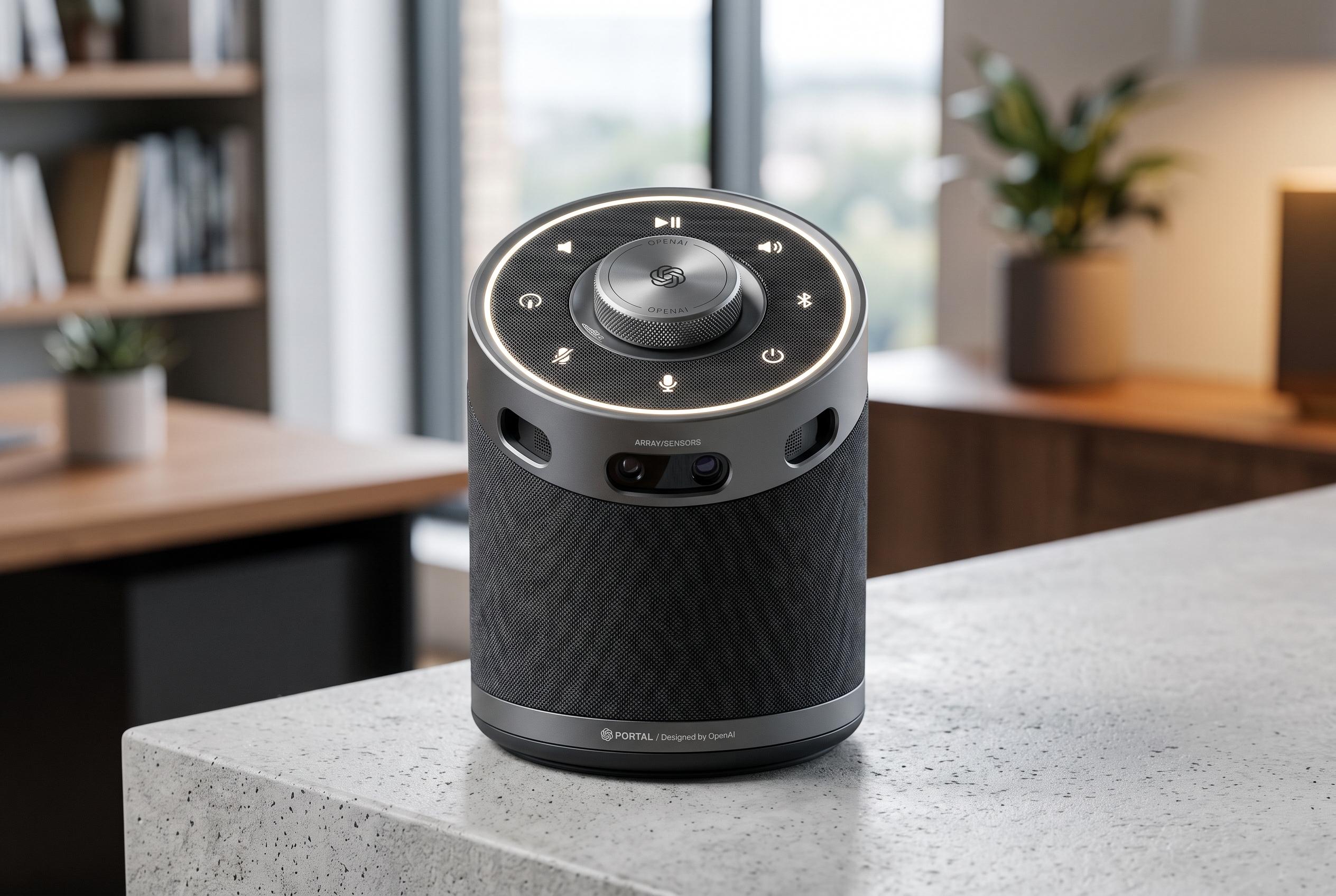
OpenAI is preparing its first consumer hardware product as a portable, screenless smart speaker shaped more like a small personal device than a conventional home assistant, according to reporting by Bloomberg’s Mark Gurman. The unit is said to be battery powered, roughly the size of a hockey puck and designed to move with the user rather than sit permanently on a counter.
The device is expected to rely on cameras, environmental sensors and computer vision so it can detect its surroundings and respond in a more context-aware way. MacRumors reported that OpenAI wants the product to act as a more human-like companion, using ChatGPT to answer questions, control smart home devices and play media, while also becoming more personalised over time.
There is also a mechanical element to the design. Reporting from MacRumors said the hardware includes moving parts intended to give it a more lifelike presence, which aligns with earlier comments from OpenAI chief executive Sam Altman and designer Jony Ive about building a new class of AI device rather than a simple voice assistant. OpenAI completed its acquisition of Ive’s startup, io, in a deal valued at about $6.5 billion, giving Ive’s team a central role in the design of the company’s next-generation hardware.
Pricing remains a potential obstacle. Bloomberg, as cited by Bandwidth Blog, said OpenAI is weighing a retail price of between $300 and $400, which would put the product well above many established smart speakers. The device is reportedly targeted for 2027, leaving OpenAI time to refine both the hardware and the market positioning of what could become one of the company’s most closely watched launches.
Disclaimer: This content is intended for informational purposes only. Readers are advised to exercise their own judgement, conduct due diligence, or consult a qualified expert before acting on any information provided.