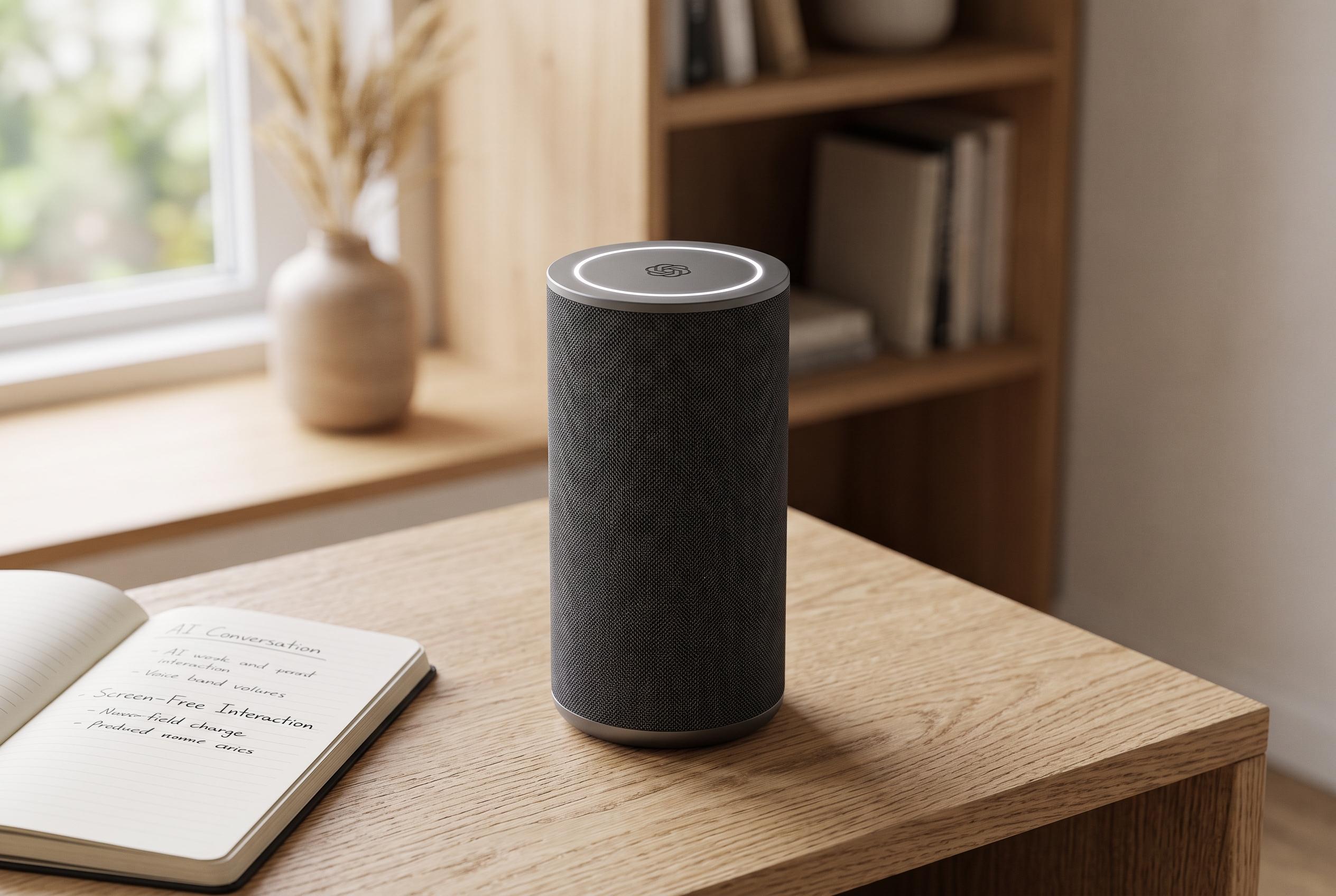

OpenAI is developing a screenless, portable smart speaker featuring AI-driven conversation and physical movement, signalling a shift towards more natural, screen-free human-AI interaction.
OpenAI is preparing its first dedicated hardware device, a screenless smart speaker that could mark the start of a broader consumer electronics push, according to Bloomberg. The product is being positioned less as a conventional speaker and more as a domestic AI companion, built around voice interaction rather than touch.
The device is expected to rely on ChatGPT as its core interface, with users speaking to it in much the same way they would in a live conversation. Bloomberg said OpenAI wants the experience to feel more natural than today’s voice assistants, with the system learning a user’s habits and context over time so it can become more personal and proactive. Reporting from TechCrunch and MacRumors suggests the speaker is also intended to handle tasks such as answering questions, controlling smart home devices and playing media.
A defining feature of the product is the absence of a display. Instead of asking users to look at a screen, OpenAI is said to be leaning on cameras, microphones, sensors and physical cues built into the casing. According to the reports, the device will show its state through lights and movement in the body itself, making it feel more like a living object than a static smart speaker.
That physical design is being developed with LoveFrom, the studio founded by former Apple chief designer Jony Ive. Bloomberg’s account, echoed by other reports, says the hardware will include moving mechanical elements intended to give the device a sense of personality. The collaboration is also notable because OpenAI is trying to establish a design identity distinct from both Apple and the existing smart speaker market.
The speaker is said to be battery-powered and small enough to move from room to room, with a circular form roughly the size of a hockey puck or a doughnut. That portability fits OpenAI’s wider ambition: to keep the assistant close to the user throughout the day rather than confining it to an app on a phone. Some reports say the company is also exploring other hardware categories, including smart glasses, although privacy concerns around always-on cameras may make a speaker a less risky first step.
The product is expected to debut in 2027 and could cost more than $300, Bloomberg reported. If OpenAI succeeds, the launch would represent more than a new accessory for ChatGPT. It would be an attempt to build a new interface category in which conversation, not a screen, becomes the main way people work with AI.
Disclaimer: This content is intended for informational purposes only. Readers are advised to exercise their own judgement, conduct due diligence, or consult a qualified expert before acting on any information provided.