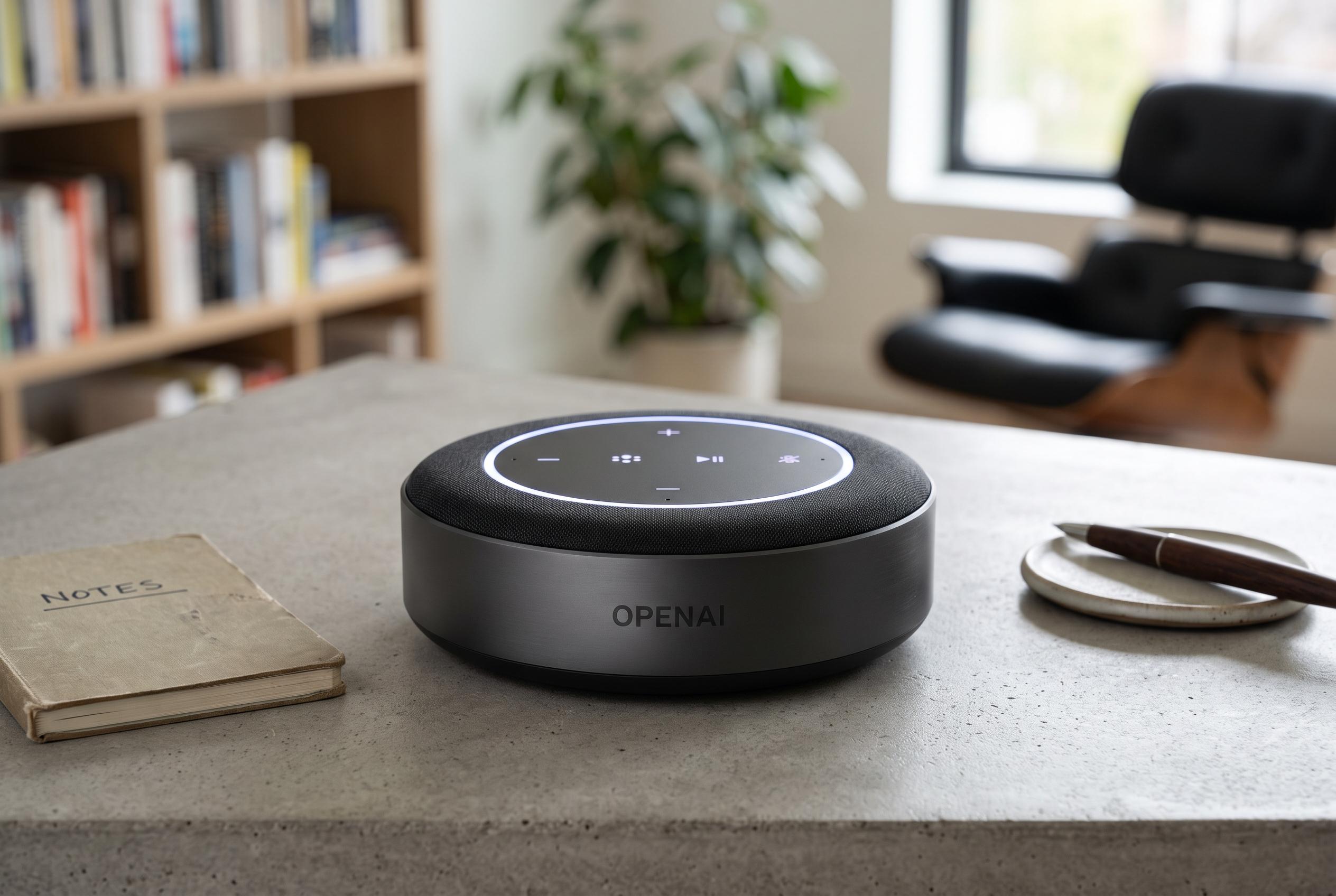

OpenAI is reportedly preparing to launch a high-end, screenless AI speaker priced between $300 and $400, featuring a lifelike, puck-shaped design and multi-position versatility, marking a strategic move into hardware and aiming to compete with Amazon and Google in the premium smart device market.
Bloomberg says OpenAI has discussed pricing its first consumer device at between $300 and $400, a sign the company is aiming well above the impulse-buy level for smart speakers and closer to the premium end of the market. The report describes the product as a screenless, battery-powered speaker with a camera and other sensors, built with upscale materials and intended to sit at the centre of a user’s day rather than remain fixed in one place.
The device is said to be roughly puck-sized and shaped like a doughnut, with moving parts designed to give it a more lifelike presence. According to Bloomberg, it will be able to work in multiple positions, including being carried in the hand or placed around the home, and it is expected to rely on advanced AI models for more natural, conversational voice interactions. That would put it in direct competition with Amazon and Google in a category long dominated by their smart speakers.
Earlier reporting from Bloomberg and other outlets suggested OpenAI is developing about five hardware products, with the speaker chosen as the first to reach the market. Those reports said the company hoped to unveil the device this year, ahead of a 2027 launch, though that timetable could shift depending on the outcome of Apple’s trade secrets lawsuit. OpenAI has denied wrongdoing and, on the same day as Bloomberg’s latest report, filed a motion to dismiss the case, arguing that Apple had not identified specific trade secrets or adequately alleged improper conduct.
The broader hardware push reflects OpenAI’s growing ambition to build products beyond software. Bloomberg reported in 2025 that the company agreed to buy io, the device start-up co-founded by former Apple designer Jony Ive, in a deal worth nearly $6.5bn, bringing in Ive and other Apple veterans. That background helps explain why the new product is being framed not as a conventional smart speaker, but as the first step in a larger line of AI-native devices.
Disclaimer: This content is intended for informational purposes only. Readers are advised to exercise their own judgement, conduct due diligence, or consult a qualified expert before acting on any information provided.