
OpenAI is developing a portable, camera-aware AI device intended as a personal assistant and home controller, potentially challenging existing smart speakers and smartphones with a novel design and conversational features, expected to launch by 2027.
OpenAI is moving closer to consumer hardware with a first product that appears designed to feel more like an AI companion than a conventional smart speaker. Reports from MacRumors and other outlets say the company is developing a display-free device with a portable, battery-powered form factor, and that it could arrive as early as 2027. The device is said to be aimed at natural conversation, home control and a more personal relationship with the user.
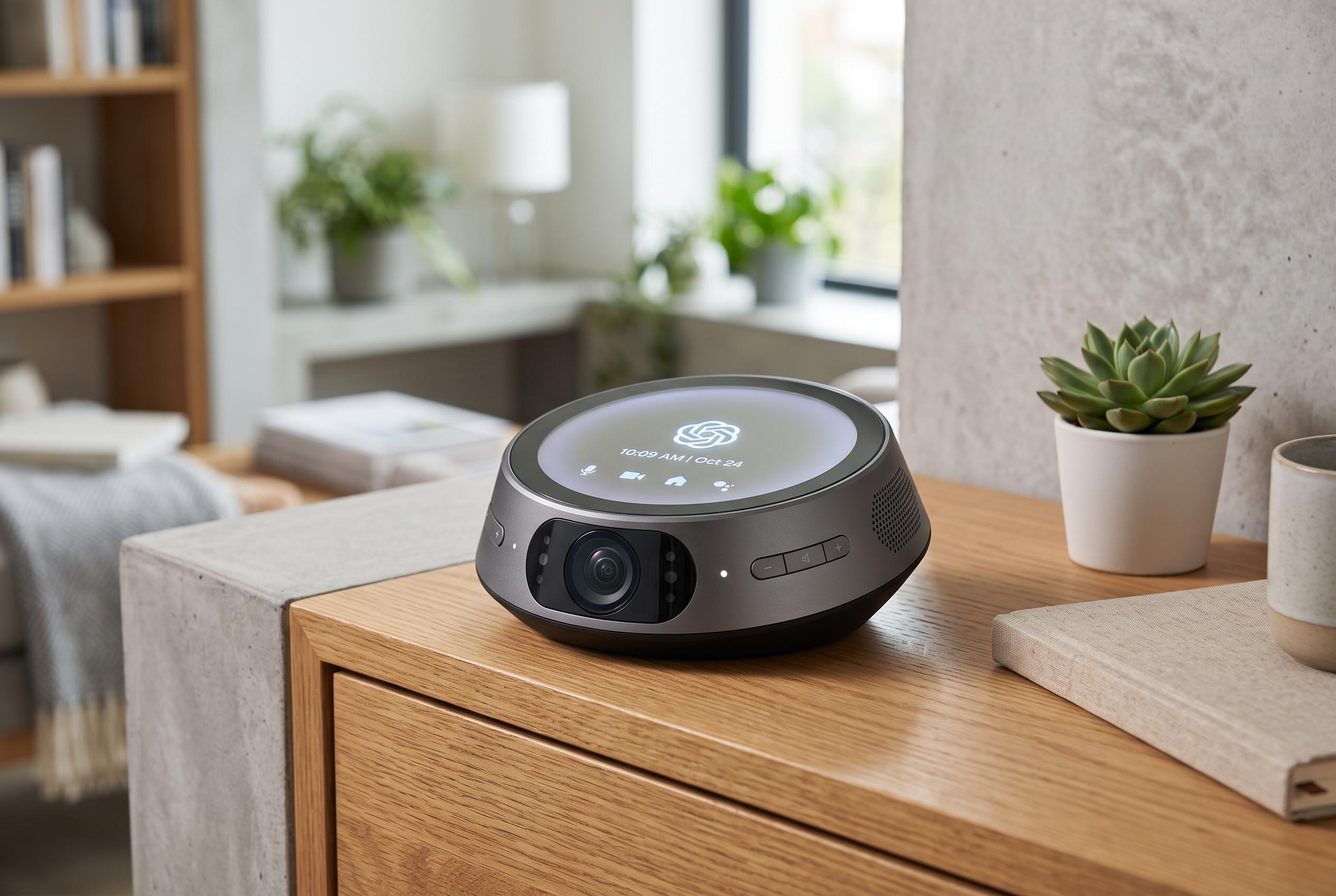
The most striking detail is the design. According to the reports, the speaker would have an unusual rounded shape, roughly the size of a hockey puck or a small disc, and would include microphones, speakers, lights and cameras. Some accounts also say it would use mechanical elements that can move during conversations, creating a sense of presence rather than a static gadget.
That approach would fit OpenAI’s broader ambition for the device: one that can observe a user’s surroundings, interpret context and respond proactively. MacRumors reported in February that the product may use facial recognition and a camera to identify users and support tasks such as suggestions based on routines and calendar demands. Later reporting added that it may answer questions, play media, control connected home devices and respond to messages.
The project is also tied closely to Jony Ive’s design studio, LoveFrom. Notebookcheck and other outlets have reported that OpenAI is working with Ive’s team on its first consumer hardware product, while Gadgets 360 said the collaboration is part of a wider push that could eventually include smart glasses and other accessories. Winbuzzer reported that Luxshare has been tapped to assemble the device, underscoring that OpenAI is building beyond software and into a broader hardware strategy.
Pricing remains uncertain, but the reported range has settled around $200 to $300, with some Spanish-language reporting placing it as high as $400. If the timeline holds, OpenAI’s first device would not only add a new product line but also test whether a voice-first, camera-aware assistant can offer a credible alternative to the smartphone rather than just another smart speaker.
Disclaimer: This content is intended for informational purposes only. Readers are advised to exercise their own judgement, conduct due diligence, or consult a qualified expert before acting on any information provided.