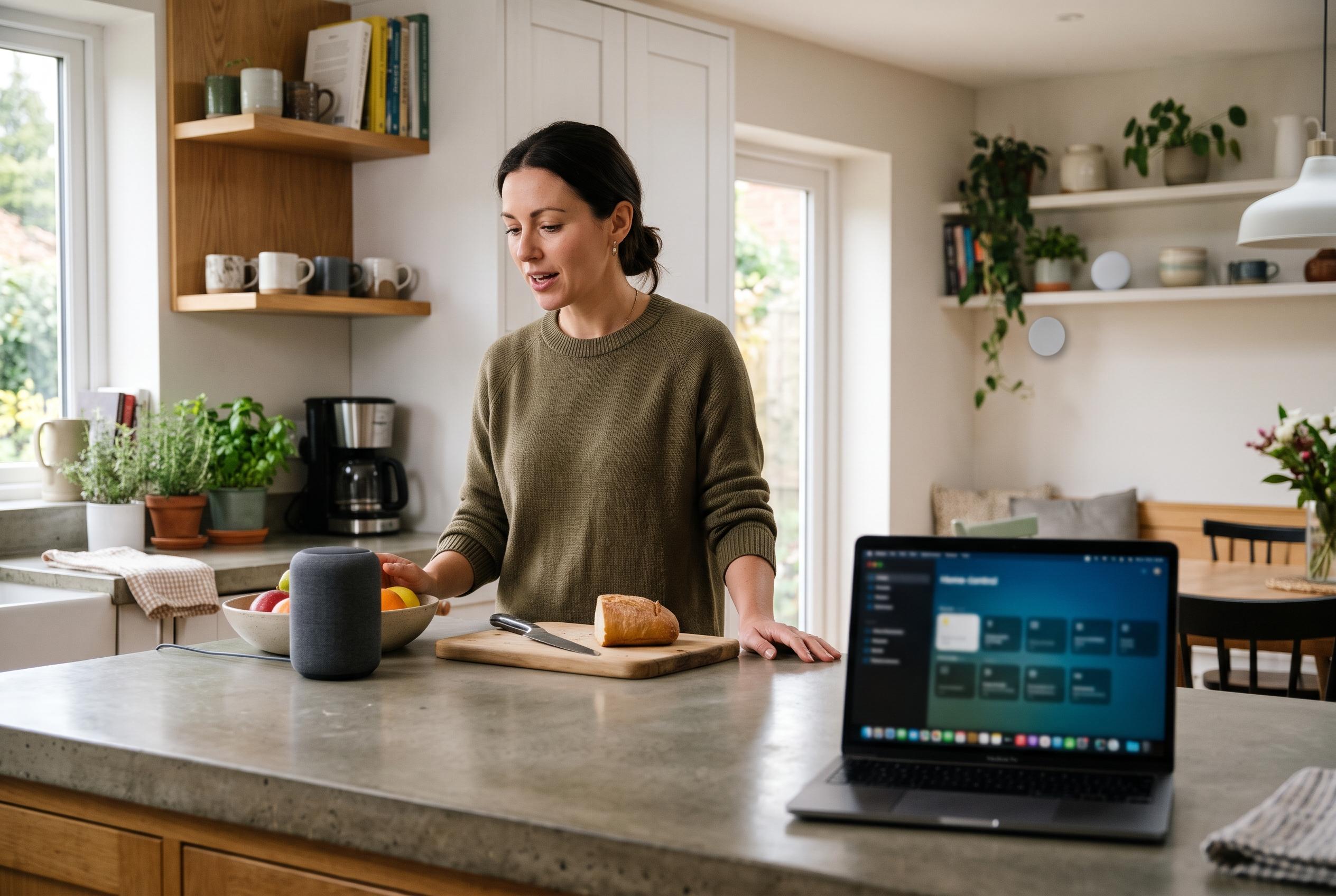

A setup combining Piper, Whisper and a local language model can answer voice queries and read household alerts aloud, without relying on cloud services.
Piper has become more than a text-to-speech add-on in one Home Assistant setup; it now sits at the centre of a fully local voice system and doubles as the engine for spoken alerts around the home. In the account published by XDA Developers, the writer describes using Piper alongside local AI models, Home Assistant and other self-hosted tools to create an assistant that can answer queries, issue replies aloud and broadcast notifications without relying on cloud services.
The wider point is that Home Assistant’s recent voice features have made this kind of arrangement much easier to assemble. Home Assistant’s own guidance says its Android companion app can act as a voice satellite, handling wake-word detection on the phone itself before handing the request to the rest of the pipeline. That approach lets an older handset serve as the front end for a local assistant while Home Assistant and a local model handle the processing behind the scenes.
In the setup described by XDA Developers, the spoken command is first converted into text by Whisper, then passed to a local large language model running through llama.cpp, with Home Assistant and the Home Agent integration acting as the bridge. Home Assistant’s documentation describes Whisper as the speech-recognition component in a local voice pipeline, while Piper provides the speech synthesis needed to read the reply back to the user. Together, they form the basic loop for private, on-device voice control.
The same text-to-speech engine is also used for something more practical: reading Home Assistant notifications aloud. Home Assistant supports automations triggered by persistent notifications, and its speak action can send generated speech to a chosen media player. That makes Piper useful as an announcement system, not just a conversational voice. The article includes a YAML automation that listens for new notifications and routes the message to a speaker in a home lab, showing how easily the service can be repurposed for household alerts.
What stands out is how light these components are compared with the larger models they support. The Home Assistant guides position Whisper and Piper as local services that can be discovered automatically or added manually through Devices & services, with both connected over the Wyoming protocol. That makes them suitable for modest home servers as well as more capable machines, and it explains why the writer treats Piper as a dependable building block rather than a novelty.
The article also places Piper within a broader pattern of Home Assistant customisation. The writer says the platform has been paired with Android devices, local AI tools and automation systems such as Node-RED to build a more capable smart-home environment. In that context, Piper is not just the voice of the assistant; it is part of a wider effort to make a home hub more responsive, more private and more useful day to day.
Disclaimer: This content is intended for informational purposes only. Readers are advised to exercise their own judgement, conduct due diligence, or consult a qualified expert before acting on any information provided.