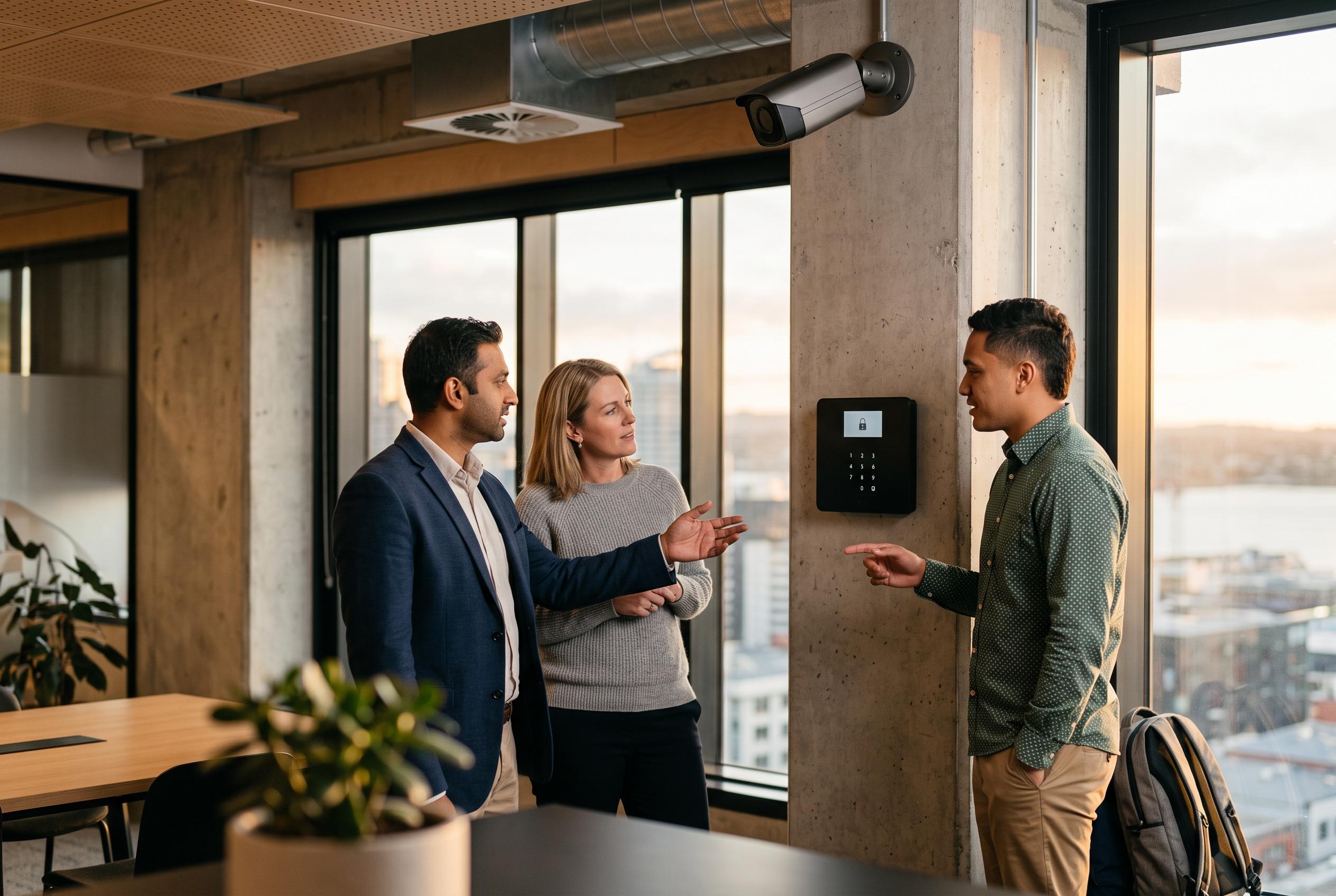

Insurance providers in New Zealand are increasingly factoring security measures into their premium calculations, offering discounts of up to 20% for professionally installed alarm and camera systems, especially for commercial properties.
Insurance can be lowered by more than claims history alone. According to Armstrong, New Zealand home and business insurers take security measures into account when pricing cover, and a professionally installed alarm or camera system can sometimes trim annual premiums by 5% to 20%. That is a material saving on larger policies, particularly for commercial premises where the premium base is higher.
The main logic is straightforward: insurers price risk. A property with no alarm, no cameras and limited deterrence is more exposed to burglary and damage than one with a monitored system and recorded surveillance. Consumer NZ and MoneyHub both stress that insurance cover is only effective when policyholders understand the limits of the policy, while BNZ notes that accurate valuation and documentation are essential to avoid under-insuring the property itself. Security is part of the same risk picture, because it can affect both the likelihood and the cost of a claim.
Not every device carries the same weight. Armstrong says the strongest discounts usually come from professionally monitored alarm systems, with unmonitored alarms generally delivering smaller reductions. CCTV can also help, especially when it covers entry points and records reliably, but a simple do-it-yourself camera setup is less likely to satisfy an insurer than a professionally installed system with proper documentation. For homeowners, the combination of monitored alarm and CCTV is usually the most persuasive.
Commercial properties face stricter expectations. Armstrong says insurers commonly look for back-to-base alarm monitoring, camera coverage of entrances and high-value areas, access logs and clear after-hours response procedures. In some cases, those measures are not just discount factors but conditions for full cover. That makes the quality of installation and the installer’s credentials important, particularly where stock, equipment or cash are held on site.
The final step is administrative rather than technical, and it is often missed. Armstrong says policyholders should obtain an installation certificate, confirm the installer’s licensing details and notify the insurer directly. Ongoing servicing also matters, because a system that is not working properly may not qualify for the discount. In practice, the savings depend on the insurer, the type of property and the standard of the system, but the broader point is consistent: security can reduce both risk and premium, provided it is installed professionally and documented properly.
Disclaimer: This content is intended for informational purposes only. Readers are advised to exercise their own judgement, conduct due diligence, or consult a qualified expert before acting on any information provided.