
Experts warn that strategic positioning and privacy-aware practices are essential for making home security cameras effective without infringing on individual privacy rights, especially in shared or sensitive areas.
Home security cameras are now common in many households because they offer remote viewing, motion alerts and easier installation than earlier systems. Yet convenience can also lead to poor placement. According to guidance from security specialists, the difference between a useful camera and a liability often comes down to where it is fixed and what it records.
The clearest rule is to avoid aiming a camera into areas controlled by other people. That means steering clear of neighbouring gardens, windows and doors unless the field of view can be restricted. Privacy masking tools, which block out parts of the image in the camera app, can help when a shared boundary makes some overlap unavoidable. This is not only a courtesy issue. Legal guides on home surveillance warn that recording in places where people reasonably expect privacy can create problems, particularly if audio is captured as well.
Bathrooms and bedrooms should stay outside the camera’s view. Security experts consistently advise against placing cameras in these rooms or pointing them towards entrances in a way that could still capture private activity. The same caution applies inside a home, where a narrow angle can still sweep up sensitive footage unexpectedly. Baby monitors are a limited exception, but even then the device should be protected with strong passwords and tightly controlled access to any stored video.
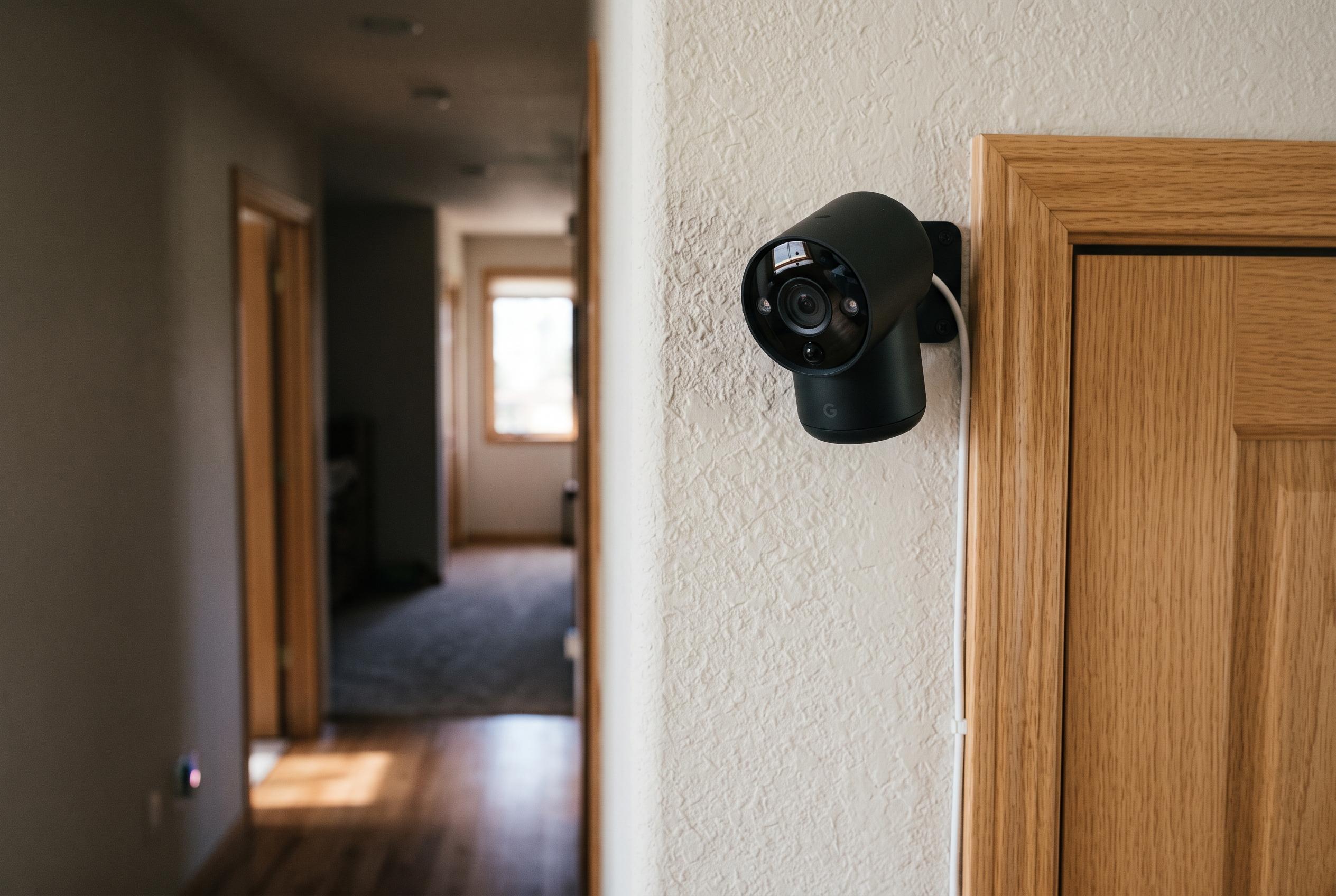
Shared homes need extra care. In hallways, landings and other common areas, one resident should not decide alone what is filmed. Occupants should agree on the camera’s purpose, the parts of the property it covers and how long footage is kept. That matters because devices in communal spaces can reveal routines, movements and other personal information about more than one person.
Physical placement also affects security. A camera mounted where it can be reached easily may be removed before it captures anything useful, especially if footage is stored only on a memory card inside the device. For outdoor use, specialist guides recommend positions that are high enough to resist tampering but still low enough to keep doors, windows and approach paths in view. Home security advisers also say to avoid mounting cameras too close to walls, ledges or reflective surfaces, as infrared night vision can bounce back into the lens and wash out the image. Testing the view in daylight and at night before final installation is therefore essential.
Used properly, a security camera strengthens protection without creating new risks. Used badly, it can miss intruders, expose private spaces and weaken the very security it is meant to provide. Careful positioning, limited data access and attention to privacy are what make the technology effective.
Disclaimer: This content is intended for informational purposes only. Readers are advised to exercise their own judgement, conduct due diligence, or consult a qualified expert before acting on any information provided.