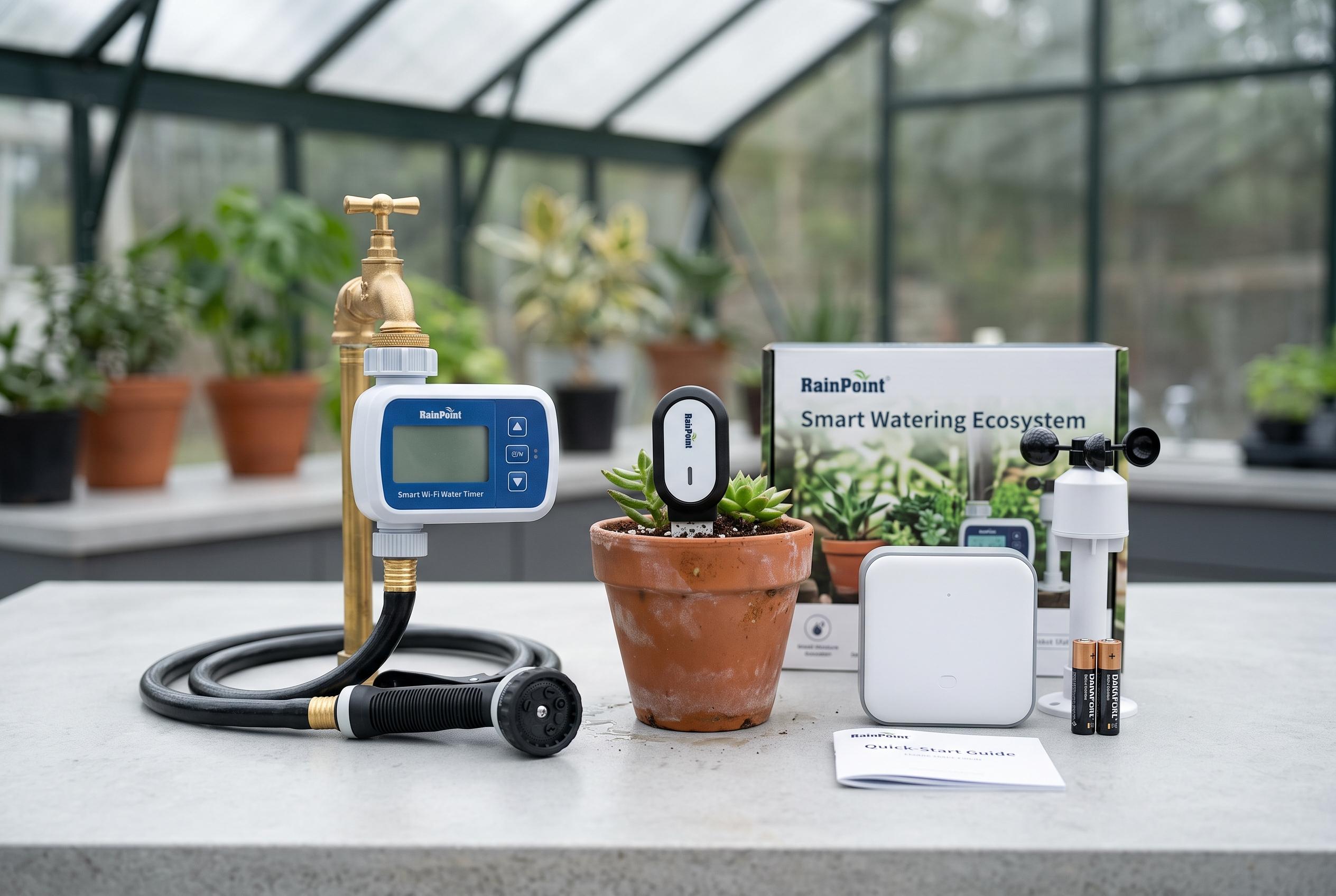

RainPoint unveils its Smart Watering Ecosystem at CES 2026, combining connectivity, sensors, and adaptive scheduling to optimise garden watering and reduce waste.
Smart water timers have long promised convenience but often fail at the point that matters most: they follow the schedule, not the weather or the soil. RainPoint’s Smart Watering Ecosystem tries to close that gap by combining a gateway, a dual-zone Wi‑Fi timer, a soil moisture meter, a rain sensor and the RainPoint Home app in one package. The system was introduced at CES 2026, where it also picked up a TWICE Picks award, according to the company and event coverage.
The key practical advantage is connectivity. RainPoint says the gateway is designed to keep the system linked even when the spigot sits far from the home router, with support for 2.4GHz Wi‑Fi on the home side and a long-range connection to compatible devices across the garden. The company also describes the gateway as capable of supporting more than 30 devices, which matters for larger or more complex plots where a single timer is only part of the picture.
The timer itself is built for households that need more than one watering pattern. It supports two independent zones, each with up to six schedules, and offers normal irrigation, cycle-and-soak and misting modes. The cycle-and-soak function is the most technically useful of the three: instead of running a single long watering session, it breaks the process into shorter bursts with pauses so water can soak into the soil rather than run off. RainPoint says the system also uses live local weather data and seasonal adjustments to skip watering before rain and adapt schedules when conditions change.
The sensing hardware is what gives the system its wider value. The moisture meter checks conditions every three minutes, shows the reading on an onboard LCD and sends the data to the app. RainPoint says it uses a capacitive probe with a corrosion-resistant coating and waterproofing for indoor or outdoor use, which is more durable than low-cost resistive probes that can degrade over time. The rain sensor adds a second layer of protection by triggering automatic rain delays when precipitation is detected.
RainPoint frames the product around what it calls a 3C model: Connect, Control and Continue. In practice, that means the hardware, app and sensors are meant to work as a closed loop rather than as separate gadgets. The app also tracks watering history, which gives users a record of what actually happened, not just what was programmed. RainPoint says the system can cut water use by 30% to 50%, depending on how much waste existed before installation, and it supports Alexa and Google Assistant for voice control. For owners with mixed planting beds, travel plans or repeated watering mistakes, the appeal is not just automation but better judgement at the tap.
Disclaimer: This content is intended for informational purposes only. Readers are advised to exercise their own judgement, conduct due diligence, or consult a qualified expert before acting on any information provided.