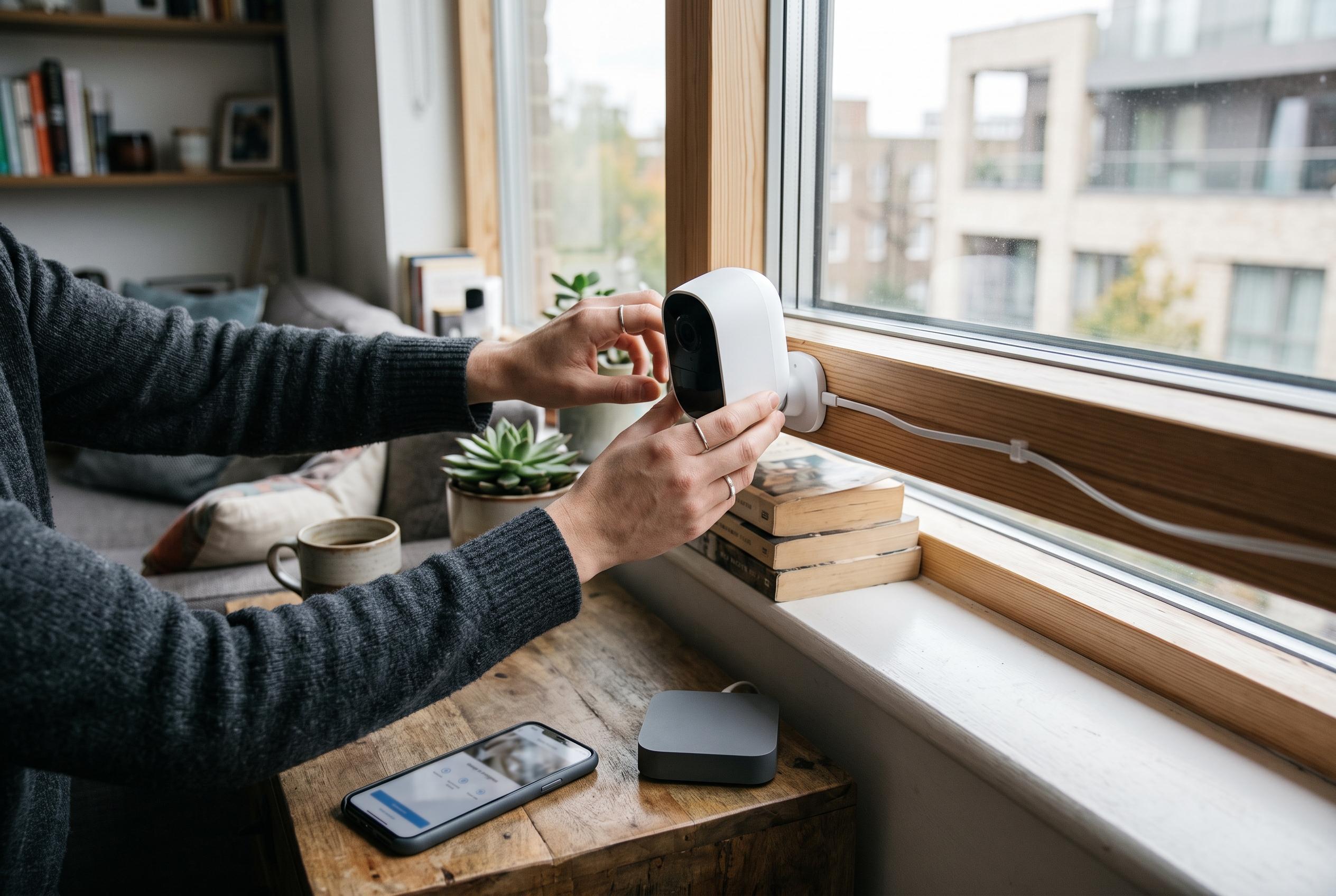

As more apartment residents seek simple, non-invasive surveillance options, experts highlight the importance of portable, privacy-conscious Wi-Fi cameras with flexible storage and robust security features amid evolving regulations in 2026.
For many apartment residents, the most practical first choice is a compact indoor Wi-Fi camera that can sit on a shelf or use a removable mount. That approach keeps installation simple and avoids permanent changes that can be awkward in a rental. The core decision is not just which camera has the best specification sheet, but what you actually need it to watch, whether it can do so without drifting into a neighbour’s space, and whether you want footage stored locally or in the cloud. Security camera buying guides aimed at renters, including recent 2026 round-ups, consistently point to no-drill, easily removable designs as the most suitable starting point for flats and leasehold homes.
Placement matters as much as the device itself. A camera placed inside your own home usually offers a clearer privacy boundary than one aimed through a doorway towards a shared corridor, another flat’s entrance, or common circulation space. Several apartment-focused guides say buyers should check field of view, resolution, and mounting options together, with some recommending at least 1080p video and a wide viewing angle of roughly 130 to 160 degrees for useful coverage. If the model offers privacy zones, these can help block off areas outside your unit; if you do not need sound, disabling audio recording is another sensible limit.
Before installing anything, tenants should check their lease and any building rules. A removable mount or free-standing camera may avoid drilling, but it does not automatically make every placement acceptable. Attaching a camera to an exterior wall, balcony, door, or shared surface may still require permission, and hardwiring is more likely to raise objections. That caution is important because camera rules vary by jurisdiction and context. The guidance cited in the source material includes a New South Wales domestic-violence-specific example effective from 21 September 2026, but that should not be treated as a general rule for all renters or locations.
Storage is another point where the long-term cost can change the value of a camera. Local recording to a microSD card can avoid a recurring subscription, while cloud plans may add remote access, longer retention, or other features, but only on the terms offered for the specific model. Buyers should confirm whether the device works without a subscription, how much storage it supports, how long clips are kept, and whether footage can be retrieved remotely. The recurring cost may also include batteries, replacement cards, or proprietary accessories, so the cheapest camera to buy is not always the cheapest to own.
The final consideration is account security. The Federal Trade Commission advises people to think about privacy and protection before enabling remote viewing, particularly when a camera monitors a private part of the home. In practice, that means creating a unique password, turning on two-factor authentication where available, keeping the app and firmware updated, and choosing a model that explains its encryption and account controls clearly. Those are basic precautions, but for a connected device that can see inside your home, they are essential rather than optional.
Disclaimer: This content is intended for informational purposes only. Readers are advised to exercise their own judgement, conduct due diligence, or consult a qualified expert before acting on any information provided.