
Shade Innovations unveils its Wireless TriMesh system at CEDIA Expo 2026, offering a disruption to large residential shading automation by enhancing reliability over congested 2.4 GHz networks, with advanced diagnostics and local control integration.
Shade Innovations is preparing to bring its Wireless TriMesh platform to CEDIA Expo 2026 in Denver, positioning the system as a professional tool for one of the hardest problems in large residential automation: reliable control of motorised shading over crowded 2.4 GHz wireless networks. The company says the platform is intended for custom integrators dealing with interference, lost configuration data and the costly site visits that can follow a coordinator failure.
The timing is notable because the trade show itself is expected to draw more than 14,000 attendees and over 300 brands to the Colorado Convention Centre from 1 to 4 September, according to CEDIA. Somfy is also using the event to present new PoE and Zigbee shading products, underlining how active the smart-shading category has become as installers look for systems that are easier to specify and maintain.
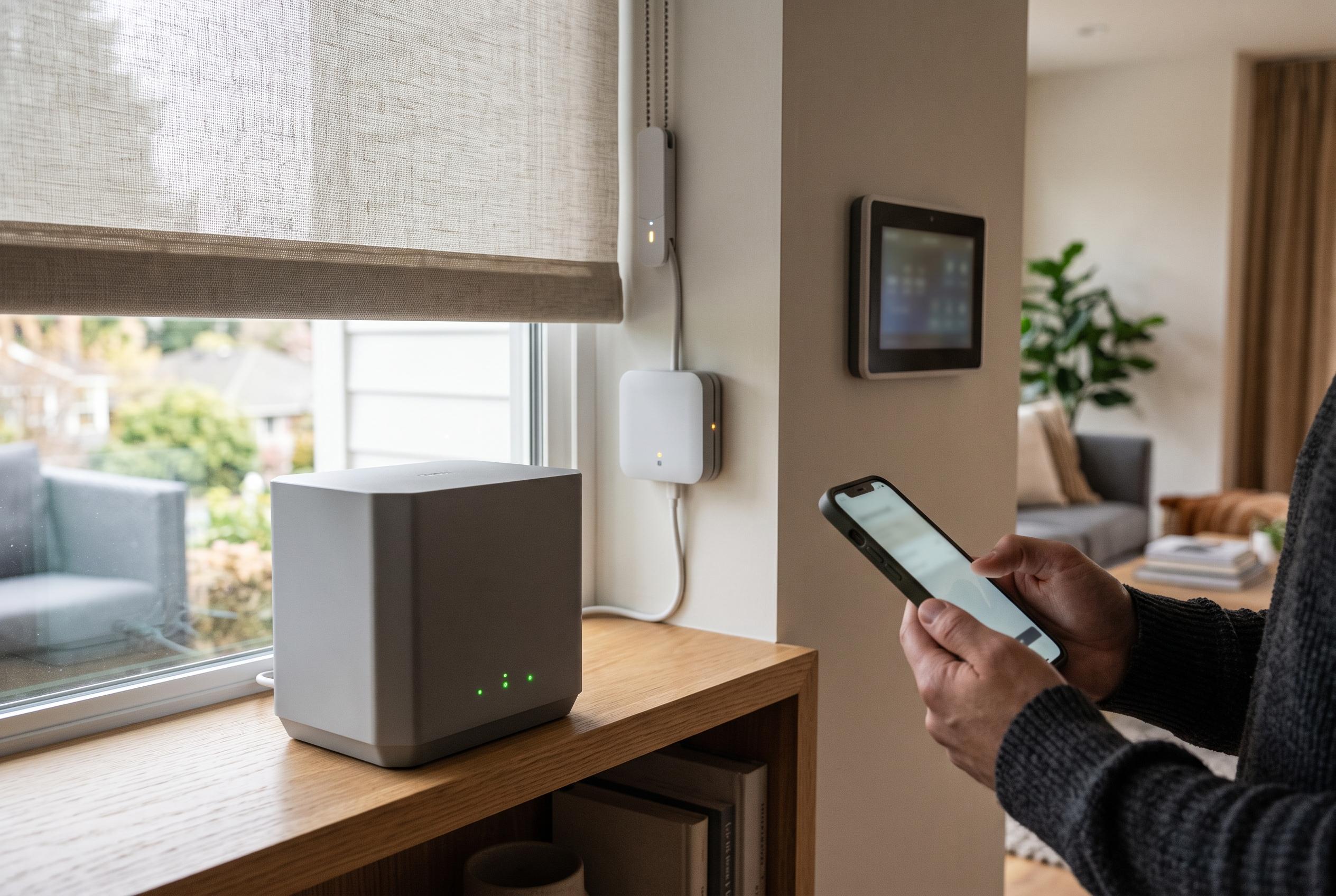
According to Shade Innovations, Wireless TriMesh splits a shading installation across three independent Zigbee meshes on separate channels, rather than relying on one network in a congested band. The company says the platform includes built-in 2.4 GHz spectrum analysis, live topology mapping, site-file backup and restore, and a coordinator hot-swap function designed to avoid the labour involved in re-pairing large numbers of motors after a hardware replacement.
That emphasis on diagnostics reflects a wider technical reality. Shade Innovations’ own mesh design guide notes that the 2.4 GHz band is already shared by Wi-Fi, Bluetooth, Thread, Zigbee and other wireless systems. In large homes, that congestion can create delayed commands, uneven movement and weak links between devices. The company argues that live visibility into signal paths and channel health should make commissioning more predictable and reduce the need for repeat visits.
The platform also leans heavily on local control. Shade Innovations says Wireless TriMesh integrates with Home Assistant and can expose controls to Apple Home, Google Home and Amazon Alexa while keeping automation on the local network. Hardware options include Power over Ethernet, Wi-Fi and USB, giving integrators flexibility in how they place and power the system across racks and rooms.
Disclaimer: This content is intended for informational purposes only. Readers are advised to exercise their own judgement, conduct due diligence, or consult a qualified expert before acting on any information provided.