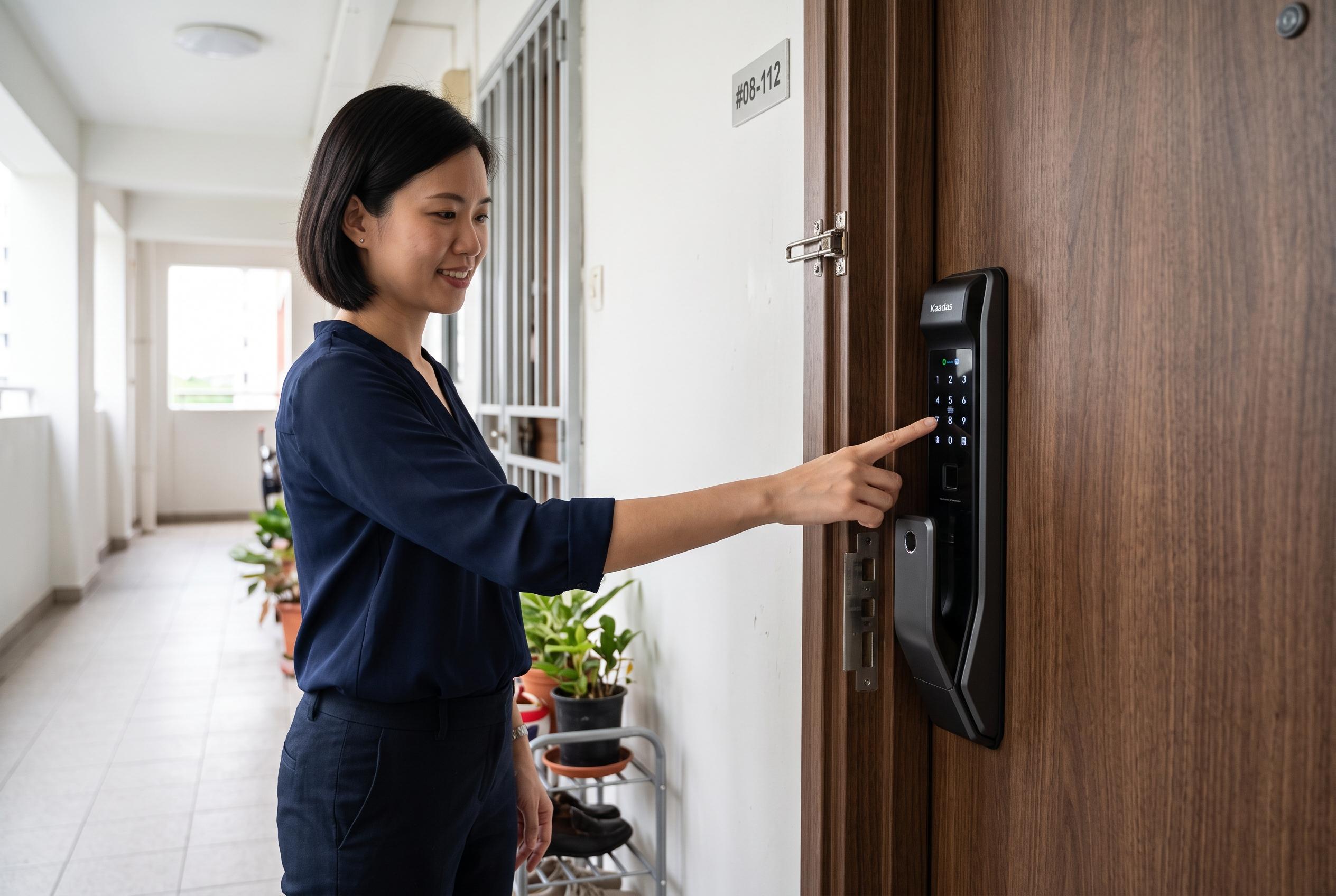

As Singapore’s HDB homeowners in Sembawang North embrace digitised entrance systems, industry experts emphasise the importance of coordinated, fire-rated solutions that ensure both security and compliance amidst rising safety standards.
For many new Sembawang North homeowners, the front entrance is no longer a purely decorative feature. It now has to balance security, fire safety and day-to-day convenience. AN Digital Lock’s 2026 package guide reflects a wider shift in Singapore housing, where digital entry systems are increasingly treated as part of the renovation plan rather than an afterthought. Guides from other Singapore suppliers say this trend is strongest in BTO homes, where owners often want keyless access before move-in and a cleaner installation path during renovation.
The practical issue is compliance. The Singapore Civil Defence Force’s fire-safety code requires exit doors and related hardware to preserve escape performance, and fire-rated doors must keep their rating when fitted with compatible locksets. Industry guides on fire-rated digital locks say the lock must be certified for the door setup, not simply marketed as fire-rated in isolation. That matters because an incompatible retrofit can undermine both safety and approval.
AN Digital Lock frames its Sembawang North bundle around that problem, pairing a main door, metal gate and digital lock as one matched set. The company argues that bundling reduces installation conflicts, avoids mismatched finishes and helps ensure the gate opening, handle position and lock hardware are designed to work together. That approach is consistent with product listings from other local vendors, which package mild steel gates, laminate fire-rated doors and locksets together with installation and disposal services.
Compatibility is especially important on HDB gates, where mesh spacing and corridor clearance can limit what can be fitted. Hong Rui’s guide on fire-rated doors notes that homeowners should think carefully about installation method, because factory-fitted and certified retrofit options are safer than improvised combinations. It also says the lock’s fire-resistance rating should match or exceed the door’s tested configuration. In practice, that means the safest route is to choose a door-and-gate package built around a tested lock-and-door combination.
The brand selection in the guide centres on Zigbang, Philips and Solity. AN Digital Lock presents Zigbang as a slim, design-led option, Philips as an easier push-pull system and Solity as a strong fit for Singapore’s metal gates. Similar local product pages show that bundled solutions for HDB flats often include extras such as mortise locksets, door viewers and installation timelines of roughly two to three weeks after measurement. The overall market direction is clear: buyers want biometric convenience, but not at the expense of fire safety or proper mounting.
That is why timing matters as much as the hardware itself. Guides aimed at BTO owners recommend installing digital locks close to the end of renovation, after heavy dust and hacking work are finished, so sensors and finishes are not damaged. AN Digital Lock gives a similar message, advising homeowners to schedule site measurement early, then complete fabrication and installation only when the flat is ready. In a market where residential fire risk and compliance scrutiny are both rising, the most sensible choice is not simply a smart lock, but a fully coordinated entrance system.
Disclaimer: This content is intended for informational purposes only. Readers are advised to exercise their own judgement, conduct due diligence, or consult a qualified expert before acting on any information provided.