
As fingerprint locks become standard in Singapore homes, safety regulations and climate conditions are shaping smarter, more compliant security choices for homeowners, with an increasing focus on certified, weather-resistant, and regulation-compliant solutions.
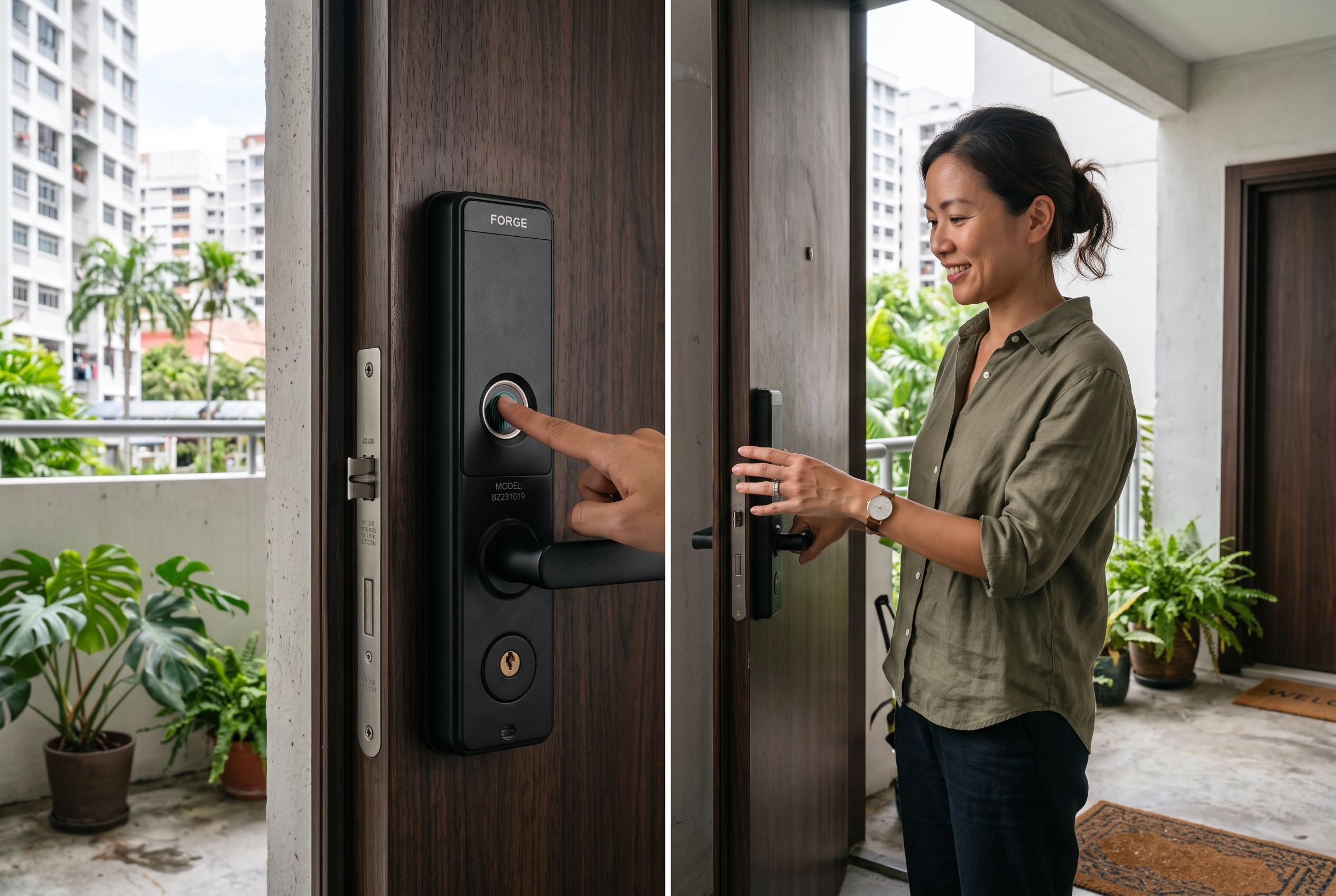
For Singapore homeowners, fingerprint locks have moved from novelty to practical standard. The appeal is straightforward: no keys to misplace, faster access in wet weather, and easier entry for children, older residents and anyone carrying bags from the lift lobby. But the shift to biometrics is not just about convenience. In Singapore, the choice of lock must also fit fire-safety rules, door construction and the climate’s persistent humidity.
The Singapore Civil Defence Force says only certified digital locksets should be used on fire-rated doors, so HDB homeowners cannot treat any fingerprint lock as a simple replacement for a conventional lock. That matters because the main entrance in many flats is part of the home’s fire barrier, and a poorly chosen device can undermine the door’s resistance in an emergency. As a result, the market now places more emphasis on certified products, proper installation and clear documentation of compliance.
The underlying technology also matters. Semiconductor, or capacitive, sensors are generally better suited to Singapore’s conditions than older optical scanners because they read the skin’s electrical properties rather than relying on a flat image. That makes them less sensitive to damp fingers, sweat and the wear that can affect elderly users or young children. Products now sold locally reflect that trend: the Aqara U100 and U300 both support fingerprint access alongside NFC, Bluetooth and mechanical backup, while water-resistance ratings such as IPX4 or IP65 are increasingly used to signal suitability for tropical use.
Brands are also differentiating themselves through form factor and access options. Solity’s range, for example, includes models with fingerprint access, passcodes and optional Bluetooth or Wi‑Fi connectivity, while Igloohome’s Mortise 2+ is positioned as a fire-rated lock with multiple entry methods, low-battery alerts, tamper alarms and emergency jump-start features. Luxus’ Atlas Wi‑Fi model adds app control, gate synchronisation and local support, reflecting a wider Singapore market in which homeowners want one system that can manage both the main door and the metal gate.
For buyers, the most important decision is not whether to buy a smart lock, but whether to buy the right one for the right door. A fire-rated HDB main entrance needs certified hardware and careful fitting; a gate-facing lock needs weather resistance and practical day-to-day reliability; and both need strong local warranty support. In Singapore’s housing market, the best fingerprint lock is increasingly the one that combines biometric speed with regulatory compliance, sensible backup access and installation that preserves the door’s integrity.
Disclaimer: This content is intended for informational purposes only. Readers are advised to exercise their own judgement, conduct due diligence, or consult a qualified expert before acting on any information provided.