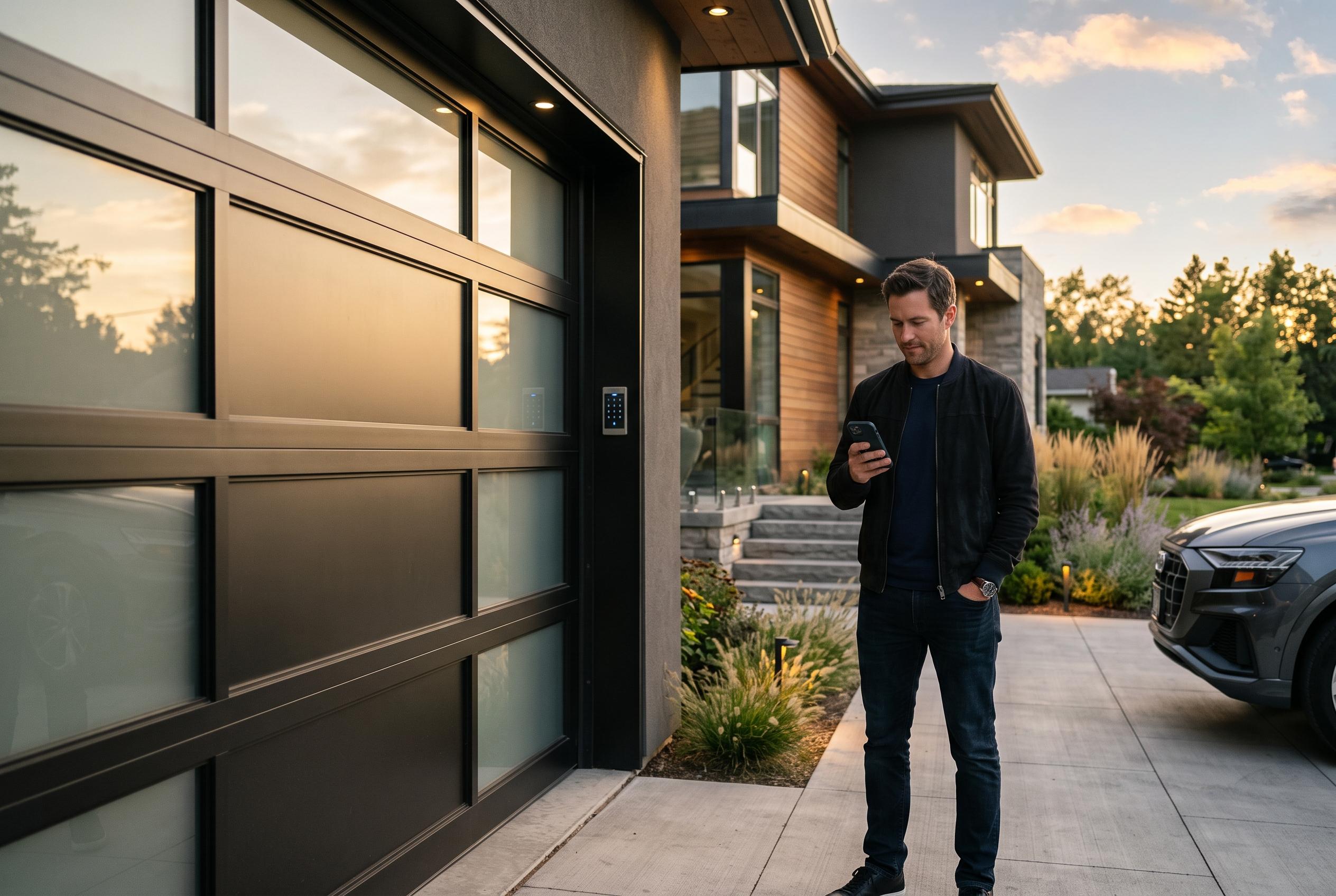

Modern garage doors now offer advanced security features such as rolling-code technology, keypad entry, and notification alerts, ensuring better protection against unauthorised access without compromising ease of use or reliability.
Modern garage doors now do far more than lift and lower on command. The useful question for homeowners is not how many features a system offers, but which ones genuinely improve day-to-day security. According to the supplied material, the strongest upgrades are usually the ones that prevent unauthorised access, reduce the chance of human error, and keep the door usable when conditions change.
The clearest baseline is rolling-code technology. Precision Door says this approach changes the access code every time the remote is used, which prevents a captured signal from being replayed later. Gate Remote Source makes the same point, noting that fixed-code remotes can be cloned or copied, whereas rolling-code remotes are designed so that one transmission does not unlock future access. In practical terms, that makes rolling-code systems far more resilient than older fixed-code remotes.
Keypad entry is another feature with strong everyday value. It is not especially advanced, but it solves common access problems: a family member arrives without a remote, someone leaves for a run without keys, or a guest needs temporary entry. Its security depends on how it is used. Weak or obvious PINs undermine the benefit, while individual or temporary codes, where available, offer better control.
Smartphone control is most useful when it improves awareness rather than simply convenience. Being able to check whether the garage door is open can matter more than being able to operate it remotely. Alerts can be even more valuable, because they tell a homeowner when the door has opened at an unexpected time. As the supplied material notes, notifications that flag unusual activity or a door left open may do more for security than constant app-based control.
Lockout modes and automatic closing functions also address familiar mistakes. A vacation setting can disable normal remote access while a home is empty, although homeowners need to confirm exactly which entry methods are blocked. Timer-to-close features provide a different safeguard by shutting the door after a set period, which can help in households where people frequently forget to close it after coming and going.
Battery backup is often presented alongside security features, but its main strength is reliability. It keeps compatible openers working during a power cut, which can be important if the garage is the household’s main entrance or if vehicles need to move during an outage. That does not make it a security system in itself, but it does stop a routine loss of power from becoming a practical access problem.
Integrated cameras can be useful, but only in the right setting. They make most sense where the garage is a regular entrance, receives deliveries, stores valuable items, or is used by several people. In those cases, video can help explain why the door opened and who used it. If the garage is already covered by a separate camera, or is used only occasionally, the built-in version may add little.
The broader lesson is that technology cannot compensate for a poor-quality door or opener. A system that does not close properly, has worn hardware, or depends on neglected accessories will not be secure simply because it has smart features. The best results usually come from pairing reliable core access control with practical extras that match how the household actually uses the garage.
Disclaimer: This content is intended for informational purposes only. Readers are advised to exercise their own judgement, conduct due diligence, or consult a qualified expert before acting on any information provided.