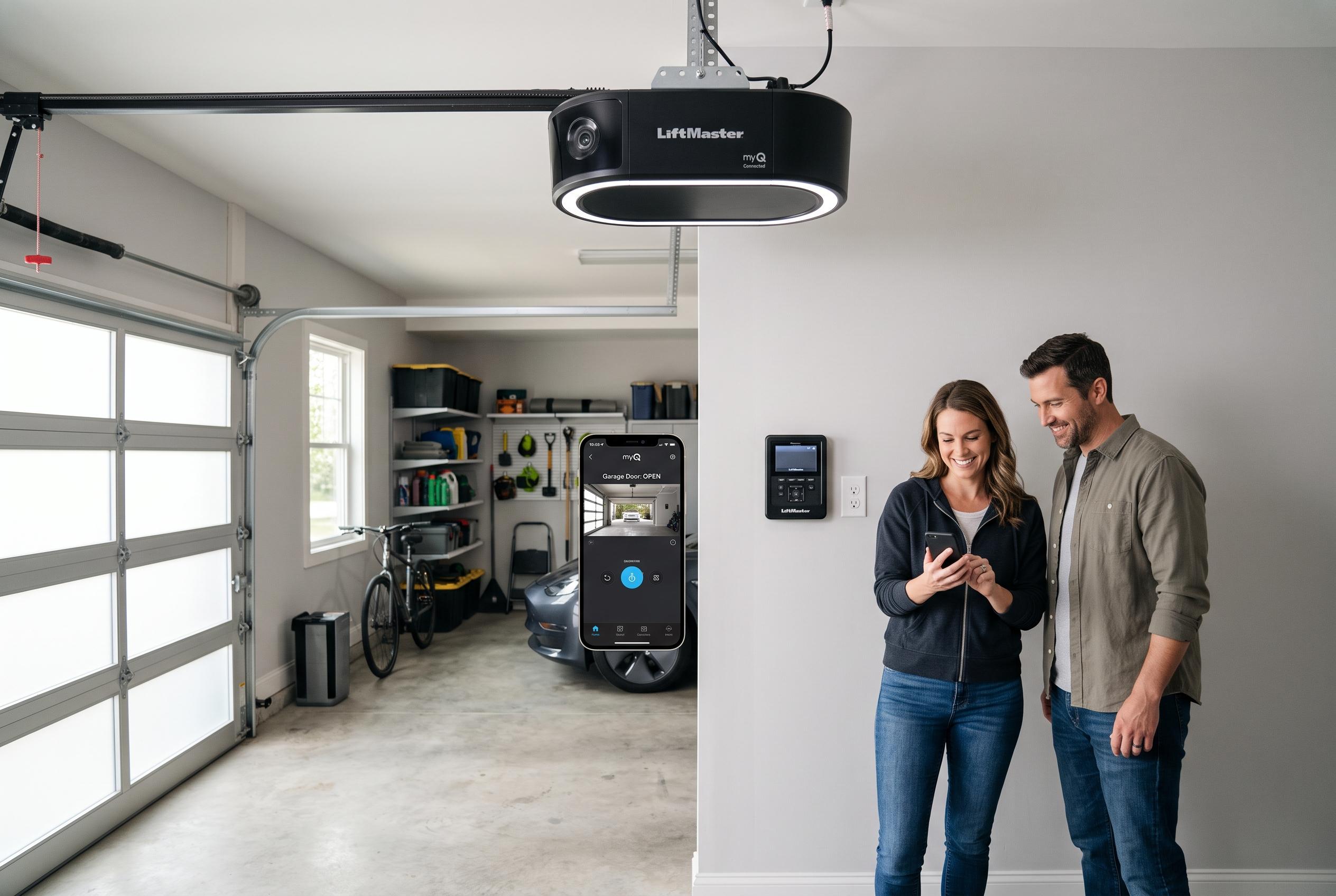

Advancements in garage door opener technology now prioritise connectivity, security and resilience, prompting homeowners to consider upgrades or replacements for older, outdated systems.
A garage door opener that is more than eight years old may still move a door up and down without complaint, but according to several buyer’s guides and technical explainers, the technology behind many older units is now well behind current standards for security, convenience and resilience. The biggest shift has been the move from isolated mechanical operation to connected systems that can be checked and controlled from a smartphone, even when the homeowner is away from the property.
Traditional openers still do the basic job well enough for detached garages or homes with simple requirements. Most rely on one of three drive types: chain, belt or screw. Chain-drive units are usually the cheapest and toughest, but they are also the loudest. Belt drives are quieter and better suited to attached garages. Screw-drive systems use fewer moving parts, though they can be less consistent in extreme temperatures. Older fixed-code remotes are also less capable than modern rolling-code systems, which change the access code each time the door is used.
Smart garage openers build on that foundation by adding Wi-Fi connectivity, app-based control and live door status updates. According to guides from OGD, DoorServPro and Best Buy, these systems can send alerts if a door is left open, close it on a schedule and create temporary access for family members, contractors or delivery services. Some systems also integrate with broader smart home platforms, support voice control and work with in-garage delivery services such as Amazon Key.
Security is where the difference becomes most important. Fixed-code systems can be vulnerable to code-grabbing attacks, in which a signal is intercepted and reused later. Rolling-code technology reduces that risk by changing the code with every use, and smart systems add encrypted communication between the phone and the opener. Several sources also note that modern systems increasingly include battery backup, which keeps the door working during outages. That matters not only for convenience but also for access and safety during storms or grid failures.
The door itself still matters as much as the opener. Guides from the garage door industry stress that a worn, poorly balanced or heavy door forces the opener to work harder and shortens the life of both components. A well-insulated, properly fitted door reduces strain, noise and maintenance. That is one reason full replacement can make more sense than adding smart controls to an older, tired system.
For homeowners weighing the cost, the choice is often straightforward. Add-on smart modules for compatible openers can cost about $50 to $150, while full smart opener units generally start higher but bring the benefit of new hardware, warranty cover and quieter operation. For a working opener in good condition, an upgrade module may be enough. For an ageing unit that is noisy, slow or incompatible, replacement is usually the cleaner and more durable option.
Disclaimer: This content is intended for informational purposes only. Readers are advised to exercise their own judgement, conduct due diligence, or consult a qualified expert before acting on any information provided.