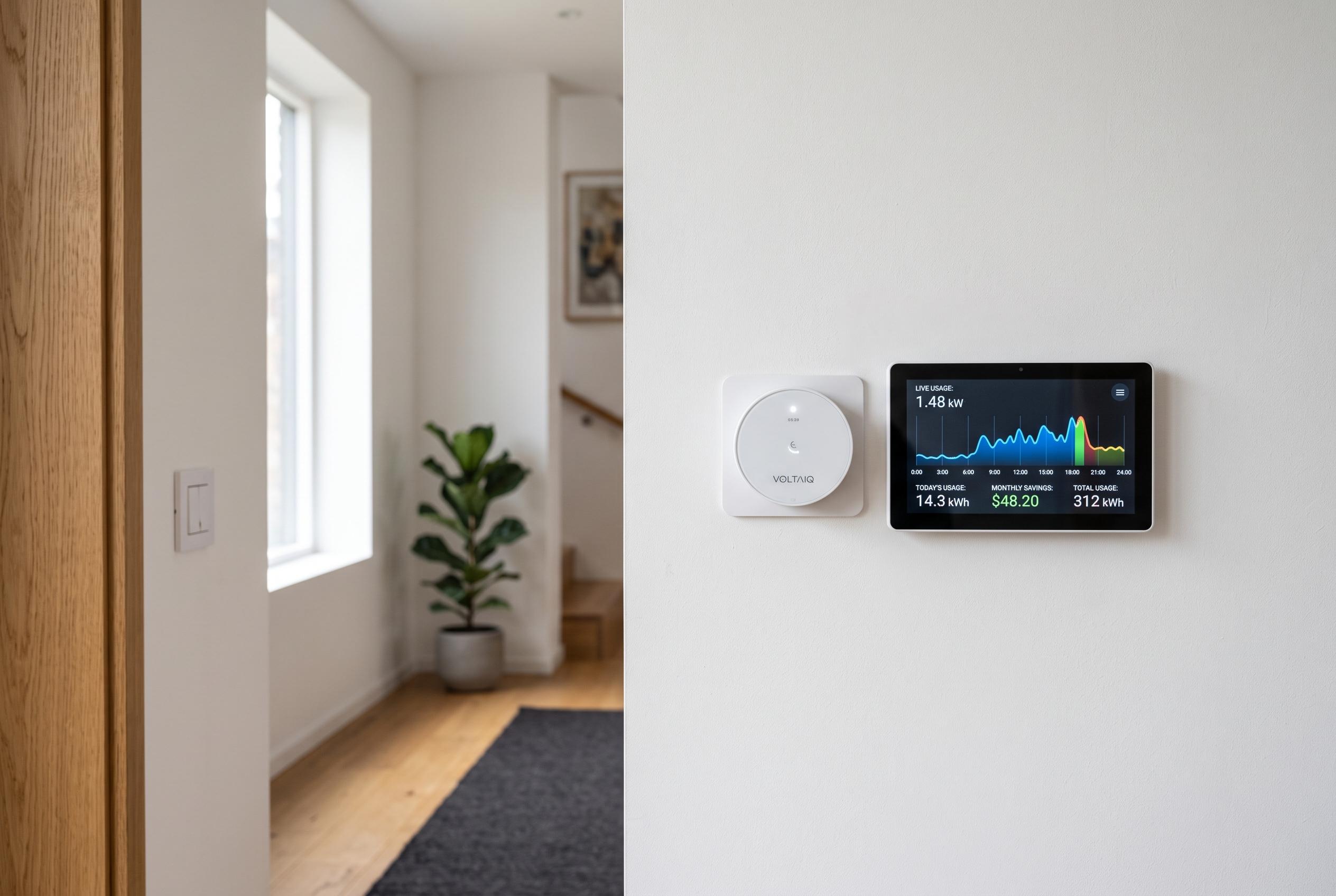

Advanced energy monitors and AI-driven systems are transforming homeowners’ ability to reduce bills and emissions by providing real-time insights and smarter controls, as awareness outpaces utilisation of available technology.
A small energy monitor can turn a vague monthly bill into useful data, showing which appliances draw the most power and when. That matters because, according to Schneider Electric, many homeowners recognise the value of lower emissions but still rely on low-impact habits such as switching off lights, which the company says accounts for only a small share of an average household energy bill. The gap between intention and outcome is clear: awareness of energy use is high, but the tools that expose real consumption are still underused.
That is why home technology is increasingly being sold not simply as decoration, but as a practical layer of domestic infrastructure. Smart mirrors, digital photo frames, adaptive lighting, scent diffusers and electricity trackers can all add visual appeal while also solving everyday problems. The strongest products do both jobs at once: they improve the look and feel of a room while helping occupants manage comfort, convenience and power use more intelligently.
Schneider Electric’s research suggests that the appeal of these devices is rooted as much in simplicity as in savings. In one survey, 42% of respondents said smart-home devices offer an easy way to reduce energy use, while 19% identified efficiency as a main benefit. Ease of use is also a major buying factor, with 43% of homeowners saying it matters most when choosing smart-home technology. In Australia, the company found that 40% of respondents see smart homes as an easy and affordable route to lower bills, while smart energy monitors are gaining traction because they can show real-time electricity use and help households adjust how they run appliances.
The more advanced versions of this idea now extend into AI-driven home energy management systems, which Schneider Electric says can make energy flows visible at both whole-home and individual appliance level. That visibility is important because small adjustments often have limited impact, while smarter controls for heating, automation and appliance scheduling can produce larger savings. The wider challenge remains one of complexity: many households still juggle multiple apps and incompatible devices, so the next stage of the market will depend on products that are easier to use, better integrated and more clearly tied to reducing costs as well as emissions.
Disclaimer: This content is intended for informational purposes only. Readers are advised to exercise their own judgement, conduct due diligence, or consult a qualified expert before acting on any information provided.