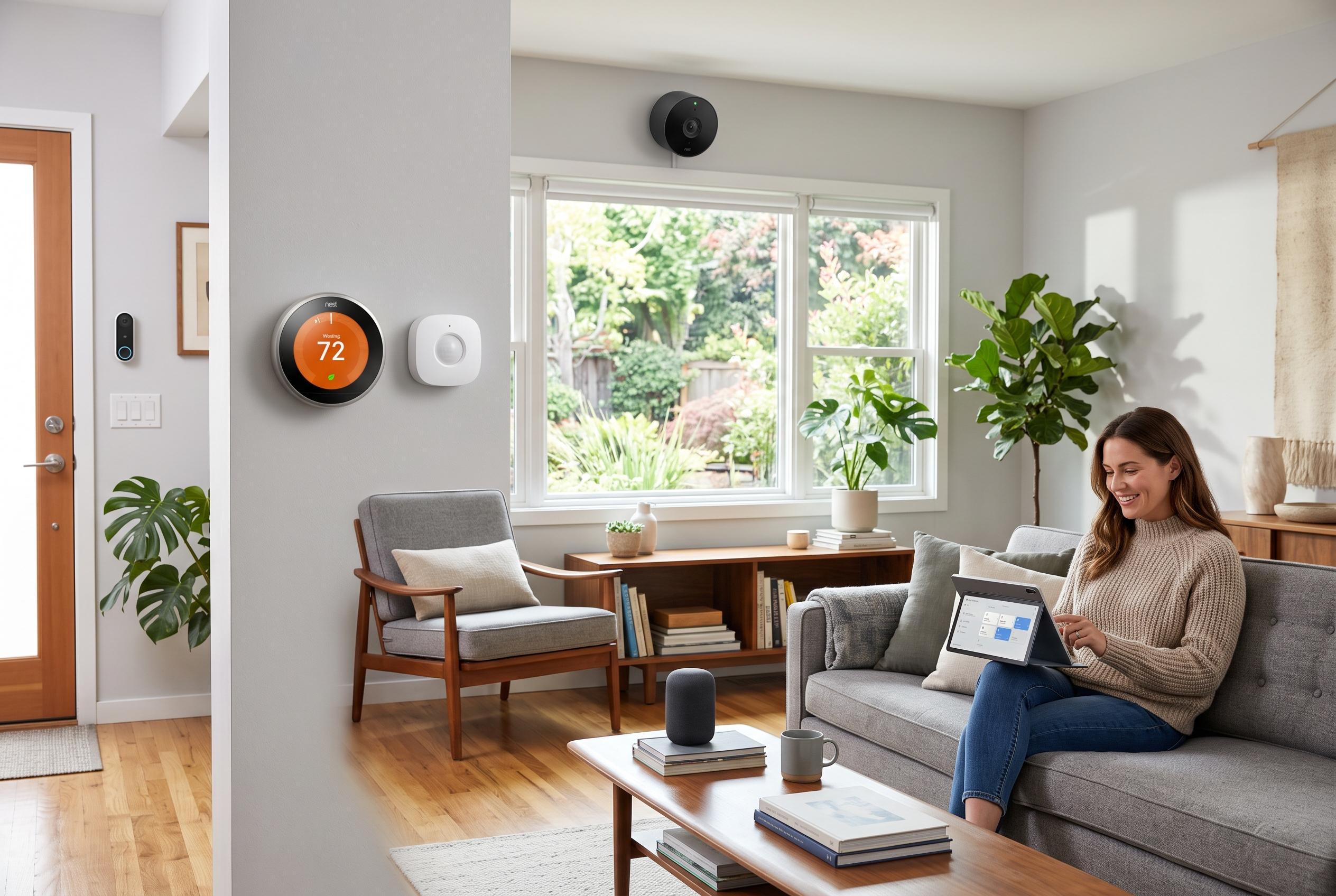

With more households adopting connected devices, the smart home market is rapidly expanding, driven by increased security needs, energy savings, and user-friendly automation, despite concerns over network security.
Connected home technology has moved well beyond novelty. According to recent industry round-ups, smart devices now sit in a large share of households, with one 2026 survey saying 63% of US homes own at least one connected product and another putting the global market at $150.6 billion in 2024. The appeal is straightforward: better convenience, more control and, in some cases, lower running costs. The challenge is deciding which devices actually earn their place rather than simply adding clutter.
For most homes, the best place to begin is a smart speaker or voice assistant. It acts as the control point for lights, thermostats, cameras and other devices, reducing the need to juggle separate apps. Industry trackers show smart speakers remained one of the most common categories in 2024, which is consistent with their role as the entry point for many first-time buyers. Once installed, they make everyday tasks such as setting timers, checking the weather or adjusting lighting far less cumbersome.
A smart thermostat is often the next sensible purchase. It learns routines, adjusts temperatures automatically and can reduce wasted energy when no one is home. A smart home statistics review cited savings of $50 to $145 a year on heating and cooling bills, while the U.S. Department of Energy has long noted that correctly used programmable thermostats can trim energy costs. For households focused on payback rather than novelty, this is one of the clearest-value upgrades.
Lighting comes close behind. Smart bulbs and switches let occupants dim rooms, set schedules and create scenes for different times of day. The practical benefit is convenience, but there is also a security dimension. More connected devices mean more exposure, especially when they rely on internet access and weak default settings. That is why homeowners are increasingly pairing smart gear with stronger network protection and better account security rather than treating each device as a standalone gadget.
Security devices remain one of the strongest drivers of adoption. Recent market summaries show home monitoring and security products accounted for a substantial share of shipments in 2024, with smart cameras dominating that segment. Video doorbells and motion cameras can send alerts, save footage and let owners check their property remotely. Research cited in one report also suggests visible security systems can deter break-ins, which helps explain why these devices appeal to both buyers and landlords.
Low-cost accessories can also deliver meaningful gains. Smart plugs are among the simplest upgrades, turning ordinary lamps, coffee makers or heaters into scheduled devices at little expense. Smart locks add controlled access for family members, cleaners or sitters without the need for spare keys. Robot vacuums, meanwhile, have become a serious category in their own right, with newer models mapping rooms, avoiding obstacles and emptying themselves. Home technology reports show many consumers want connected homes for energy savings, convenience and safety, and the market continues to grow as systems become easier to install and more interoperable.
Disclaimer: This content is intended for informational purposes only. Readers are advised to exercise their own judgement, conduct due diligence, or consult a qualified expert before acting on any information provided.