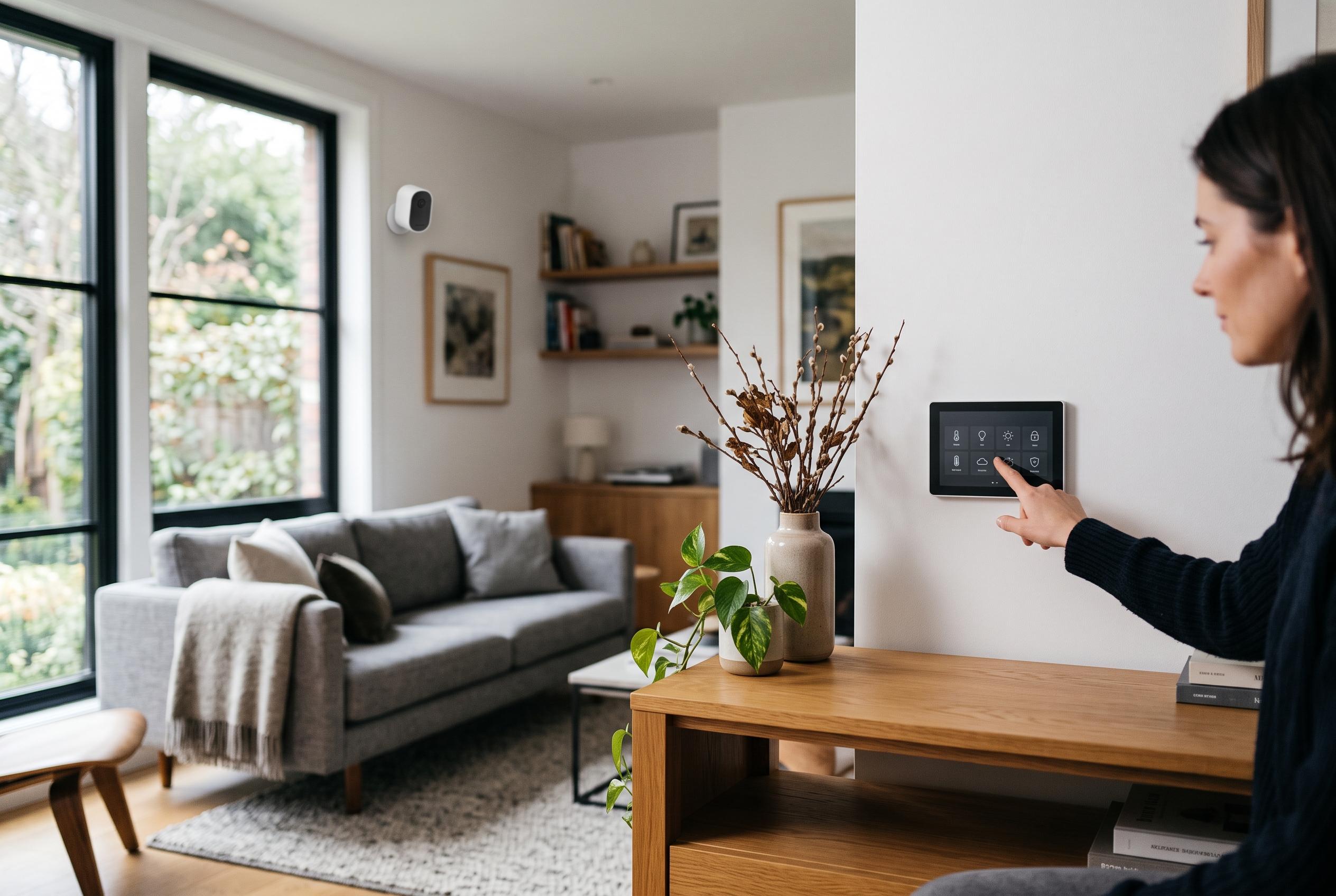

As smart security systems diversify, consumers must weigh resilience, ongoing costs, and system compatibility to find long-term solutions that suit their living spaces and budgets.
For most households, the real question in smart security is not which kit has the most parts, but which system will still be useful after the first month. Ring’s 14-piece alarm kit is the strongest all-round option because it combines broad hardware support with Ethernet, Wi-Fi, Z-Wave, Bluetooth and cellular backup, giving it more resilience than a basic WiFi-only alarm. Amazon’s product details also show that it is designed for 2-4 bedroom homes and can be expanded through Ring’s wider accessory range, although remote features and voice control still sit behind a subscription.
The best low-cost route is not the cheapest box on the shelf, but the one that avoids hidden running costs. The 12-piece WiFi alarm kit stands out because it carries no monthly fee, includes nine contact sensors and works with Alexa and Google Assistant. However, Amazon’s listing makes clear that it relies on 2.4GHz Wi-Fi only and provides just eight hours of battery backup, which leaves it weaker during longer outages than higher-end systems with cellular failover.
For buyers who want cameras built into the system rather than added later, SimpliSafe’s 10-piece kit is the most complete surveillance-focused option in this group. The bundle includes a 1080p outdoor camera with colour night vision and a 140-degree field of view, and Amazon says its AI detection is designed to tell people from vehicles to cut false alerts. It also offers optional 24/7 monitoring without long contracts, but some camera functions still depend on wired power and the battery reserve is only around 24 hours.
Small-space buyers have a different set of priorities. eufy’s 5-piece alarm kit is the leanest package in the roundup, with a HomeBase, keypad, motion sensor and two entry sensors. According to Amazon, it has no subscription or hidden fee structure and sends instant phone alerts, but the limited sensor count makes it a poor fit for larger homes and it does not present the same smart home integration depth as Ring or SimpliSafe.
SimpliSafe’s 8-piece kit is the most approachable entry point for first-time buyers who want a simple installation process and the option to upgrade later. Amazon describes it as tool-free, with no drilling or wiring, and says it includes a panic button plus motion sensors that ignore pets under 60 lbs. The trade-off is that full monitoring still requires a paid plan, and the system is sold only in the US.
Ring’s 5-piece starter kit is aimed at flats and compact homes rather than full-sized properties. It covers the essentials with a base station, keypad, one contact sensor, one motion detector and a range extender, and it ties neatly into Alexa-based homes. But Amazon notes that remote arming, notifications and 24/7 professional monitoring all require Ring Protect, so the entry price understates the eventual cost if the buyer wants the platform’s full function.
Taken together, the market divides into two clear philosophies. Ring and SimpliSafe are the stronger long-term choices because they offer optional monitoring, broader accessory ecosystems and better resilience when the internet or power goes out. The subscription-free WiFi kits can be the better value for buyers who want simple self-monitoring and no recurring cost, but they also accept sharper limits on backup power, connectivity and service depth.
Disclaimer: This content is intended for informational purposes only. Readers are advised to exercise their own judgement, conduct due diligence, or consult a qualified expert before acting on any information provided.