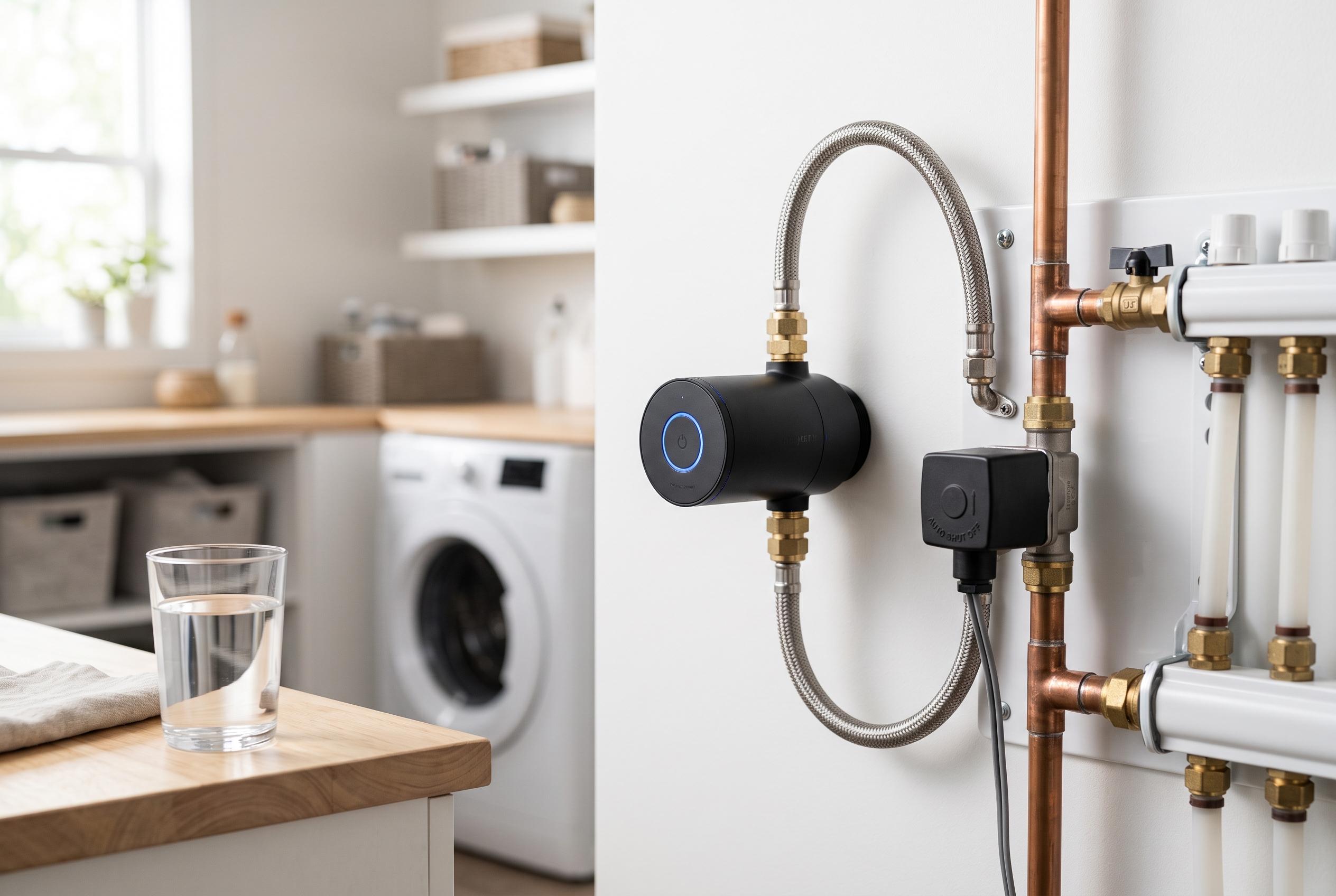

Advancements in smart leak detection now include automatic shut-off valves, offering homeowners a proactive solution to minimise water damage and enhance preventative maintenance.
Water leaks remain one of the most expensive and disruptive household failures. A slow drip can go unnoticed for weeks, yet still lead to mould, damaged timber and costly structural repair. That risk is why smart leak detection has moved from a niche convenience to a practical layer of home protection. As Best Buy notes, these systems are designed to spot trouble early and send alerts remotely, giving owners time to intervene before minor moisture becomes major damage.
The technology falls into two broad categories. Point sensors are small units placed in high-risk spots such as under sinks, behind toilets, beside washing machines and near boilers or sump pumps. When water reaches the contacts, they trigger an alarm and send a notification to a phone. Flow-based systems are more comprehensive: fitted to the main supply line, they watch the pattern of water use across the entire property and can flag unusual continuous flow, sudden spikes or behaviour consistent with a burst pipe. Smart Home Gear HQ says many buyers now weigh Wi-Fi, Zigbee and Z-Wave options depending on the rest of their connected-home setup.
For households that want more than an alert, automatic shut-off valves are the next step. These devices can close the main water supply when a leak is detected, limiting the spread of damage if nobody is home to respond. DCI Leak Detection says this makes them especially useful for second homes and holiday lets, where delays in response can be costly. The trade-off is complexity: while simple sensors are usually easy to install, shut-off systems often need professional plumbing work to be fitted safely and correctly.
Integration with wider smart-home platforms is another reason these products have become more attractive. Many detectors can connect to apps and, where compatible, to systems such as Alexa, Google Assistant or Apple HomeKit. That allows owners to build routines, such as flashing lights, sounding speakers or sending multiple notifications when water is detected in a particular room. Security.org says remote monitoring is one of the main benefits, because it lets owners check status and receive alerts even when they are away from home.
The limits of the technology are just as important as its benefits. Leak detectors can warn, but they do not repair the problem. If a sensor fires under a sink, the cause still has to be traced, whether it is a loose fitting, a failing valve or corroded pipework. TN Standard stresses that regular maintenance remains essential, including checking pumps, flushing water heaters and inspecting older plumbing. In other words, smart detection reduces risk, but it does not replace routine care or skilled repair work.
Consumer Reports has also highlighted that the best devices are not identical in performance, with differences in setup, alert quality and compatibility affecting how useful they are in practice. For many homes, the strongest protection comes from combining spot sensors with a flow monitor and, where justified, a shut-off valve. That mix offers early warning, broader oversight and automatic response. For homeowners seeking to protect property, reduce disruption and limit the cost of hidden leaks, smart plumbing is becoming a sensible investment rather than a novelty.
Disclaimer: This content is intended for informational purposes only. Readers are advised to exercise their own judgement, conduct due diligence, or consult a qualified expert before acting on any information provided.