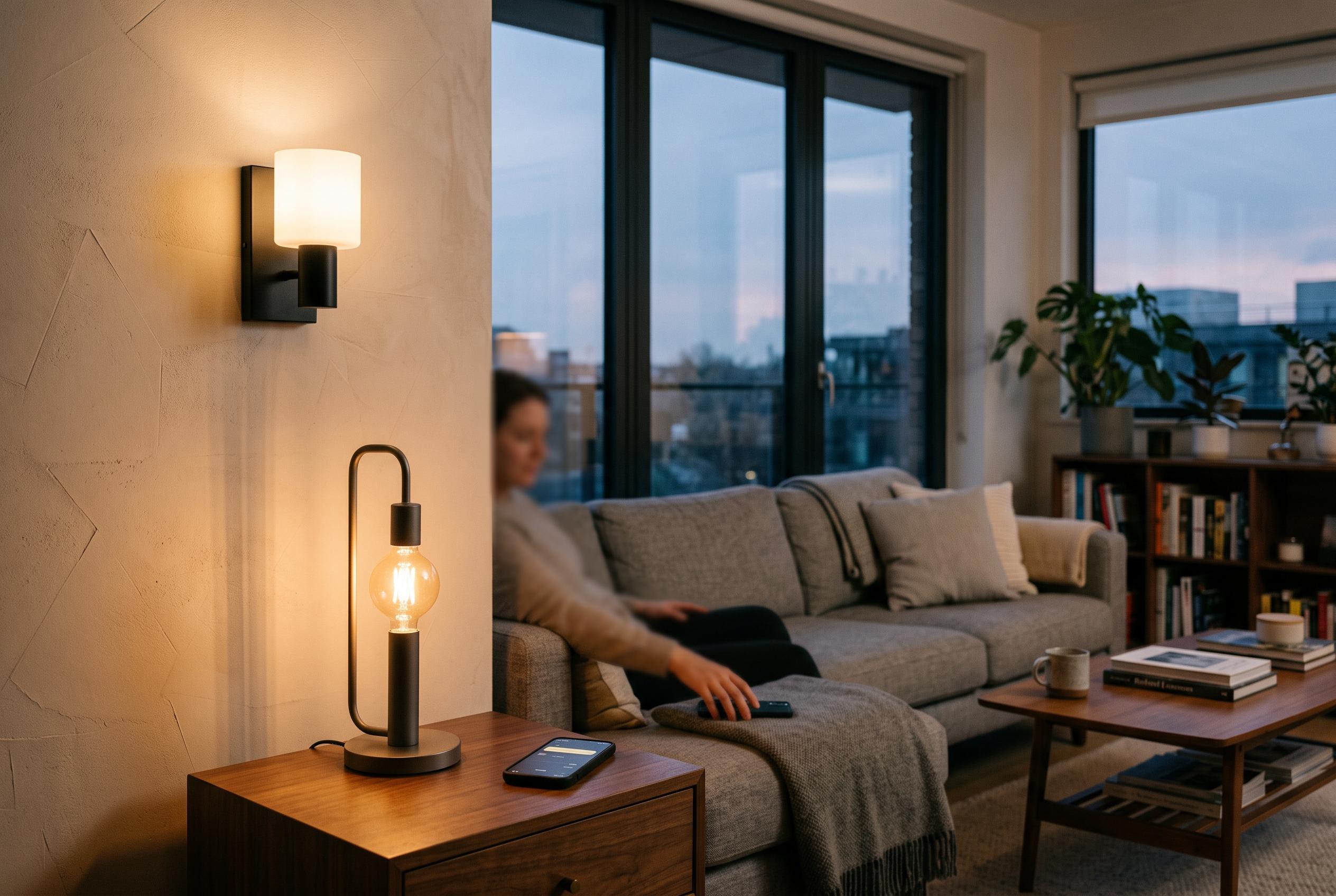

Advances in adjustable and smart lighting systems are transforming how homeowners create flexible, layered illumination suited to multiple uses within a single space.
Lighting has become one of the most flexible tools in interior design. The basic four-part framework still applies: ambient light sets the overall level, task light supports activities such as reading or cooking, accent light draws attention to features, and decorative light contributes visual character. The most effective schemes combine these layers so a room can shift from practical use to evening atmosphere without feeling static or overlit.
That is why the light bulb itself is no longer a simple purchase. Where shoppers once chose between a few wattages and finishes, today’s bulbs offer far more control over appearance and function. Adjustable and tunable lamps let users change brightness, alter colour temperature and, in some cases, switch between warm white, cool white and full colour. Industry guides note that this approach is especially useful where a single room has to serve several purposes during the day.
A key specification is colour temperature, usually shown in Kelvin. Lower numbers produce a warmer, softer white, while higher figures create a colder, clearer light. In practical terms, around 2700K to 3000K suits living spaces and bedrooms, while brighter temperatures are more appropriate for work zones. That flexibility is now common in retail bulbs. Globe Electric’s Ambiance Select A19 offers five settings from 2700K to 5000K, while EcoSmart’s Selectable A19 extends that range to six temperatures up to 6500K.
Brightness control matters just as much. EcoSmart’s Universal Select allows users to choose outputs equivalent to 40, 60, 75 or 100 watts, with the light output measured in lumens rather than watts. That distinction is important: watts indicate energy use, while lumens show how much light a bulb actually produces. For that reason, “60-watt equivalent” remains a useful shorthand, but lumens are the better guide when comparing products.
Smart bulbs add another layer of control. Philips Hue’s Essential line combines tunable white light, colour, app control, voice control and dimming, while Philips WiZ offers tunable white, scheduling and app control without a separate hub. These systems can be programmed for different scenes, such as arrival, dinner, movie watching or reading. But lighting still depends on restraint and compatibility. Dimmers do not work equally well with every LED, smart bulbs usually need constant power, and enclosed fittings may require lamps designed for that use. The result is that good lighting is as much about specification as it is about style.
Disclaimer: This content is intended for informational purposes only. Readers are advised to exercise their own judgement, conduct due diligence, or consult a qualified expert before acting on any information provided.