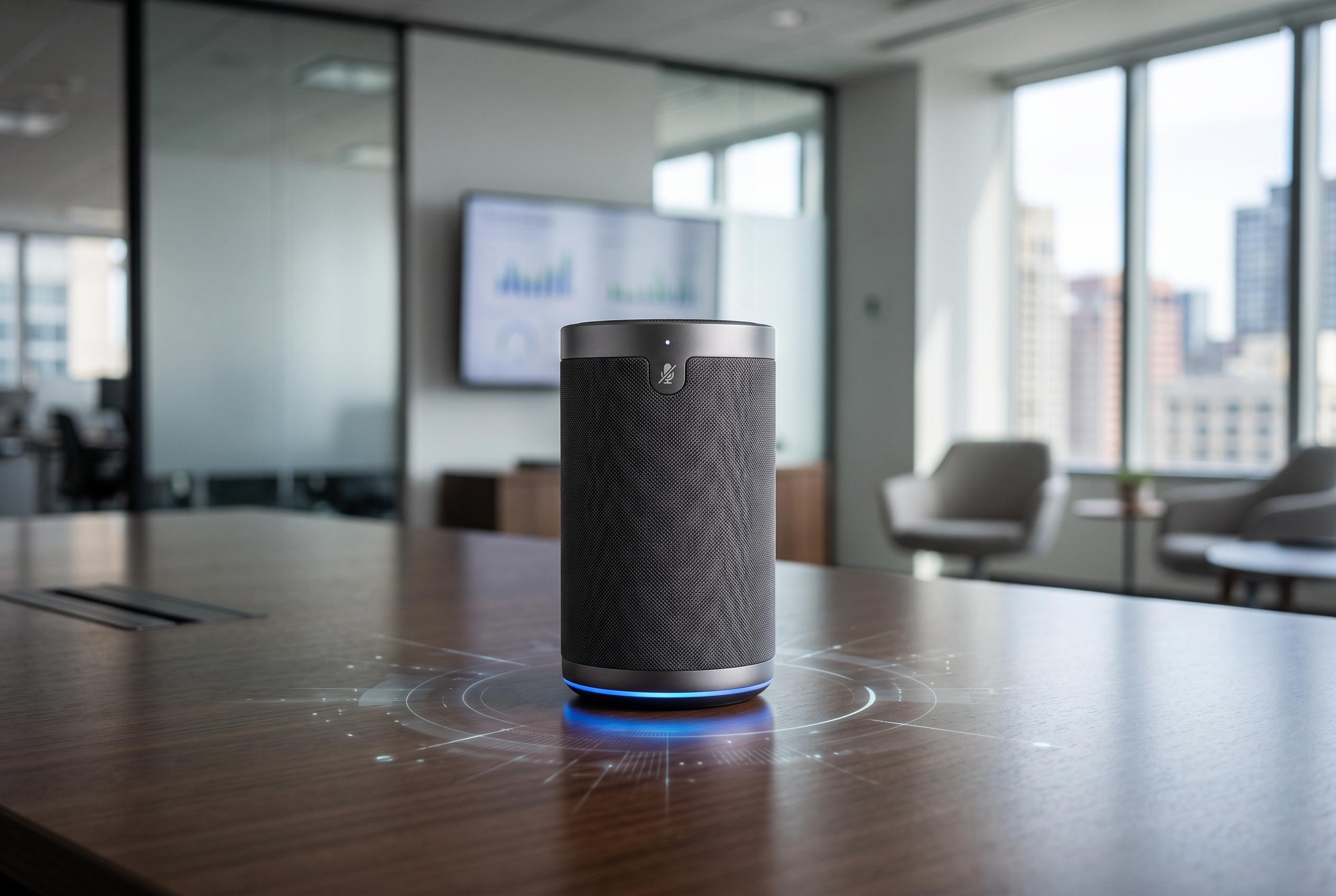

The smart speaker industry is experiencing rapid growth, driven by enhanced AI, software integration, and industry expansion into business settings, with privacy concerns remaining a key challenge.
Smart speakers have moved from novelty gadgets to central controls for the connected home, and market researchers say the category is still expanding quickly. Grand View Research estimates the market at $15.8bn in 2025, rising to $18.1bn in 2026 and then to $48.6bn by 2033, which implies a compound annual growth rate of 15.1% from 2026 to 2033. The shift reflects broader use of voice technology across household routines, from music playback to lighting, heating and security.
The growth case now depends less on the speaker itself and more on the software layered on top of it. Grand View Research says smart-home integration, AI improvements and commercial deployment are the main drivers, while Amazon’s Alexa ecosystem remains the largest single revenue segment, with a 40.4% share in 2025. Amazon has also pushed Alexa+ into Bose speakers and soundbars, where the assistant is designed to offer more natural conversations and tighter device control. According to Amazon and Bose, the upgraded service is available free to Prime members on compatible devices, while recent reporting has said user engagement has risen sharply since launch.
That push towards more conversational assistants is also changing where the value sits. Hardware still accounts for most revenue, but the fastest-growing opportunity is in software, including voice platforms, AI services and app integrations that can generate recurring income. A separate trend is the expansion of smart speakers into business settings. Hotels, healthcare providers and offices are using voice-enabled devices for guest services and operational tasks, giving commercial demand a faster growth profile even though homes remain the largest market.
Regional and competitive dynamics are also shifting. Grand View Research says North America held the biggest share in 2025, at 38.2%, while Asia Pacific is expected to grow fastest as incomes rise and local-language assistants become more capable. The main constraint remains privacy and security, with regulators and consumer groups continuing to scrutinise always-on microphones, cloud storage and data use. That tension is likely to shape the next phase of the market: companies can win share by improving AI and convenience, but they will also need to convince users that voice control does not come at the expense of trust.
Disclaimer: This content is intended for informational purposes only. Readers are advised to exercise their own judgement, conduct due diligence, or consult a qualified expert before acting on any information provided.