
The traditional AV receiver’s role is evolving as major manufacturers embed advanced audio capabilities into televisions and streaming platforms, simplifying setup and challenging legacy audio hierarchies.
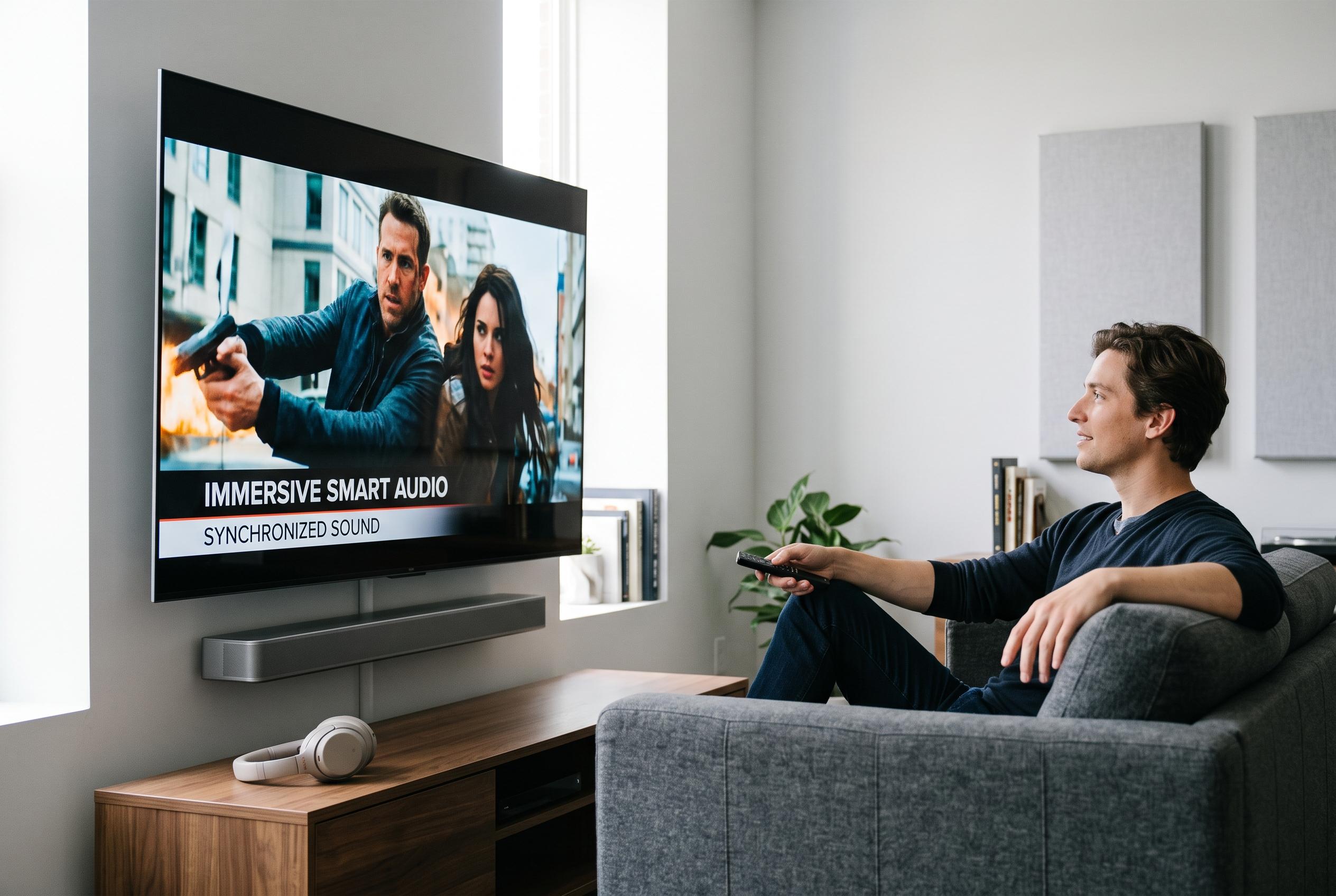
The home theatre hierarchy is shifting. For years, the AV receiver sat at the centre of the room, taking in every source, decoding every soundtrack and managing speaker timing, bass and room correction. That role is not vanishing, but it is being challenged by televisions, soundbars and streaming platforms that now do far more than merely display a picture.
Samsung, LG, TCL and Sony are all pushing audio intelligence into the television itself, while Apple and Google are moving the control point into their streaming hardware. The result is a quieter upheaval: fewer boxes, fewer cables and less setup friction for people who want surround sound without building a traditional component system.
Samsung has gone furthest in turning the TV into an active part of the audio chain. The company says its 2026 audio line expands Q-Symphony, allowing compatible televisions to coordinate with multiple Samsung audio devices at once, including soundbars and Wi-Fi speakers. According to Samsung, SmartThings also helps manage playback and audio settings, reinforcing the TV’s role as a system controller rather than a passive screen.
Dolby Atmos FlexConnect points in a more open direction. Dolby says the technology is designed to let wireless speakers be placed freely around a room, with the television or sound system automatically calibrating the layout and adjusting playback accordingly. LG has embraced that approach in its 2026 Sound Suite, according to TechRadar, with FlexConnect-enabled soundbar, speaker and subwoofer products that can scale from a simple setup to a more elaborate multi-channel arrangement. The company has also brought the feature to some recent OLED models, including a free upgrade for selected 2025 sets, which effectively turns the television into the hub of a modular audio system.
Sony’s approach is narrower but still significant. On compatible BRAVIA systems, Acoustic Center Sync uses the television as part of the centre channel so dialogue appears to come from the screen itself. That does not remove the need for external speakers, but it does show how the TV is increasingly being treated as an element in the soundstage rather than an endpoint for the signal.
Apple and Google are taking the same idea through their streaming ecosystems. Apple TV 4K can work with HomePods as a stereo pair and, with eARC support, can route audio from other connected devices through that setup. Google TV Streamer can pair with Google Home speakers and add spatial processing, although Google has not framed that configuration as a full Dolby Atmos system. The common thread is clear: the centre of gravity is moving away from the receiver and towards software-defined systems that are simpler to live with, even if they remain less flexible than a proper AVR with passive speakers.
That flexibility still matters. A conventional receiver remains the better choice for anyone who wants full control over speaker choice, amplification, bass management, room correction and source switching. It also still wins on scale and dynamics. But for many households, the appeal of a television-led or platform-led system is obvious: less wiring, easier calibration and far less technical overhead. The AV receiver is not disappearing. It is being pushed back into the space where enthusiasts and custom installers still need it most.
Disclaimer: This content is intended for informational purposes only. Readers are advised to exercise their own judgement, conduct due diligence, or consult a qualified expert before acting on any information provided.