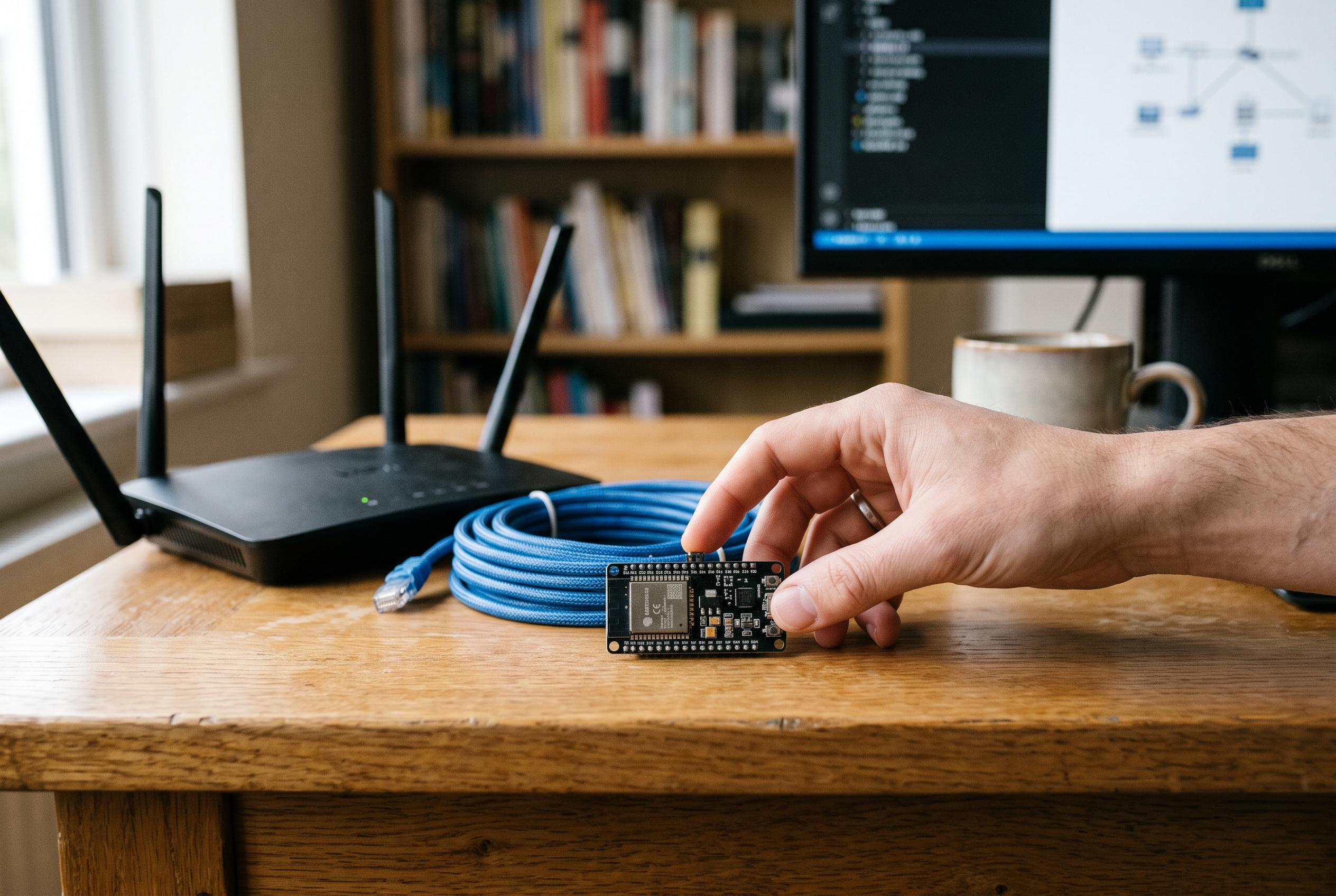

Open-source firmware lets a low-cost ESP32-C3 board block more than half a million advertising and tracking domains across a home network, though it cannot stop every kind of advert.
A low-cost ESP32-C3 board has attracted unusual attention in China’s maker and consumer-tech communities after users claimed it can suppress advertising across an entire home network with open-source firmware. The project, known as esp32-c3-adblock, turns the microcontroller into a DNS sinkhole: when devices ask for the address of a known advertising or tracking domain, the board refuses the request or returns a non-routable address, preventing the content from loading.
The appeal is partly financial and partly technical. According to coverage from CNX Software and other hardware sites, the project is designed to run on a board that can cost only a few dollars, without the extra memory modules that more complex single-board computers often need. The firmware stores blocklists as compact 40-bit hashes in flash memory rather than keeping full domain lists in RAM, which lets the board hold more than half a million entries while using only modest memory. Reports on the project say a lookup takes about 10 milliseconds and the firmware uses roughly 50KB of RAM.
That makes the device appealing for households that want network-wide filtering without installing software on every phone, television or laptop. Because the filtering happens at DNS level, it can cover many devices at once as long as their DNS settings point to the board. It also avoids the permissions sometimes required by app-based blockers that rely on accessibility access or modified software. In that sense, the ESP32 approach is attractive as a small, local alternative to cloud-based filtering.
The limitations are just as important. DNS blocking cannot remove every type of advert, because many apps hard-code promotional elements inside the application itself or serve ads and content from the same domain. In those cases, blocking the domain would either fail or break legitimate content. The system also creates a single point of failure: if the board stops working, devices that depend on it for DNS resolution may lose internet access unless a fallback resolver is configured. For that reason, the project is best understood as a network filter, not a universal advertising cure.
That distinction is reflected in how enthusiasts are using it. Tech coverage describes the ESP32-C3 setup as a low-cost, open-source replacement for a Pi-hole-style blocker, or as a backup filter that can keep working during reboots or outages on a larger network. For users with an OpenWrt router or a dedicated home server, more capable software still offers finer control and faster responses. For anyone with a spare development board, though, the project is a neat example of how far a tiny chip can be pushed when the goal is simply to block known tracking and advertising domains.
Disclaimer: This content is intended for informational purposes only. Readers are advised to exercise their own judgement, conduct due diligence, or consult a qualified expert before acting on any information provided.