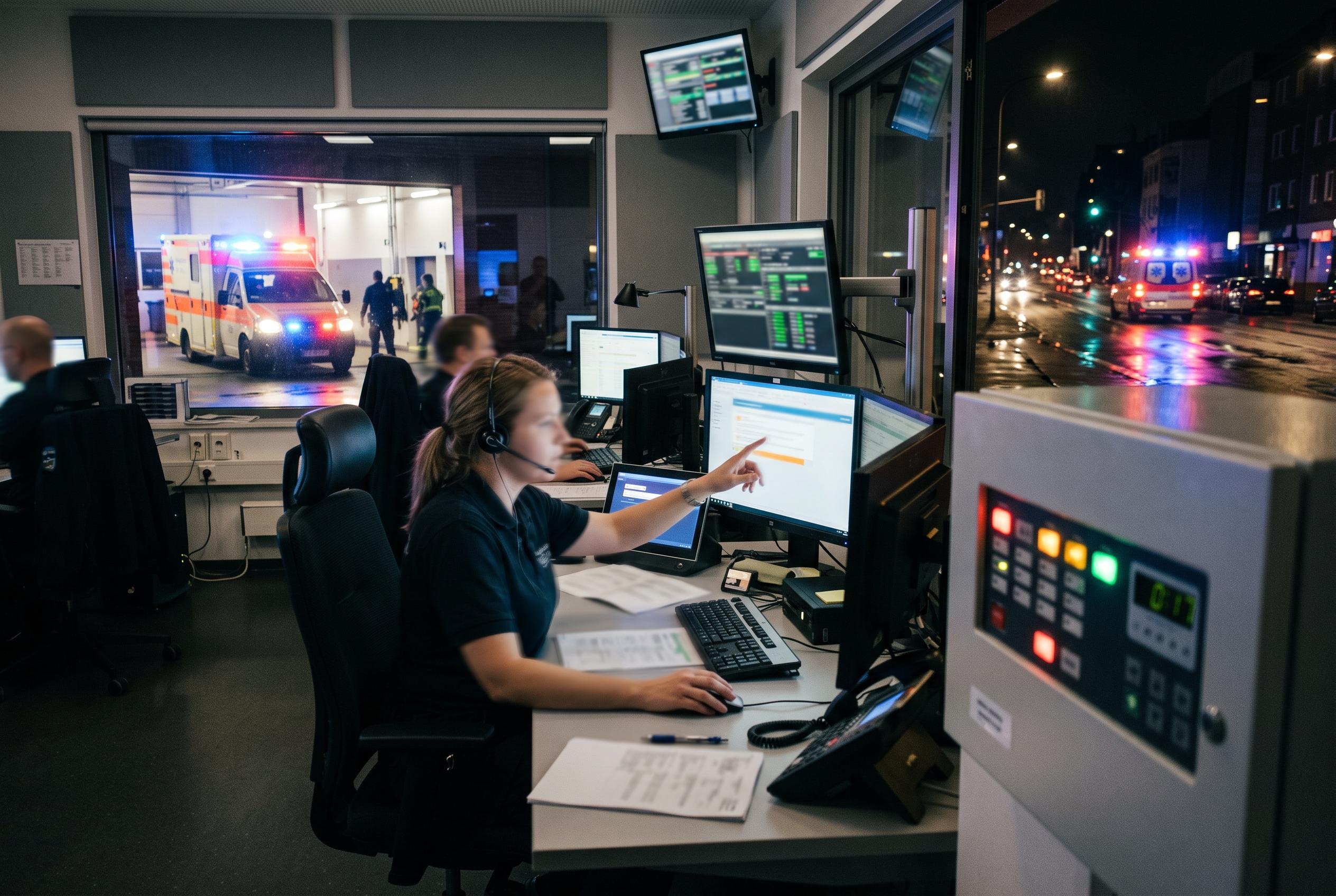

While alarms can sound instantly, the path to help involves multiple stages, including detection, verification, dispatch, and travel time, highlighting the importance of comprehensive system design and efficient communication for faster responses.
A security alarm can be heard in seconds, but the path from trigger to help is more complicated. As Fluent Home explains, there is no single universal “response time” for every incident. Instead, the process usually unfolds in stages: a sensor detects activity, the monitoring centre receives the signal, an operator reviews the account details, emergency services are contacted if needed, and responders then travel to the property.
That sequence matters because each step has its own delay. A door contact, motion detector, smoke alarm, carbon monoxide sensor or flood device may all trigger different workflows. In a professionally monitored system, trained operators assess the signal, follow the property’s emergency instructions and decide whether to call the premises, contact listed emergency numbers or request dispatch. But the final arrival time always depends on local conditions, including distance, traffic, weather and emergency service workload.
Industry guides on alarm monitoring make the same distinction between monitoring-centre handling, dispatch time and physical arrival on site. That is why police response to an unverified alarm can be slower than many customers expect. LegalClarity notes that unconfirmed calls are often treated as lower priority, while verification can help improve the chances of a faster police response. In practical terms, that distinction matters because a burglary may be over before a patrol unit arrives.
Video verification can improve the quality of the information sent to the monitoring team. Witness LLC says video context can help an operator decide whether a signal reflects a real threat, while other guidance points out that confirmed alarms are more likely to be treated as priority calls. That does not remove the limits of cameras, which cannot cover every angle or resolve every situation, but it gives responders and operators more evidence than an audible siren alone. Fluent Home also argues that AI-assisted deterrence and 24/7 verification can help professionals react more decisively when suspicious activity is visible.
Several factors influence how quickly a system can move from alert to action. Reliable communication paths, accurate contact details, correct passcodes and clear site instructions can all reduce avoidable delay. So can sensible installation and sensible account management. Location remains important as well: properties in rural areas may face longer travel times than those close to a station, and local call volume, severe weather and major incidents can all affect service availability. For smoke and carbon monoxide events, the response path is usually faster and more urgent, while flood sensors and connected shut-off controls are designed to limit damage rather than summon emergency crews.
The most effective systems are built before an incident occurs. Professional monitoring, properly placed sensors, updated contact lists and a simple household or business response plan all make the process smoother. Small businesses, in particular, benefit from having named keyholders and clear after-hours instructions, so that alarm handling does not depend on one person seeing a notification in time. For property owners comparing systems, the useful question is not whether a provider can promise a fixed arrival time. It is whether the system can detect an event quickly, communicate it clearly and give trained people enough information to respond well.
Disclaimer: This content is intended for informational purposes only. Readers are advised to exercise their own judgement, conduct due diligence, or consult a qualified expert before acting on any information provided.