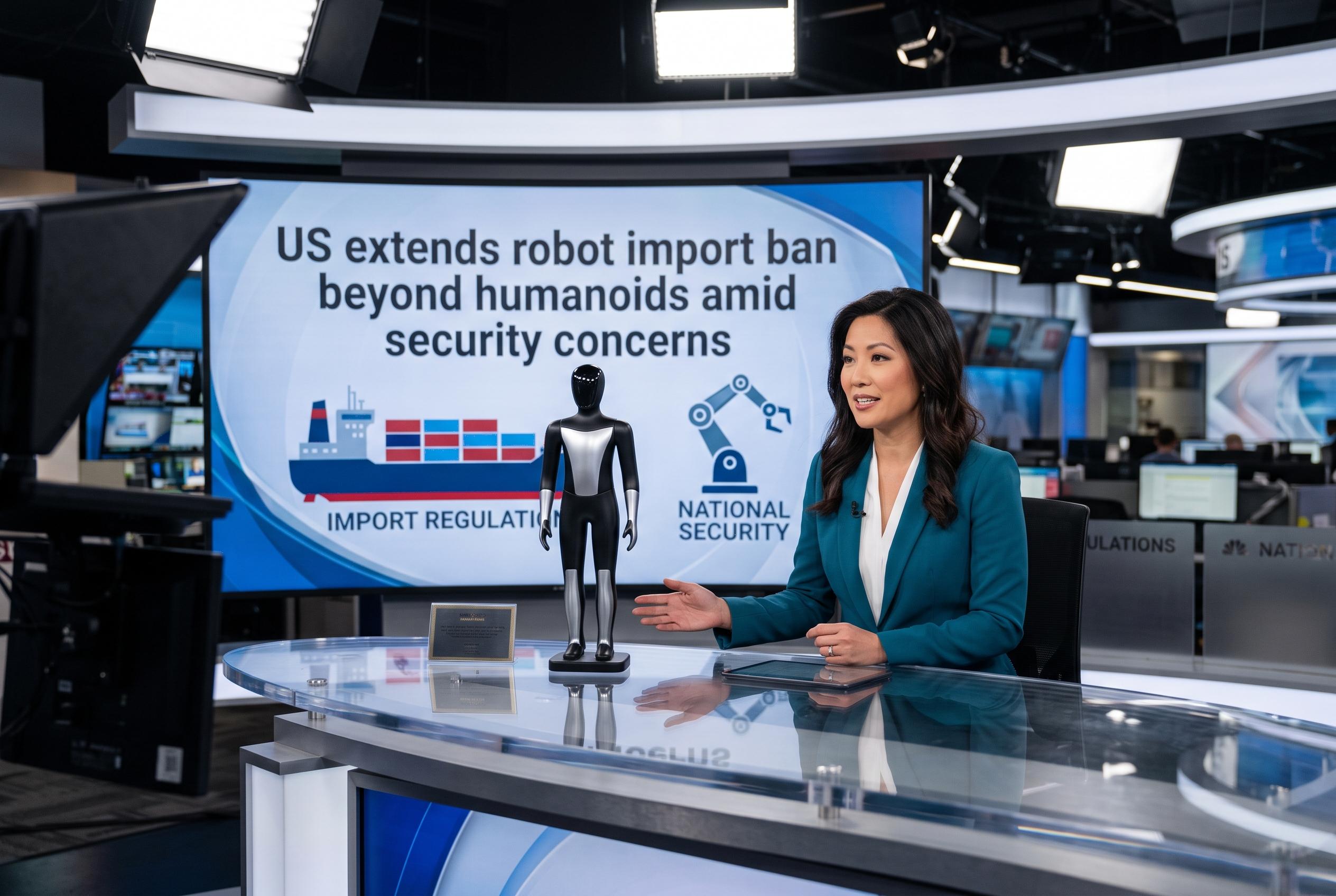

The FCC’s new rules threaten a wide range of foreign-made robots, including consumer devices like robot vacuums, raising industry concerns over security and market access.
The Trump administration’s latest technology crackdown appears to be reaching well beyond humanoid machines. According to reports from The Verge and other US outlets, a Federal Communications Commission decision now threatens imports of certain foreign-made robots on national security grounds, and the scope is broad enough to sweep in consumer products such as robot vacuum cleaners.
The FCC has added advanced robotic devices to its Covered List, a register of products and services considered risky under the Secure Networks Act. Reuters-style reporting from the Washington Post and UPI said the agency’s concern is that such machines could be used for surveillance or exploited by foreign intelligence services. The new language is not limited to walking humanoids. It also covers some quadruped and wheeled robots, widening the policy far beyond the category that first drew attention.
That breadth is what has alarmed industry observers. Tom’s Hardware reported that the rule can catch any ground-based robot weighing more than 4.4lb, fitted with environmental sensors, network connectivity of at least 200kbps and autonomous software. In practice, that could include many robot vacuums, as well as autonomous lawn mowers and delivery robots. Sean Hollister of The Verge argued that the approach is blunt, because it focuses on manufacturing thresholds rather than security performance.
The practical effect could be significant in the United States, where many leading robot vacuum brands are Chinese-made. Robotics International said companies such as Roborock, Ecovacs and Dreame account for a large share of the market, and that some models may be forced off sale unless manufacturers can show compliance. The rule is said to apply only to future imports, so devices already in homes are not affected. Even so, the measure may also ensnare American firms if they do not meet the domestic-production threshold cited in the reporting.
There is a genuine security problem behind the policy. Reports have documented hostile control of connected cleaning robots, including a 2024 incident involving an Ecovacs device and a separate case this year in which thousands of DJI units were reportedly hijacked. But critics say the FCC’s response does not directly fix weak security. A company can still sell in the US if it manufactures enough of its product locally, even if the software remains vulnerable. That leaves consumers facing a narrower market, with no guarantee of better protection.
Disclaimer: This content is intended for informational purposes only. Readers are advised to exercise their own judgement, conduct due diligence, or consult a qualified expert before acting on any information provided.