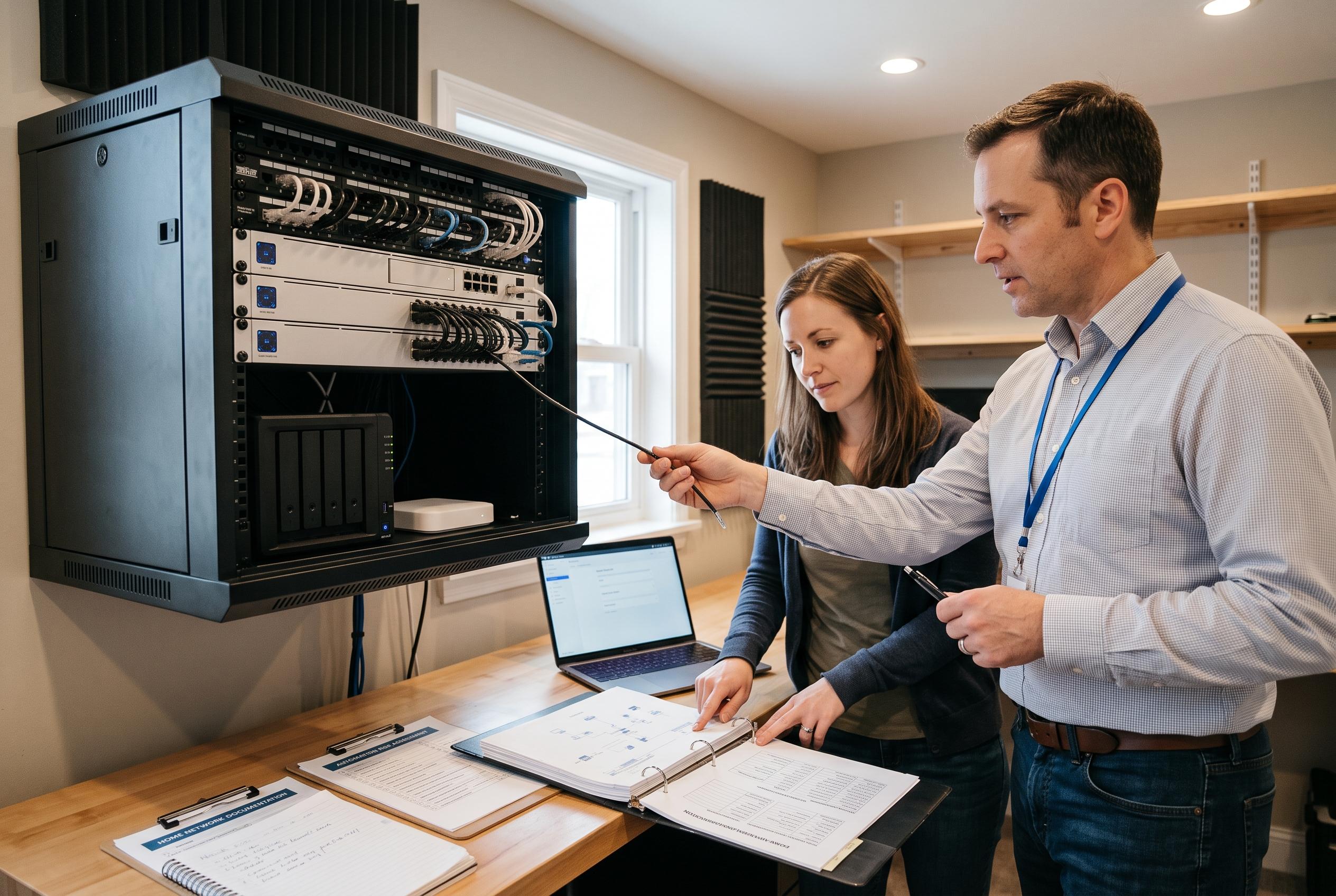

An in-depth look at how AI can serve as a helpful consultant for home network management, emphasising the vital role of documentation, privacy, and careful scoping to ensure security and resilience.
Artificial intelligence is increasingly being used for everyday productivity, but one of its more practical uses may be closer to home: reviewing a domestic network. In the case described by HomeTechHacker, the value was not in letting AI configure routers or touch firewall rules, but in using it as a second opinion on an already well-documented setup. That distinction matters. AI can help experienced users test assumptions, spot blind spots and improve record-keeping, but it should remain advisory rather than operational.
The exercise worked because the network had been documented carefully. Rather than handing over passwords, keys or configuration backups, the author shared a diagram that brought together topology, devices, SSIDs, switch ports, IP addresses and key services. That level of clarity gave the AI enough context to assess the design without direct access. It also exposed an important principle: if documentation is too thin for an AI review, it is probably too thin for a human handover or a future recovery exercise.
Privacy discipline was central to the process. Sensitive files were deliberately withheld, and the author recommended using temporary or privacy-focused chat modes where available. That caution aligns with wider guidance on AI security. Best-practice advice from PuppyOne and PipeLab stresses that AI systems should be tightly scoped, given limited access, thoroughly logged and tested before being trusted with any meaningful operational role. In other words, the model may review the network, but it should not be allowed to run it.
The first substantial recommendation was to move from a single-subnet design with separate wireless networks to proper segmentation using VLANs. That would create cleaner isolation between trusted devices, IoT kit, cameras, guests, servers and management interfaces. It is a sound architectural recommendation, but not always a practical immediate change. In this case, the author chose to weigh the cost of replacing functioning hardware against the theoretical gains of a more elegant design, which is a sensible trade-off for a home environment.
Some of the AI’s suggestions were less about architecture and more about resilience. It identified the core switch as a single point of failure and urged planning for faster Ethernet, including 2.5GbE or better, as workloads such as backups, storage, virtualisation and media traffic grow. That is consistent with the direction of the broader networking market. Products such as NetBox Copilot and Aviz Networks are also pushing AI into infrastructure management, but mainly as a tool for faster reasoning, documentation and operations rather than autonomous control. For home users, the lesson is similar: use AI to improve planning, not to remove judgement.
The most useful findings were arguably documentary rather than technical. The AI recommended versioning diagrams, colour-coding device types, splitting large drawings into clearer layers and creating a proper runbook for disaster recovery. It also spotted documentation drift, including duplicated IP addresses that reflected old data rather than active conflicts. That kind of error is easy to miss in a network that has evolved over years. It is also where AI can be genuinely helpful: not by inventing a new design, but by checking whether the record of the existing one still matches reality.
Another recurring theme was validation. The AI praised the overall structure, recognised that security had been treated as a priority and identified several practices that were already in place, such as camera isolation and automated backups. That matters because a useful audit should confirm what is working, not merely list what is missing. Home network reviews often fail when they default to generic advice. A better review distinguishes between urgent problems, future upgrades, already-completed work and changes that are not worth the added complexity.
The broader message is that AI can act as a thoughtful consultant if it is given the right material. A well-prepared diagram, a clear prompt and a willingness to challenge assumptions can turn an ordinary chat session into a useful architectural review. It will not understand budget limits, household priorities or the real-world compromises behind every design choice. But it can ask better questions than most people ask themselves after living with the same network for years. That is where its value lies.
Disclaimer: This content is intended for informational purposes only. Readers are advised to exercise their own judgement, conduct due diligence, or consult a qualified expert before acting on any information provided.