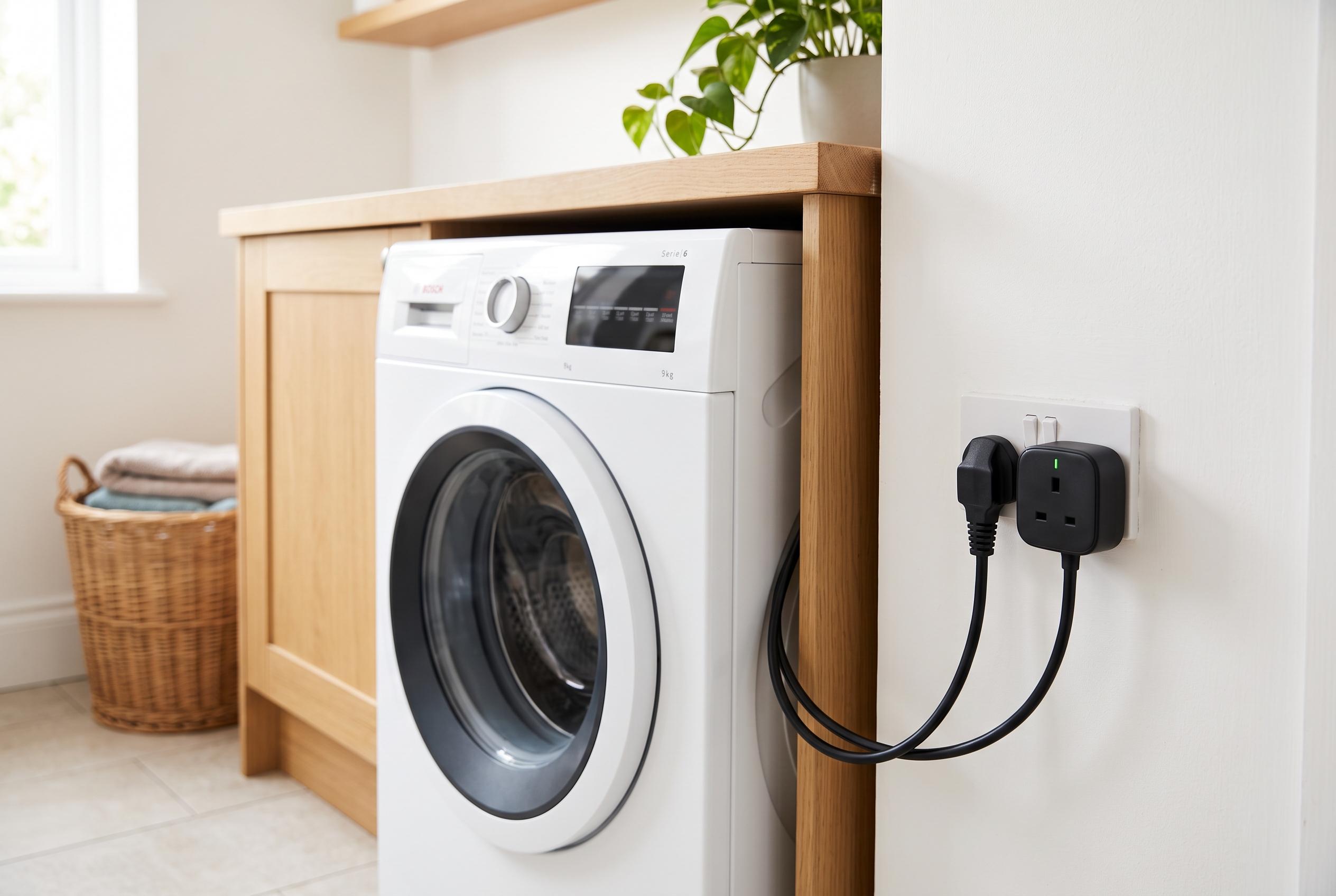

A simple smart plug can effectively monitor washing machine cycles by analysing power consumption stages, offering a cheaper and more reliable alternative to expensive smart washers, though with some limitations on fault detection and control.
A smart washer is often sold as a convenience upgrade, yet the practical gains can be modest. XDA Developers argues that a far cheaper route is to leave a working machine in place and add a power-monitoring smart plug instead. The idea is simple: a washer’s electricity use changes in recognisable stages, so the plug can act as a local cycle sensor without depending on a manufacturer app, cloud service or subscription model.
That approach rests on the fact that a washing machine’s power draw is usually more informative than its motion or noise. According to the XDA Developers piece, an idle machine sits at only a few watts, filling and soaking uses slightly more, heating can rise into the kilowatt range, agitation and tumble land at a few hundred watts, draining sits lower again, and the final drop back to near-idle signals the end of the cycle. Practical Home Automation similarly recommends using a smart plug first as a meter, watching a few wash cycles before setting notification thresholds that only fire once the load has stayed at low power for long enough.
There are limits, however. Repair Me Yourself notes that a smart plug only measures total power use, so it cannot tell which internal component is active or identify faults that do not change consumption in an obvious way. Safety guidance from Tom’s Guide, T3 and Smart Home Matrix also warns against treating standard smart plugs as universal appliance controllers, particularly for higher-draw devices and equipment that is better served by dedicated circuits or manufacturer-approved controls. In other words, the method is useful for monitoring, but it is not a licence to ignore load ratings or appliance manuals.
Used carefully, the setup can be more than a simple finished-cycle alert. XDA Developers says a Home Assistant state machine can separate idle, running, finishing and clean-but-unemptied states, cutting down on false notifications. The same data can drive spoken announcements, flashing lights, follow-up reminders if the door stays closed too long, and cost tracking through Home Assistant’s energy dashboard. For many households, the appeal is not novelty but reliability: local telemetry on an ordinary appliance, at a fraction of the price of a connected washer.
Disclaimer: This content is intended for informational purposes only. Readers are advised to exercise their own judgement, conduct due diligence, or consult a qualified expert before acting on any information provided.