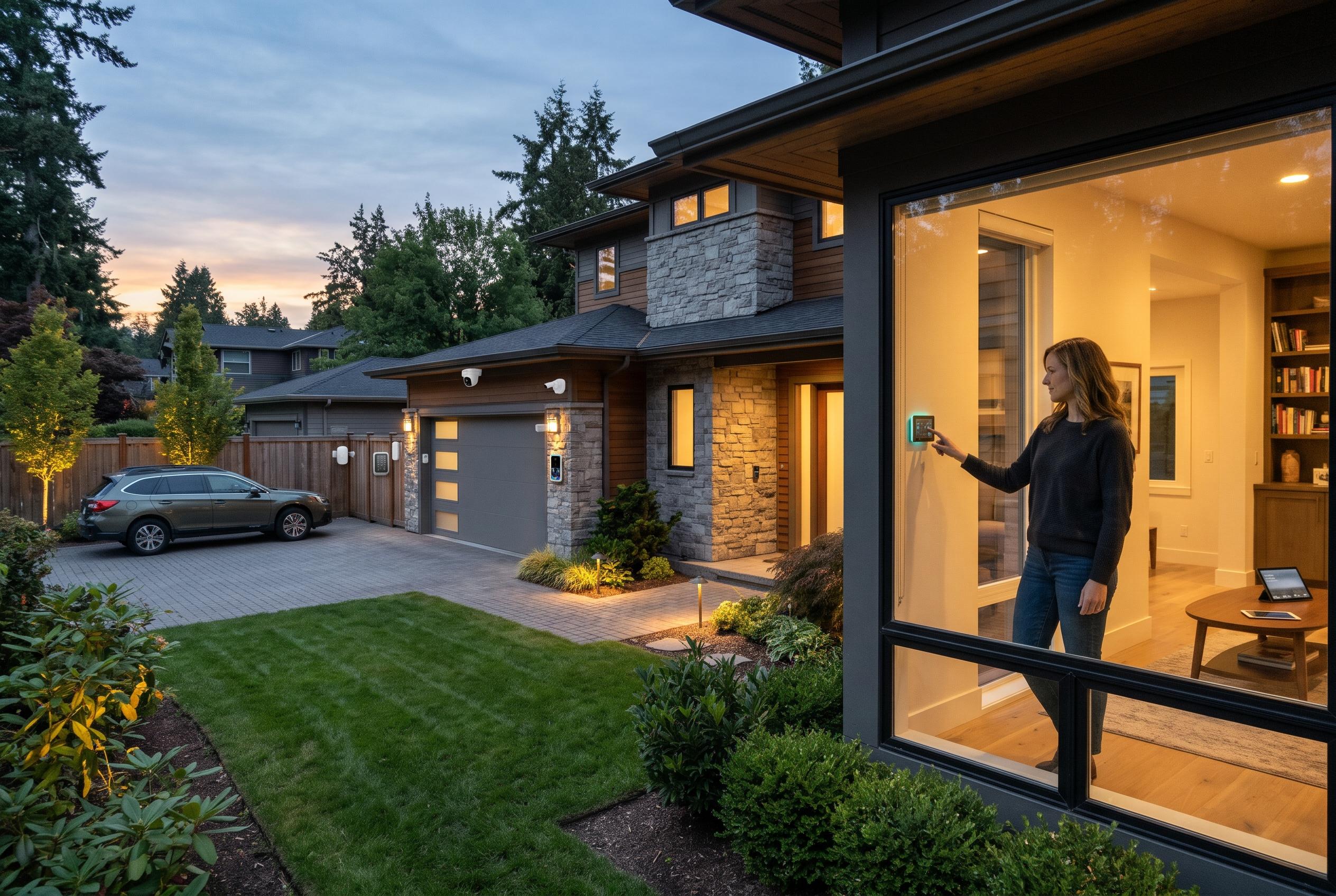

Z-Wave Long Range can connect sensors, switches and relays across garages, gates and outbuildings, but its North American availability, setup requirements and lack of device-to-device repeating make careful planning essential.
Z-Wave Long Range is designed for the parts of a property where conventional mesh networking often becomes unreliable. According to MicrocontrollersLab, LR devices do not rely on hops through repeaters; instead, they communicate directly with the controller in a star-style network, which is why they are aimed at detached garages, barns, gates, mailboxes and other distant endpoints. The guide also notes that LR is not a replacement for classic Z-Wave mesh, because LR devices do not repeat for one another and indoor mains-powered devices still have a role in extending coverage inside the main house.
The controller is the critical purchase. Zooz says its ZST39 LR stick supports Long Range and classic Z-Wave, and independent reviews of the device describe it as well suited to Home Assistant with Z-Wave JS, provided the user is comfortable with manual configuration. Those reviews also repeat two practical cautions: firmware updates are not universally simple across platforms, and a USB 3 extension cable is advisable to reduce interference from the host computer. MicrocontrollersLab similarly points to the ZST39 as the default choice for DIY users, while also highlighting dual-protocol alternatives such as Aeotec’s Z-Stick 10 Pro for homes that mix Z-Wave and Zigbee, and HomeSeer’s SmartStick G8 for users already invested in that ecosystem.
Once the controller is in place, the strongest use cases are battery sensors and devices at the edge of the property. Zooz’s own material on the ZSE41 contact sensor and ZSE44 climate sensor stresses that LR is intended for outbuildings, gates and remote enclosures, while the guide points to outdoor motion sensing and climate monitoring as especially sensible applications. That is consistent with the broader technical case for LR: with no intermediate hops, a battery sensor should spend less time negotiating routes and more time doing its actual job. The trade-off is that many of these devices only realise their full potential when they are paired with an LR-capable hub and included in the correct mode from the outset.
The same logic applies to plugs, switches, remotes and relays. MicrocontrollersLab’s buying list includes outdoor plugs for lights and pumps, in-wall dimmers and on/off switches for barns or studios, a battery remote for scenes and a hidden relay for circuits that should stay out of sight. Review data from third-party sellers also suggests that the Zooz ZEN77 dimmer, ZEN76 switch and Minoston outdoor plug are among the more established options, while Shelly’s Wave 1 US LR is aimed at users who need a compact relay behind an existing switch. In each case, the underlying rule is the same: use LR where distance matters, and preserve classic mesh where repeaters are useful indoors.
There are, however, limits that buyers should treat as non-negotiable. MicrocontrollersLab notes that Z-Wave Long Range is currently a North America feature, that the quoted 1,300ft-class figures are open-air claims rather than real-world guarantees, and that walls, metal siding and terrain will reduce performance. The guide also warns that many devices can operate in either LR or mesh mode, so the decision is usually made during inclusion. That makes planning important: an indoor plug may be more valuable to the mesh if joined conventionally, whereas a remote sensor, gate contact or driveway motion detector is often better served by LR. For buyers evaluating the technology, the most important conclusion is simple: Long Range is not a universal upgrade, but it is highly effective when the physical layout of a property has outgrown a traditional Z-Wave mesh.
Disclaimer: This content is intended for informational purposes only. Readers are advised to exercise their own judgement, conduct due diligence, or consult a qualified expert before acting on any information provided.