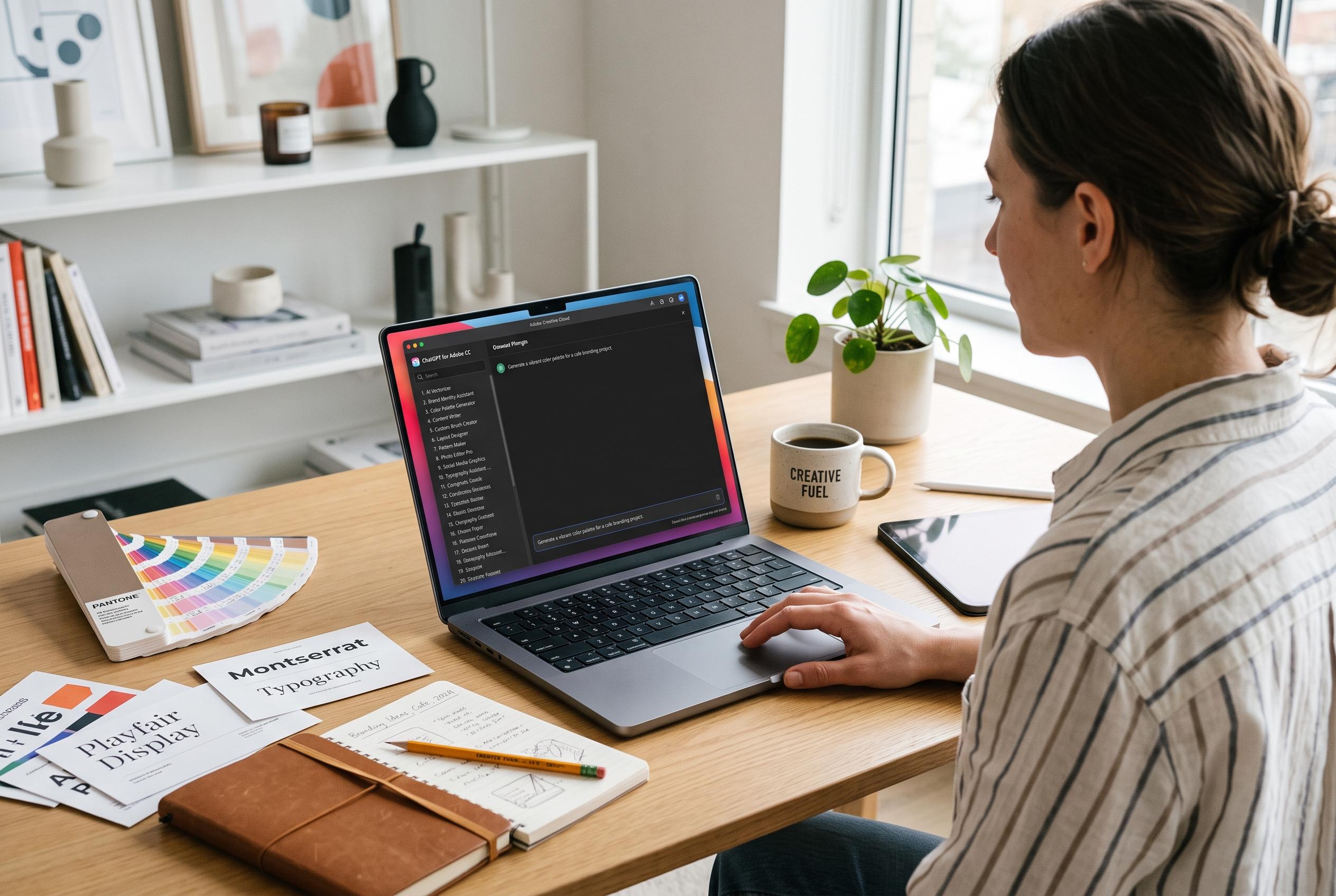

Adobe unveils a major upgrade to its creative software ecosystem by embedding more than 70 functions within a new ChatGPT plugin, offering free entry-level tools that challenge Canva and redefine how users access design technology.
Adobe has opened a wider route into its creative software by placing a large part of its toolset inside ChatGPT, allowing users to access more than 70 functions without paying for a Creative Cloud subscription. The integration, launched on August 6, brings Photoshop, Lightroom, Premiere, Illustrator, InDesign, Acrobat, Firefly, Express and Adobe Stock into a single ChatGPT plugin. In practice, that means a user can describe a task in plain language and let ChatGPT direct the request to the relevant Adobe application.
The company is positioning the move as a blend of accessibility and funnel strategy. Basic use is free, while users who sign in to an Adobe account can unlock more advanced Firefly features and cloud storage. That approach puts Adobe into closer competition with Canva, which has built a large audience by offering faster, lower-cost creative tools to casual users and small businesses. According to reporting on Adobe’s product strategy, the company is now trying to compete more directly at the point where many users first encounter design work: inside a chat interface rather than a desktop application.
The technical hinge is the Model Context Protocol, or MCP, which lets ChatGPT route a prompt to the correct Adobe service without the user selecting a specific app. Adobe says the system can chain tools together automatically, such as turning a batch of campaign images into a consistent set of assets, condensing video into short-form clips or generating formatted PDFs from spreadsheets. The plugin works on the web, desktop and mobile versions of ChatGPT, and Adobe says it is at its best in ChatGPT Work and Codex.
Adobe is also drawing a clear line around what the plugin is not. Forest Key, the company’s vice-president of Firefly and agentic AI, told Engadget that the ChatGPT integration is not a substitute for Adobe’s flagship desktop software. That distinction matters for professionals who need pixel-level control, advanced compositing or other hands-on editing tools that remain native to the company’s core applications. Adobe says the plugin is designed for speed, ideation and routine production, not for replacing full creative workflows.
The launch also reflects a broader shift in Adobe’s business. The company has said its AI-powered annual recurring revenue has risen sharply and that it is adjusting growth priorities as it pushes more users into its ecosystem through free entry points. OpenAI, meanwhile, is using Adobe to deepen ChatGPT’s position as a general-purpose work platform. Adobe follows earlier integrations from other creative tools, including Canva, but its offer is more closely tied to professional production software and the underlying engines that power it.
Disclaimer: This content is intended for informational purposes only. Readers are advised to exercise their own judgement, conduct due diligence, or consult a qualified expert before acting on any information provided.