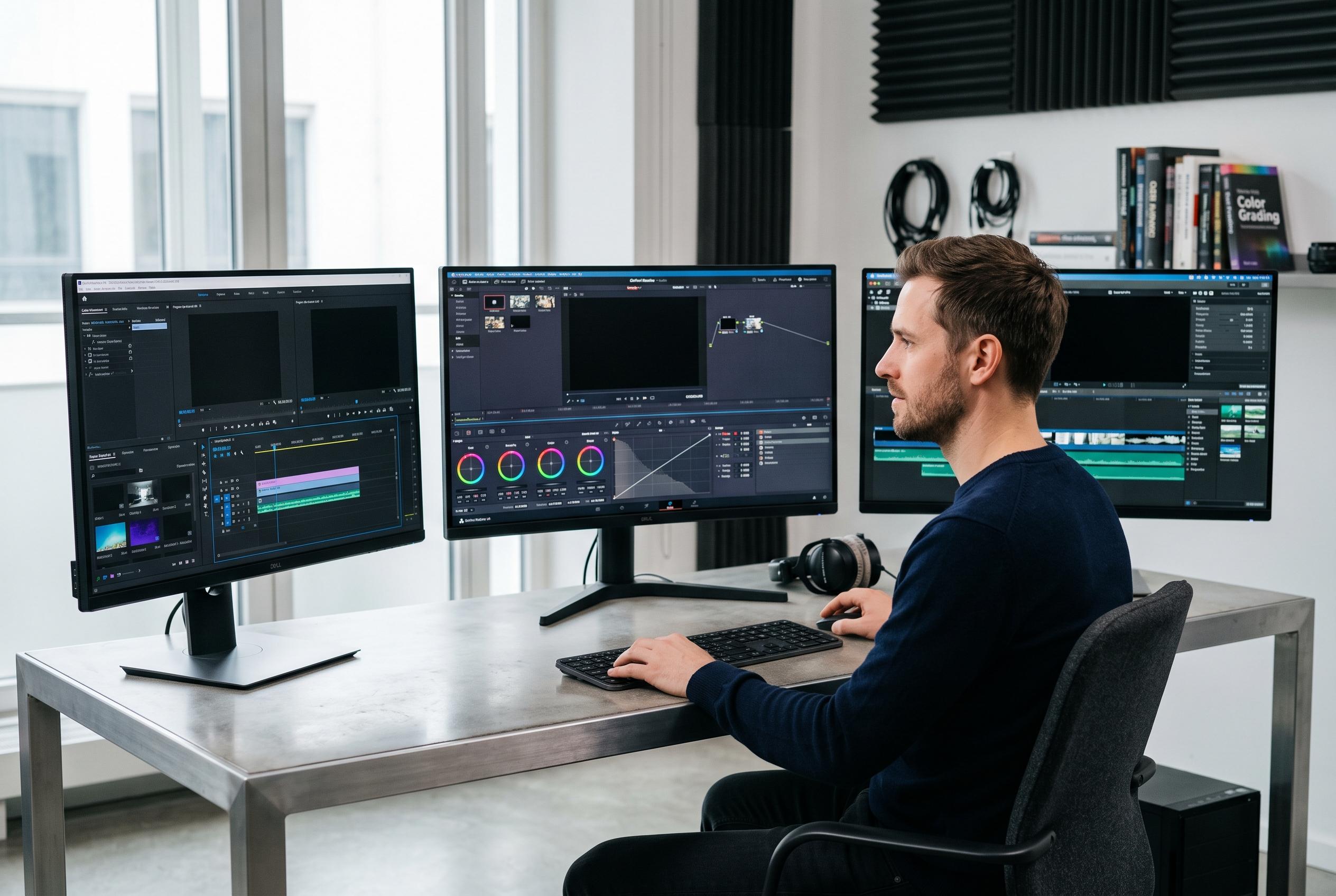

As the video editing market diversifies, Adobe Premiere, DaVinci Resolve and Final Cut Pro continue to lead, each offering distinct advantages for different user needs, from cross-platform workflows to colour correction and Mac optimisation, with emerging tools like CapCut and open-source options broadening choices for creators.
Adobe Premiere remains the safest professional choice for editors who work across Windows and macOS, particularly when a production team already uses Adobe Creative Cloud. The guide positions it as the broadest all-rounder for users who need format support, a scalable timeline and established media management, while related comparisons also describe it as the preferred option for full-time creators who rely on team workflows and the Adobe ecosystem.
DaVinci Resolve stands out as the strongest value option for serious post-production. The supplied guide notes that its free edition is unusually capable, with editing and finishing up to Ultra HD at 60 frames per second, while the paid Studio tier adds more advanced tools at a one-off price. Other comparisons echo that Resolve is especially attractive for colour correction and users who want professional features without a subscription.
For Mac users, Final Cut Pro remains the most compelling Apple-native editor. The guide highlights its Magnetic Timeline and Mac-only position, while the related summary underlines its performance on Apple hardware and its one-time purchase model. That makes it a strong fit for creators who value speed and integration over cross-platform portability.
CapCut serves a different market altogether. It is best suited to short-form, vertical and caption-led content, where speed matters more than deep finishing control. The related articles consistently describe it as fast, simple and mobile-friendly, with templates, automatic captions and quick edits making it a practical choice for social media, YouTube Shorts and Reels.
Filmora sits between consumer simplicity and more advanced editing. The guide presents it as the easiest paid option for many beginners, and the comparison material supports that view by pointing to its accessible interface, motion tools, effects and broad feature set. It is best suited to users who want a guided workflow without moving straight into the complexity of Premiere or Resolve.
For users who want no-cost desktop editing, Shotcut and Kdenlive remain the main open-source options. The guide frames Shotcut as the cleaner general-purpose free choice and Kdenlive as the more technical, Linux-friendly alternative with stronger multitrack and proxy workflows. That distinction is useful for anyone who values open-source software more than commercial polish.
The most practical way to choose is to match the software to the job. Fast social publishing calls for CapCut; professional cross-platform editing points to Premiere; colour-heavy or subscription-free work favours Resolve; Mac-only production is best served by Final Cut Pro; beginners may prefer Filmora; and open-source users are better served by Shotcut or Kdenlive. The guide’s central warning is sound: the best editor is the one that fits the operating system, budget and workflow, not the one with the longest feature list.
Disclaimer: This content is intended for informational purposes only. Readers are advised to exercise their own judgement, conduct due diligence, or consult a qualified expert before acting on any information provided.