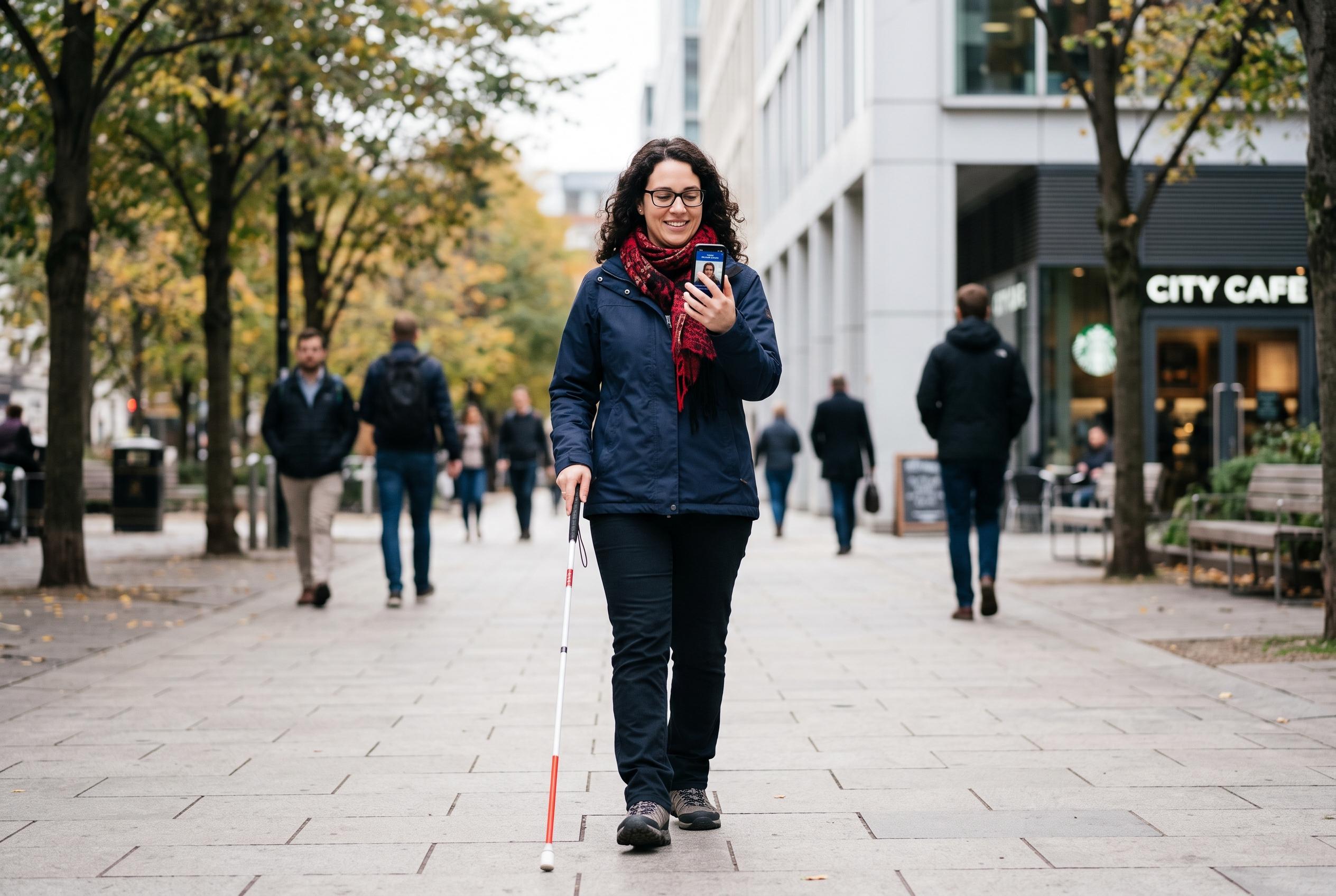

AI enhancements in assistive tools like Be My Eyes are expanding independence for people with vision loss, driving a new era of accessible support amid rising global demand.
Assistive technology is entering a more capable phase, and artificial intelligence is helping drive it. The World Health Organization says assistive products and services are designed to improve functioning in areas including cognition, communication, hearing, mobility, self-care and vision, and it estimates that 3.5 billion people will need some form of assistive technology by 2050. That demand is rising as populations age and chronic disease becomes more common, while access to the right tools remains uneven.
For people with vision loss, the practical stakes are immediate. Everyday tasks such as cooking, dressing, shopping or finding a small object on the floor can become difficult, slow or unsafe. The WHO says at least 2.2 billion people worldwide have near or distance vision impairment, with refractive errors and cataracts among the leading causes, and it estimates the annual global economic burden of vision loss at $411 billion. In that context, assistive technology is not a niche convenience but a basic part of independence.
Progress has been steady rather than dramatic. Braille dates to 1824, white canes to 1921 and talking books to the 1930s. Screen readers appeared in the 1970s, optical character readers in the 1990s and, in the early 2000s, users gained access to barcode scanners, bill readers, voice-enabled scales, smartphones and wearables. Each step improved usability, but many tools remained expensive or limited in scope.
That is where AI is changing the equation. Be My Eyes, a non-profit launched in 2015, originally linked blind and low-vision users with volunteers through a phone camera and live video. The company says its Be My AI feature now adds detailed image descriptions, including refrigerator contents, menu items and ride-hailing vehicles, while also helping users compare images over time. OpenAI has said the app integrates GPT-4 to provide richer visual descriptions, and Be My Eyes describes the service as a free, 24/7 global support network.
The result is a broader mix of support rather than a replacement for human help. Simple, repetitive questions can be handled by AI, leaving volunteers for more complex or emotionally sensitive tasks. According to the account in Destination CRM, call volume has continued to rise even after the AI feature was introduced, suggesting that better automation can increase rather than reduce engagement by making the service more useful. For users, that means more independence in routine tasks and more meaningful help when it really matters.
Disclaimer: This content is intended for informational purposes only. Readers are advised to exercise their own judgement, conduct due diligence, or consult a qualified expert before acting on any information provided.