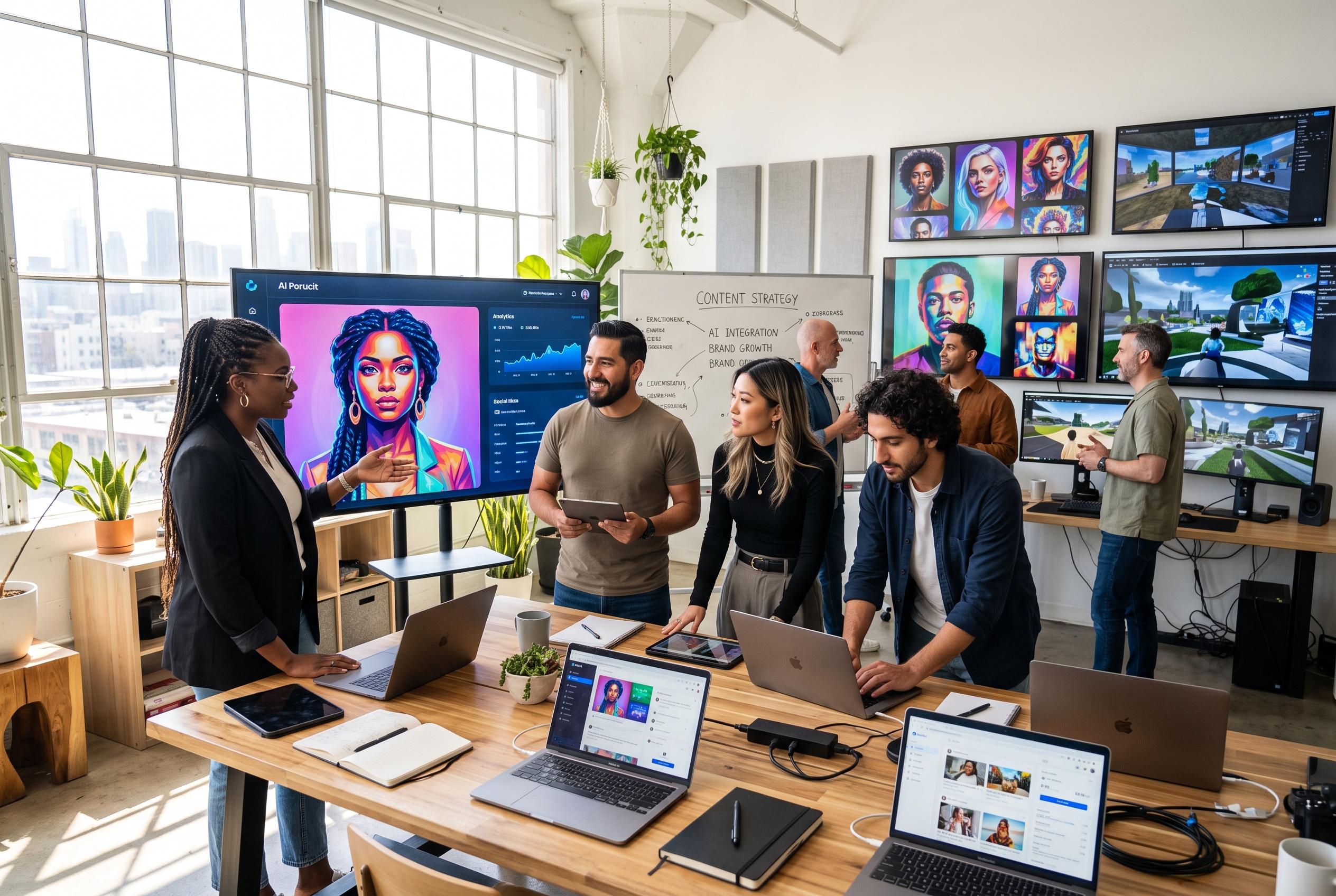

The rise of AI-generated portraits and virtual environments is transforming social media from static self-presentation to immersive, imaginative identity creation, with brands and creators embracing new visual possibilities.
Social media is increasingly moving from static self-presentation to constructed digital identity. What began with filters and heavily edited photographs has evolved into AI-generated portraits, fantasy avatars and fully imagined scenes that allow users to present versions of themselves that do not exist in the physical world. TechBullion argues that the AI image generator has become a central tool in that shift, and wider industry examples suggest the trend is already well established. Tencent’s “Different Dimension Me”, for instance, generated more than 200 million anime-style avatars within two months of launch, according to reporting on the app’s rapid spread across Chinese platforms.
The appeal is easy to see. AI avatars offer a faster and more flexible route to identity curation than traditional photography. Users can create professional headshots, stylised characters, cinematic portraits or fantasy alter egos for different audiences and platforms. Commentary from brands and avatar toolmakers suggests this is no longer a niche novelty. It is becoming a practical content format for creators and marketers who want consistency, speed and a distinct visual signature. Some brands are now using AI avatars for spokespeople and mascots, while newer models are being designed to avoid the uncanny, overly artificial look that limited earlier attempts.
The change is not confined to portraits. AI image tools are also encouraging users to build complete environments: imagined cityscapes, game-inspired backdrops, speculative travel scenes and fictional story worlds. That matters because it moves social content away from documentation and towards invention. A single prompt can now produce a visual that would once have required specialist software or a commissioned illustrator. The result is a growing body of social media content that blends personal expression with narrative design, often borrowing heavily from gaming and film language.
That gaming influence is particularly visible in the popularity of filters and styles modelled on open-world titles. TechBullion points to the AI GTA Filter as an example of how social media users are turning everyday images into dramatic, game-like scenes. The broader pattern is similar to the anime boom seen in AI image generation tools over the past few years, including OpenAI’s image generator, which helped fuel a surge in stylised AI artwork. What links these trends is not simply novelty but participation: users are no longer just consuming visual culture, they are remaking themselves inside it.
For platforms, the implications are significant. AI-generated content can increase engagement by making posts feel more original and more shareable. For creators, it lowers the cost of producing polished visuals. For brands, it opens new ways to test concepts and build recognisable digital identities. Yet the underlying driver remains human rather than technical. These tools matter because they let people turn ideas into images quickly. The next stage of social creativity is likely to be defined less by realism than by imagination, with AI helping users construct identities, scenes and narratives that sit somewhere between entertainment and self-expression.
Disclaimer: This content is intended for informational purposes only. Readers are advised to exercise their own judgement, conduct due diligence, or consult a qualified expert before acting on any information provided.