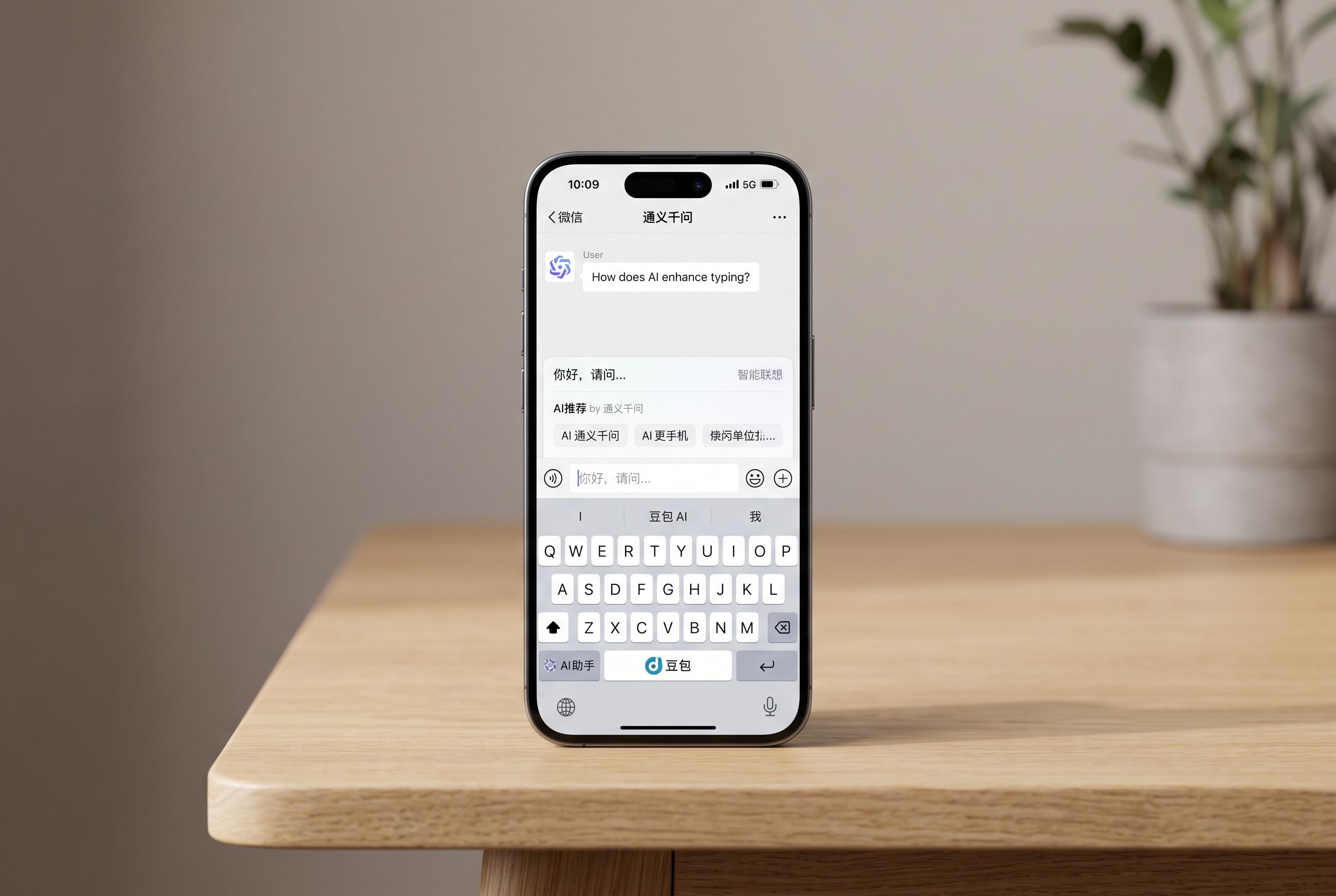

The Chinese input method market is entering a new era as AI-native products like WeChat’s Qianwen and Doubao integrate more deeply into user workflows, shifting from simple typing tools to expression and action platforms, amid evolving competition and privacy concerns.
For years, the input method market looked settled. In China, Sogou, Baidu and iFlytek built durable positions through large dictionaries, custom skins and habits formed over time, while users largely treated keyboards as utilities rather than products that could change dramatically. That changed when WeChat launched its own input method in late 2022 and, more recently, when Doubao and Qianwen entered the field, pushing the category into a new phase shaped by artificial intelligence and tighter integration with broader platforms.
The shift is not just about adding smarter autocomplete. The article’s central argument is that AI-native input methods are moving the category from simple typing towards expression itself: capturing rough thoughts, spoken fragments and half-formed ideas, then turning them into usable text. Traditional input tools were designed to help users enter sentences they had already decided on. The newer wave is being built to help users create, refine and organise language at the point of entry, whether through voice transcription, rewriting or summarisation.
Industry research suggests the competitive field is broader than a single China-focused contest, but the same pattern is visible elsewhere: input method software is shaped by platform power, latency, prediction quality and usability across devices. Verified Market Research says the market is moderately fragmented, with ecosystem giants on one side and language specialists on the other, and competition increasingly centred on speed, accuracy, gesture support and enterprise compliance. A separate report on pinyin input methods says large Chinese technology groups are still investing heavily in AI and machine learning to improve user experience, while niche players try to win specific devices and use cases.
What makes the AI entrants different is the role the input box plays inside their wider product strategy. According to the article, Doubao and Qianwen are not simply trying to steal share from established input method apps. They are trying to turn the keyboard into a permanent access point for their own model ecosystems. That means the input method becomes an everyday interface for voice, drafting, polishing and continuation writing, rather than a standalone utility. In practice, that could make it more useful in noisy commuting environments, meeting-note capture and quick workplace drafting, where conventional voice input often still needs manual cleanup.
The commercial model is changing too. Traditional input methods have often relied on advertising, pop-ups and membership prompts, with the input box acting as a traffic funnel. By contrast, AI-native products are being positioned as cleaner, more seamless tools, with fewer interruptions and more focus on retaining users inside a model-led experience. That said, the opportunity is accompanied by a trade-off: the more deeply an input method understands context and language patterns, the more it raises privacy and compliance concerns, especially when cloud processing is involved.
The market is unlikely to become a simple winner-takes-all race. The article argues that legacy players still have important advantages in accuracy, habit formation and basic typing comfort, and that those strengths remain decisive for mass users. At the same time, market research indicates that established firms such as Baidu, Sogou, Tencent and iFlytek continue to invest in AI features, speech input and multi-modal typing. A report cited in the related material says the three biggest third-party input method providers in China held a combined 76% share from January to July 2024, underlining how concentrated the field remains even as new products emerge.
The likely result is a split market. Conventional tools will keep serving users who want reliable, fast typing, while AI-native input methods may attract office workers, content creators and others who value drafting help and voice-to-text assistance. In that sense, the bigger story is not the death of the old keyboard, but its reinvention as an intelligent layer in the wider AI stack. As the article suggests, the contest is now about who controls the point where intention becomes text , and, increasingly, where text becomes action.
Disclaimer: This content is intended for informational purposes only. Readers are advised to exercise their own judgement, conduct due diligence, or consult a qualified expert before acting on any information provided.