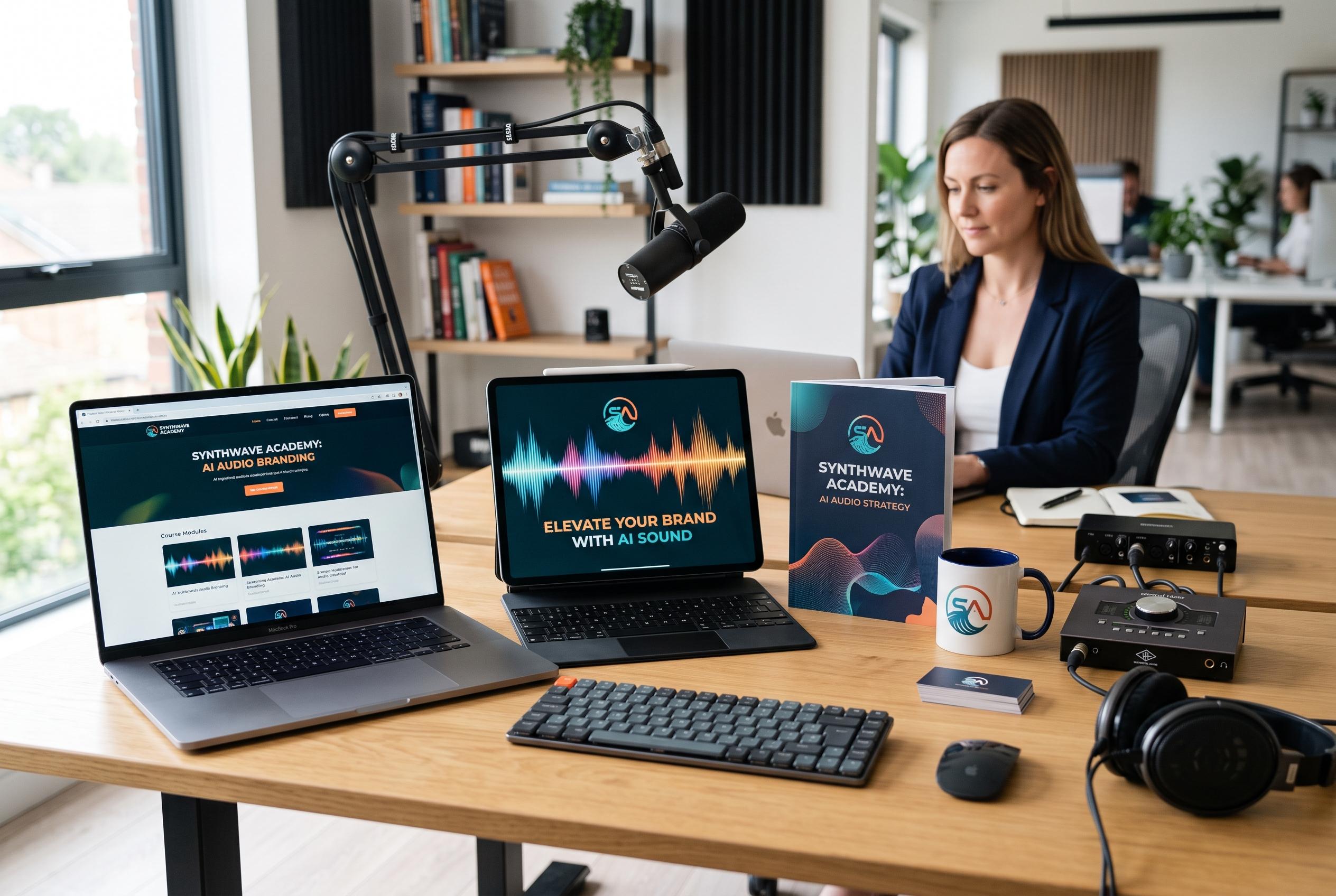

As online course creators embrace AI-generated music, personalised, high-quality audio is becoming a key factor in building course identity, enhancing learner engagement, and amplifying marketing efforts amid a competitive market.
Online course creators are paying far more attention to audio than they once did, and the reason is simple: in a crowded market, sound now helps sell the course before a student has learned a single thing. The BreakingAC partner article argues that the days when clear slides and passable narration were enough have largely gone, with learners making snap judgements about quality within seconds of a preview. Music, once treated as an afterthought, is increasingly part of that first impression.
That shift is changing how educators think about production. Rather than relying on the same stock background tracks heard across countless tutorials, creators are turning to AI tools that generate original music from prompts, notes or course descriptions. Soundforge says its platform can turn class notes into songs with vocals and lyrics, while HeartMuLa and WaveMusic both describe systems that create songs, beats, vocals and instrumentals from text. Melyx AI says it can produce two songs per request in 1 to 2 minutes, and SoundsGen promotes studio-quality output in seconds. Song AI says it can generate full songs in more than 50 genres, with more than 80,000 songs created so far.
For course makers, the appeal is not only novelty but consistency. Original music can give a programme a recognisable identity across modules, section breaks and trailers, making the whole experience feel more deliberate. The partner article says that approach matters because learners can sense when a course has been assembled from generic parts rather than designed as a single experience. AI tools make that level of tailoring more practical for individual instructors, small teams and schools that may not have the budget for custom composition.
The same logic applies to learning itself. In an educational setting, background music is not just decoration; it can either support concentration or break it. The article argues that quieter, less melodic tracks work better during explanations, while slightly more energetic music may suit exercises and review sections. Platforms such as Soundforge, which says it is aimed at educators and offers school-friendly output, and Melyx AI, which advertises commercial use rights, show how AI music is being packaged for this use case rather than for entertainment alone.
Creators are also beginning to think beyond the lesson itself. The article points to preview videos, trailers and certificate moments as opportunities to use original audio to reinforce value and prompt sharing. A course trailer with music built around the course promise can feel more memorable than a standard voiceover clip, while a completion cue tied to a certificate may make the achievement feel more meaningful. In a business built on enrolments, reviews and repeat customers, that kind of detail can carry more weight than its modest cost suggests.
Disclaimer: This content is intended for informational purposes only. Readers are advised to exercise their own judgement, conduct due diligence, or consult a qualified expert before acting on any information provided.