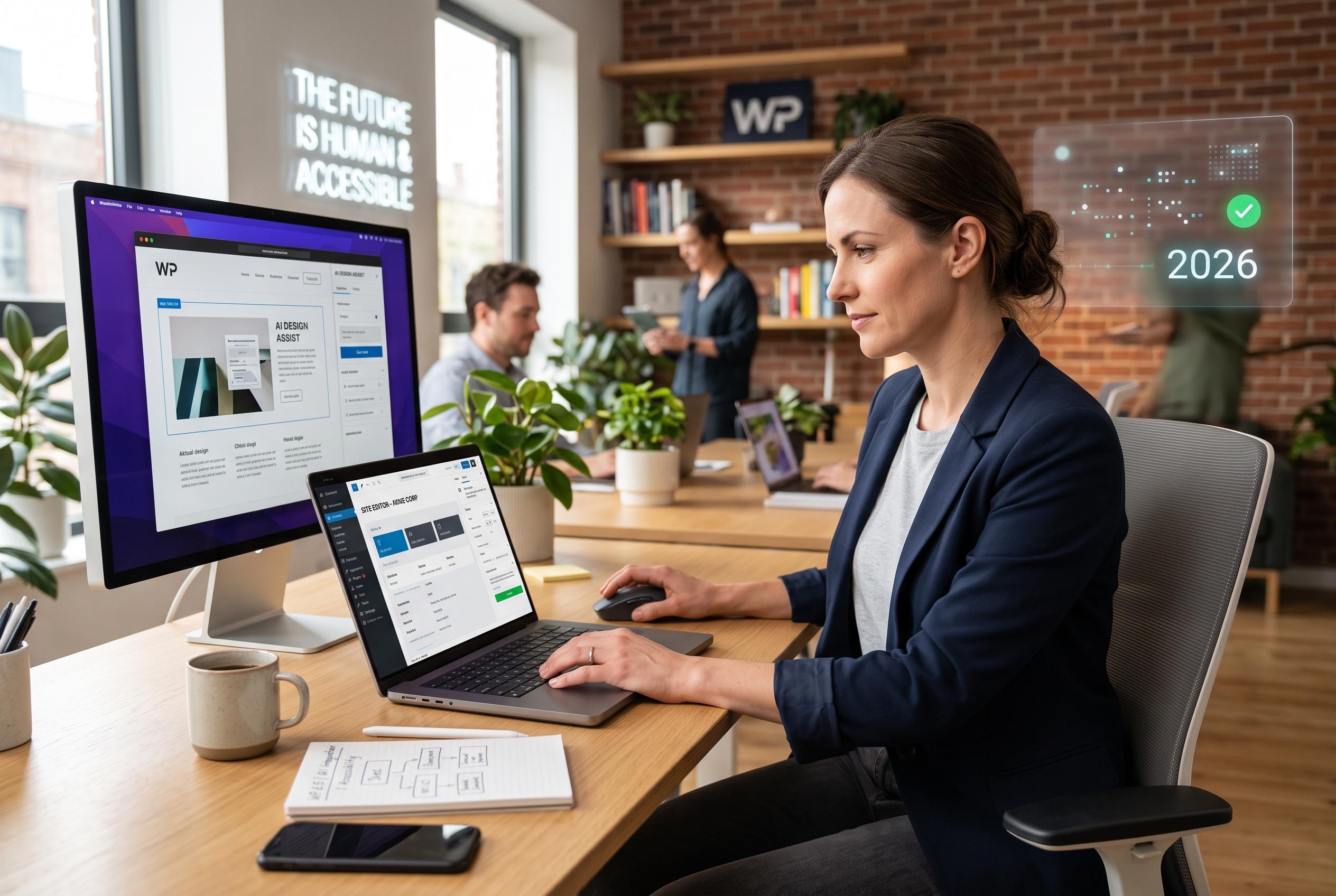

As AI-assisted tools encourage uniform aesthetics and accessibility flaws in web interfaces, WordPress stands out as the platform to forge durable brand identities and accessible user experiences in 2026.
Open ten Product Hunt launches in a row this week and the visual pattern is hard to miss: gradient hero panels, rounded card grids, the same small status badges and the same neutral typography. According to recent web design trend round-ups, that look is not accidental. AI-assisted tools now make it easy to assemble sites quickly, but they also encourage similar layout choices, repeated component structures and a narrow set of visual defaults.
That is the real shift behind the current wave of AI-built products. Tools such as Lovable, Bolt, Cursor and v0 have lowered the barrier to launching software, allowing founders without design experience to put products online in days rather than months. But analysts and design commentators have also warned that AI-generated interfaces often converge on familiar patterns, producing sites that feel interchangeable even when the underlying products are different.
The problem is not only aesthetic. Research on AI-generated interfaces has found recurring accessibility failures, with contrast issues particularly persistent. At the same time, accessibility remains a widespread issue across the wider web: the WebAIM Million 2026 report said 95.9% of the top one million home pages still showed at least one detectable WCAG 2 failure. In practice, that means speed alone does not guarantee a usable product.
WordPress is well placed to benefit from that gap. WPZOOM said in July 2026 that WordPress powers 41.5% of all websites and 59.2% of sites with a known content management system. That scale matters because many AI-built products eventually need more than a fast launch. They need a stronger content structure, a recognisable brand system and a platform that can support more careful editorial and design work.
Design agencies and developers are increasingly being pushed into that role. The related trend reports describe 2026 as a year in which AI is being used less as a replacement for design judgement and more as a production aid for layouts, variation testing and personalisation. Several of them also note a shift towards conversion-focused design, where teams use AI to accelerate experimentation but still rely on human oversight to preserve identity and clarity.
That is why accessibility and brand discipline are becoming competitive advantages rather than optional extras. The most effective teams appear to be the ones that treat typography, spacing, colour and component behaviour as defined systems before any prompt is written. They also document what the brand should not sound or look like, then check every AI-generated draft against that standard before it reaches a customer.
For WordPress agencies, theme developers and freelance designers, the opportunity is straightforward. AI builders can get a founder to launch day, but they do not reliably supply voice, structure or trust. WordPress, together with the people who build on it, can provide that next step: a more durable identity, a more accessible interface and a more complete commercial presence.
Disclaimer: This content is intended for informational purposes only. Readers are advised to exercise their own judgement, conduct due diligence, or consult a qualified expert before acting on any information provided.