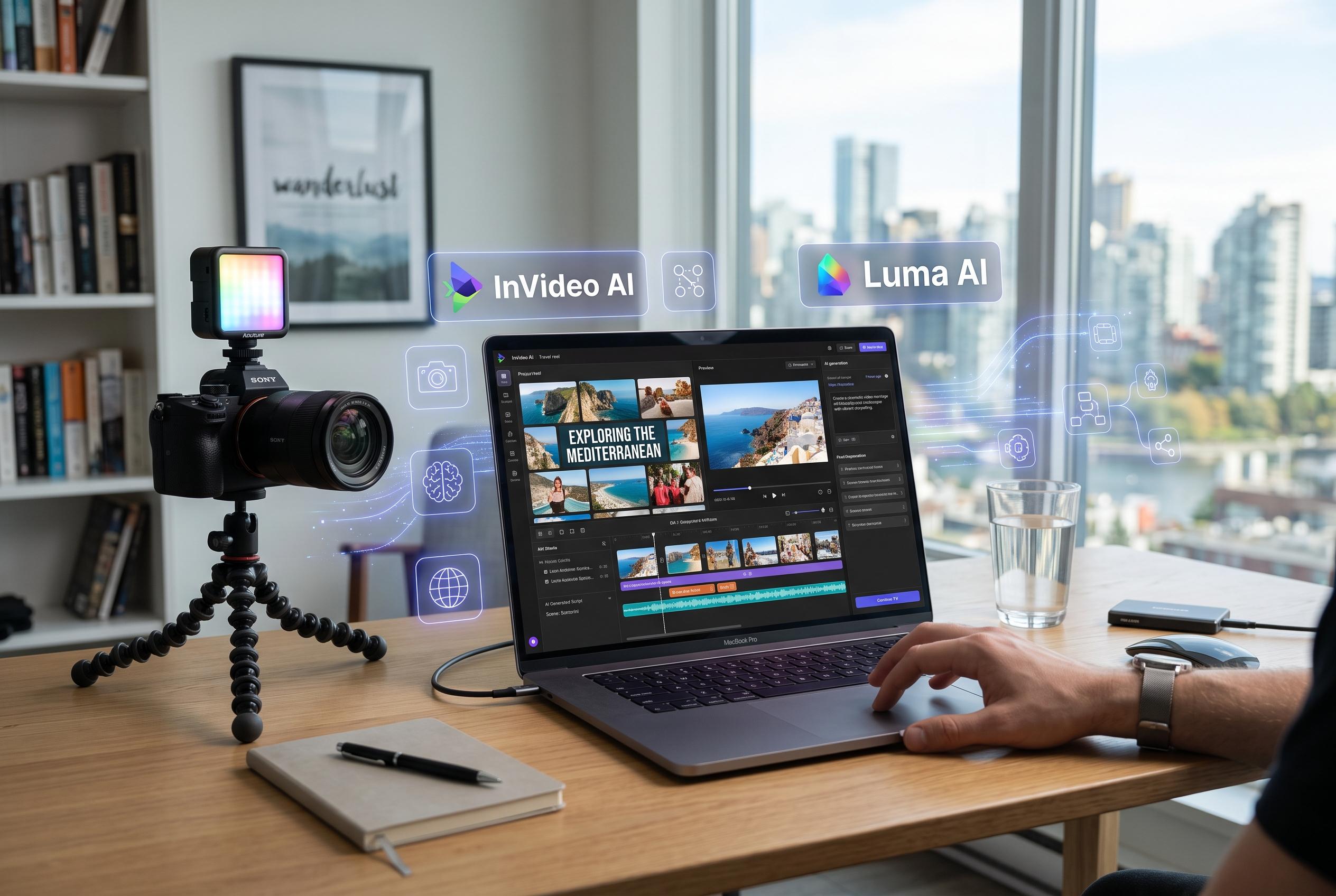

Advancements in AI tools like InVideo, Luma AI, and others are transforming travel reels, allowing creators to produce diverse, engaging videos faster and more efficiently than ever before, while maintaining authenticity.
Travel reels have become one of the most effective ways to turn a trip into a story that people will actually watch. A few well-chosen clips can do more than a long caption or a static photo set: they can create pace, mood and a sense of place. The growing use of artificial intelligence is making that process faster, particularly for creators who want to turn scattered photos, phone footage and notes into short-form video with less manual editing.
Among the tools drawing attention in 2026 is InVideo, which positions itself as an AI video platform for turning prompts, scripts and briefs into ready-to-publish video. According to the company and recent reviews, its Agent One assistant can help with concept development, scripting, shot planning, scene assembly, captions and voiceovers, while maintaining project context across a workflow. It also supports multiple AI models, which makes it more flexible for creators who want one system to handle several stages of production.
Luma AI is aimed more directly at generating moving video from text prompts and photos. The company says its Dream Machine system is designed to produce realistic motion and physics, which suits travel content that depends on atmosphere, such as mountain views, coastal scenes or city movement. A recent update from Digital Camera World noted that Luma has also moved towards hybrid editing with Ray3 Modify, a tool that can rework live-action footage by changing lighting, wardrobe, backgrounds and visual effects rather than starting from text alone.
Google Veo and Sora sit in a similar category of prompt-led video generation, and both are useful when a creator has a visual idea but lacks the exact footage to match it. In practical terms, that could mean generating an opening shot for a destination sequence, creating a stylised journey through several locations, or testing a campaign concept before committing to a larger edit. These tools are less about replacing travel footage than extending what a creator can show when filming opportunities are limited.
Pika is better suited to speed. It is designed for short, accessible AI video creation and is useful when a creator needs to produce quick social assets rather than a full cinematic edit. That makes it a sensible option for destination teasers, announcement clips and rapid-turnaround posts. Runway, by contrast, is stronger when the aim is to refine existing footage. It can extend shots, remove unwanted elements and add effects, which can help when a reel needs a cleaner transition or an additional visual bridge between scenes.
The strongest travel reels are still built on real footage. AI works best when it supports the material a creator already has, rather than replacing it entirely. A practical workflow begins with the story: what the viewer should feel or learn. From there, creators can choose the most important clips, identify gaps and use AI for tasks such as voiceovers, transitions, captions or supporting visuals. That approach preserves authenticity while reducing the time spent on repetitive editing.
The wider change is that travel content no longer has to be a simple trip montage. One journey can now become several different videos, each aimed at a different audience or platform: a cinematic destination piece, a food-focused reel, a hotel review or a practical itinerary. For travel brands and independent creators alike, AI is making it easier to repurpose source material, test different creative angles and keep a consistent style across multiple posts.
Disclaimer: This content is intended for informational purposes only. Readers are advised to exercise their own judgement, conduct due diligence, or consult a qualified expert before acting on any information provided.