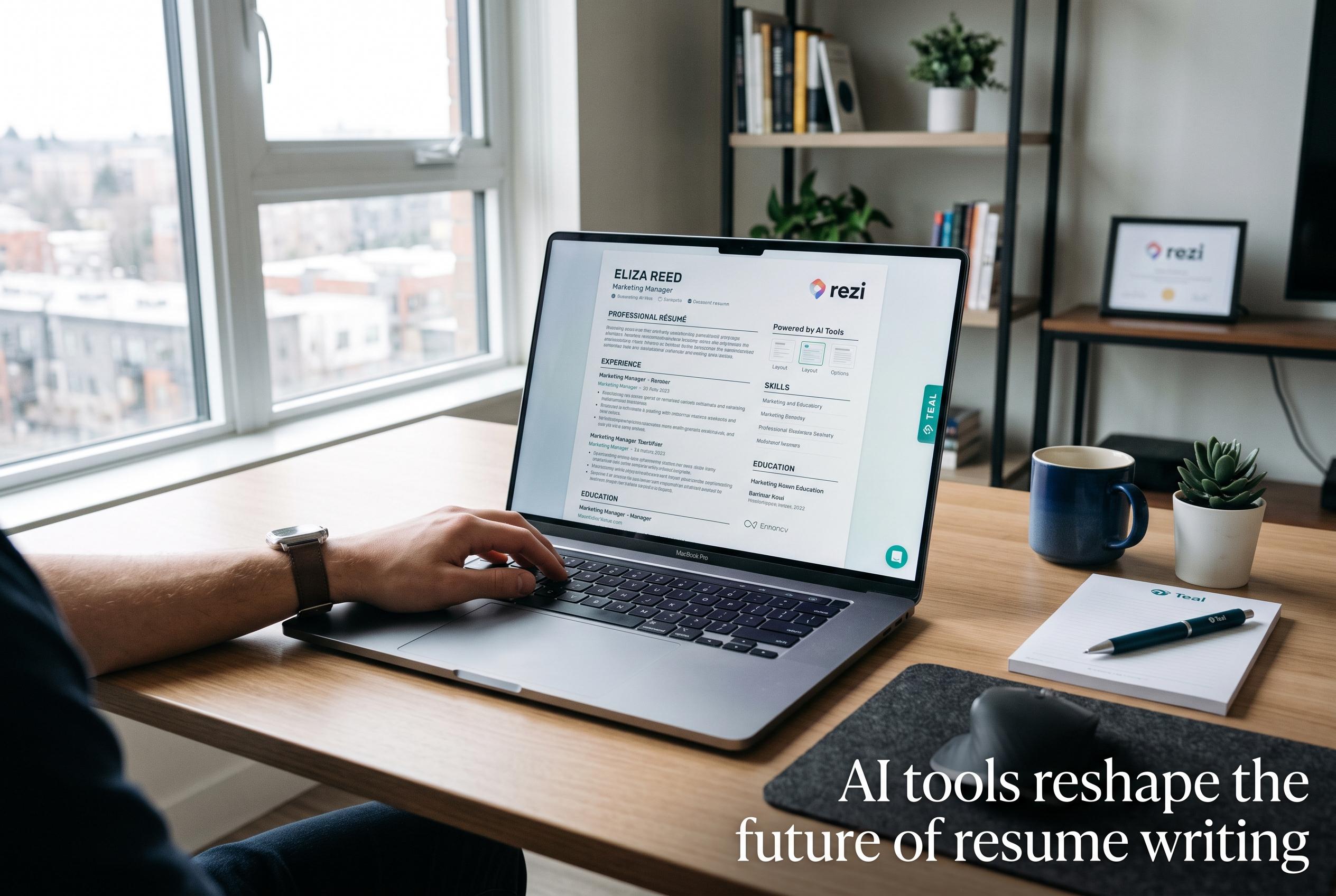

As the competition for jobs intensifies, AI resume builders like Rezi, Teal, and Enhancv are transforming how applicants craft compelling, tailored CVs, balancing automation with authenticity to stand out in a crowded market.
For jobseekers, a resume still has to do a difficult job in very little space: show relevance, prove impact and survive automated screening. That is why AI resume builders have become more than novelty tools. Used properly, they can help turn rough notes into clearer achievement-led bullet points, align language with job descriptions and catch formatting problems before an application is sent.
Among the strongest options is Rezi, which combines a guided builder with a conversational AI agent. According to Rezi, users can start from scratch or upload an existing CV, then receive section-by-section scoring, keyword analysis and real-time suggestions. Its pricing ranges from a free plan to a Pro package at $29 a month and an Enterprise tier at $99 a month for up to 200 users. The tool is especially useful for candidates, such as computer science graduates, who need to translate academic or project work into evidence of job-ready skills.
Teal takes a broader approach by treating the resume as part of a wider job-search system. Its builder lets users import a resume or LinkedIn profile, create a master version and then generate tailored variants for different roles, all while tracking applications in a pipeline. Teal also offers more than 100 templates, keyword matching and AI suggestions for summaries, skills and bullets. Its Plus package costs $13 a week, making it most attractive to applicants applying for several roles at once and needing fast customisation.
Enhancv leans more heavily into presentation, while still offering ATS-focused features. The company says it uses job-description analysis to guide writing, keyword matching and auto-formatting, and it supports more than 30 languages. It also stands out for design flexibility, with customisable templates, colours, fonts and sections. A free trial is available, with a Pro quarterly plan priced at $4.51 a month when billed quarterly. That makes it a practical option for design-led applicants, including UX professionals who want a resume that can reflect side projects and portfolio thinking.
Resume.io and Jobscan round out the main choices with different strengths. Resume.io offers a structured workflow in which users select a template, enter their details and let the AI draft the document, while also correcting errors and polishing phrasing. Jobscan is better known for optimisation: it generates bullets from guided questions, then scans the finished resume against a job description for keyword gaps, formatting issues and match score weaknesses. Resume.io starts with a free trial and then charges $2.95 for seven days or $49.95 per quarter, while Jobscan offers a free package and a monthly plan of $49.95.
The broader lesson is that no single tool suits every applicant. Rezi and Jobscan are stronger for ATS optimisation, Teal is better for high-volume applications and tracking, Enhancv suits visually distinctive resumes, and Resume.io is a simpler route for first-time candidates building from limited experience. But the same warning applies to all of them: AI can improve structure and wording, yet it should not inflate credentials or blur what a candidate has really done. The best result is still a resume that is clear, relevant and truthful.
Disclaimer: This content is intended for informational purposes only. Readers are advised to exercise their own judgement, conduct due diligence, or consult a qualified expert before acting on any information provided.