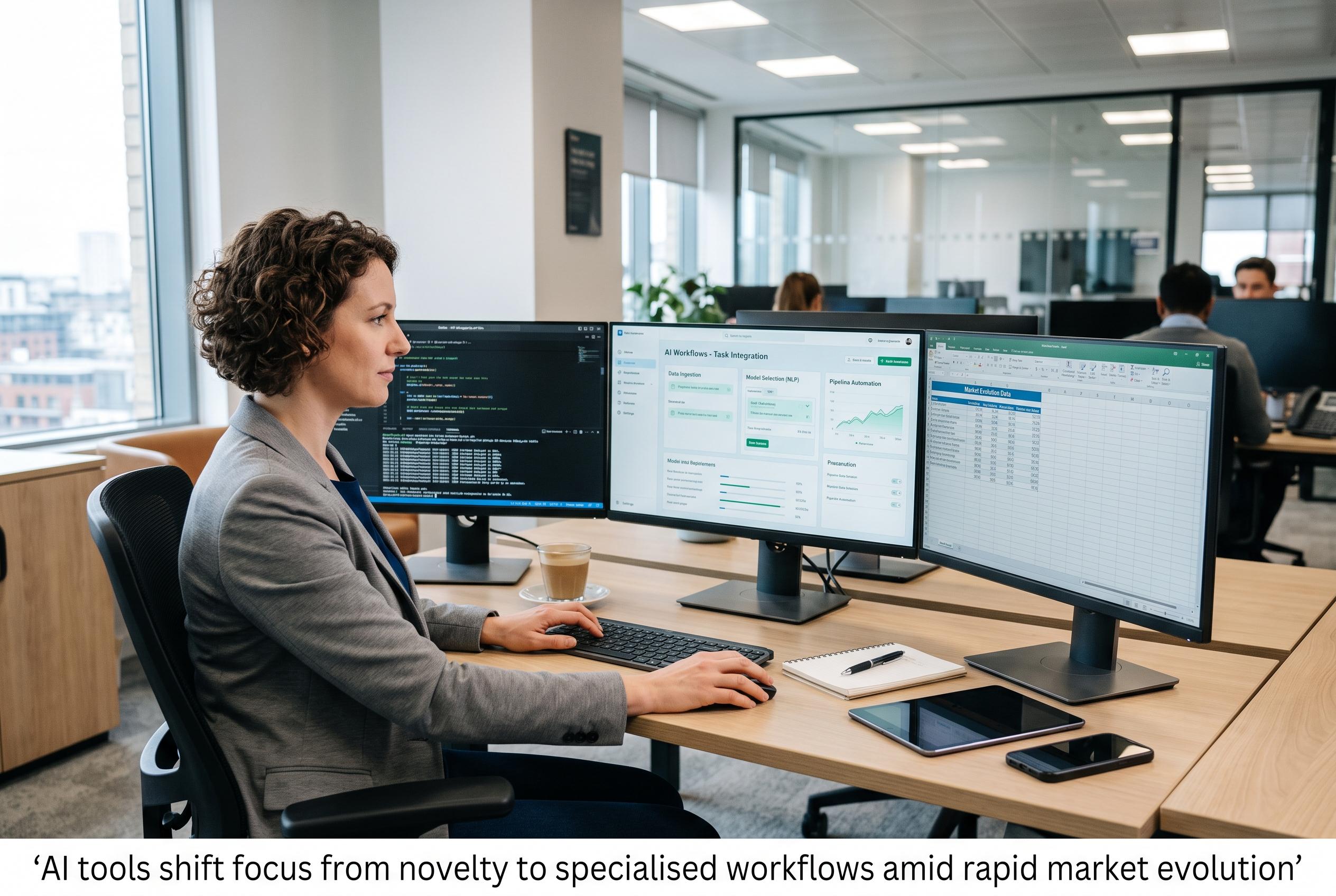

As the AI market becomes more saturated and tools more specialised, selecting the right software based on function is crucial amid ongoing product and regulatory changes, with a growing emphasis on workflow integration and task-specific performance.
Artificial intelligence tools have become less about novelty and more about fit. The market is now crowded with products that often wrap the same underlying models in different interfaces, which makes the real challenge choosing software that matches a specific task rather than simply chasing the most familiar name. The directory published by Minerva Techno argues that the most useful way to judge these tools is by function, not by marketing noise, and that is a sensible approach in a sector where pricing, ownership and feature sets can change quickly. According to the site, the list is designed as a snapshot of a fast-moving market, not a fixed ranking.
At the centre of the guide is Claude, which the directory presents as the strongest option for long-form writing and reasoning. That assessment fits recent product changes: Axios reported this month that Anthropic has introduced machine-readable watermarks for Claude-generated text and files to align with the EU AI Act’s transparency rules, while TechRadar said the company is embedding imperceptible watermarks into new Claude models from day one and retrofitting them to existing ones. Anthropic is also expanding Claude beyond text generation; TechRadar described a new browser-based assistant, Claude Cowork, that keeps context across devices and asks for confirmation before sensitive actions.
The same directory places ChatGPT as the broadest all-round assistant, useful for writing, coding, research and image generation, though it is described as less specialised than dedicated tools. That distinction matters because the current generation of AI assistants is increasingly fragmented by use case. TechRadar’s coverage of Claude’s browser and model updates, for example, shows how quickly vendors are moving towards more task-specific workflows, even when they still market themselves as general assistants.
For software development, the guide splits the field into two styles of product. Cursor is presented as the AI-native code editor for developers who want multi-file changes and in-context suggestions built into the editing experience. GitHub Copilot, by contrast, is framed as the lower-friction choice for teams that want AI inside their existing IDEs. That separation reflects how coding tools have matured: TechRadar recently described Claude generating a playable browser game in minutes, while PC Gamer reported that autonomous AI agents are now powerful enough to create fresh security risks, including malicious repositories and social-engineering attempts.
The creative tools are divided in a similar way. Midjourney is described as the better choice for artistic and editorial image generation, where style and visual coherence matter more than literal accuracy. For video, Runway is positioned as the professional option because it offers more direct control over motion, camera movement and consistency than pure text-to-video systems. The article also notes that Synthesia fills a different niche altogether: scripted avatar videos for training, onboarding and explainers, where efficiency and repeatability matter more than cinematic realism.
The guide is strongest when it moves away from generation and towards workflow. Notion AI is presented as useful because it lives inside the workspace where teams already store notes and projects, rather than asking users to move tasks into a separate app. Grammarly occupies a similar support layer, focusing on revision, tone and clarity rather than drafting from scratch. That emphasis on embedded assistance reflects a wider industry shift from standalone chatbots to software that sits inside browser tabs, documents and development environments.
Perplexity is treated as the research tool in the set, because it searches the live web and cites sources, making it more suitable for current information than a model answering from memory. The directory’s broader advice is pragmatic: use the tool that fits the job, combine specialised products rather than expecting one system to do everything, and check pricing before subscribing because billing models and feature sets change quickly. That warning is especially relevant in 2026, when even leading AI firms are adjusting to regulation, security concerns and rapid product iteration.
In practical terms, the directory’s argument is that AI has moved from a single category into a stack of distinct tools. Writing assistants, coding agents, research products, image and video generators, and editing layers now solve different problems, and the best results usually come from combining them. For readers trying to build a useful setup, that is the most relevant lesson: the market no longer rewards one-size-fits-all thinking. It rewards careful selection, and regular re-evaluation, as the technology keeps changing.
Disclaimer: This content is intended for informational purposes only. Readers are advised to exercise their own judgement, conduct due diligence, or consult a qualified expert before acting on any information provided.