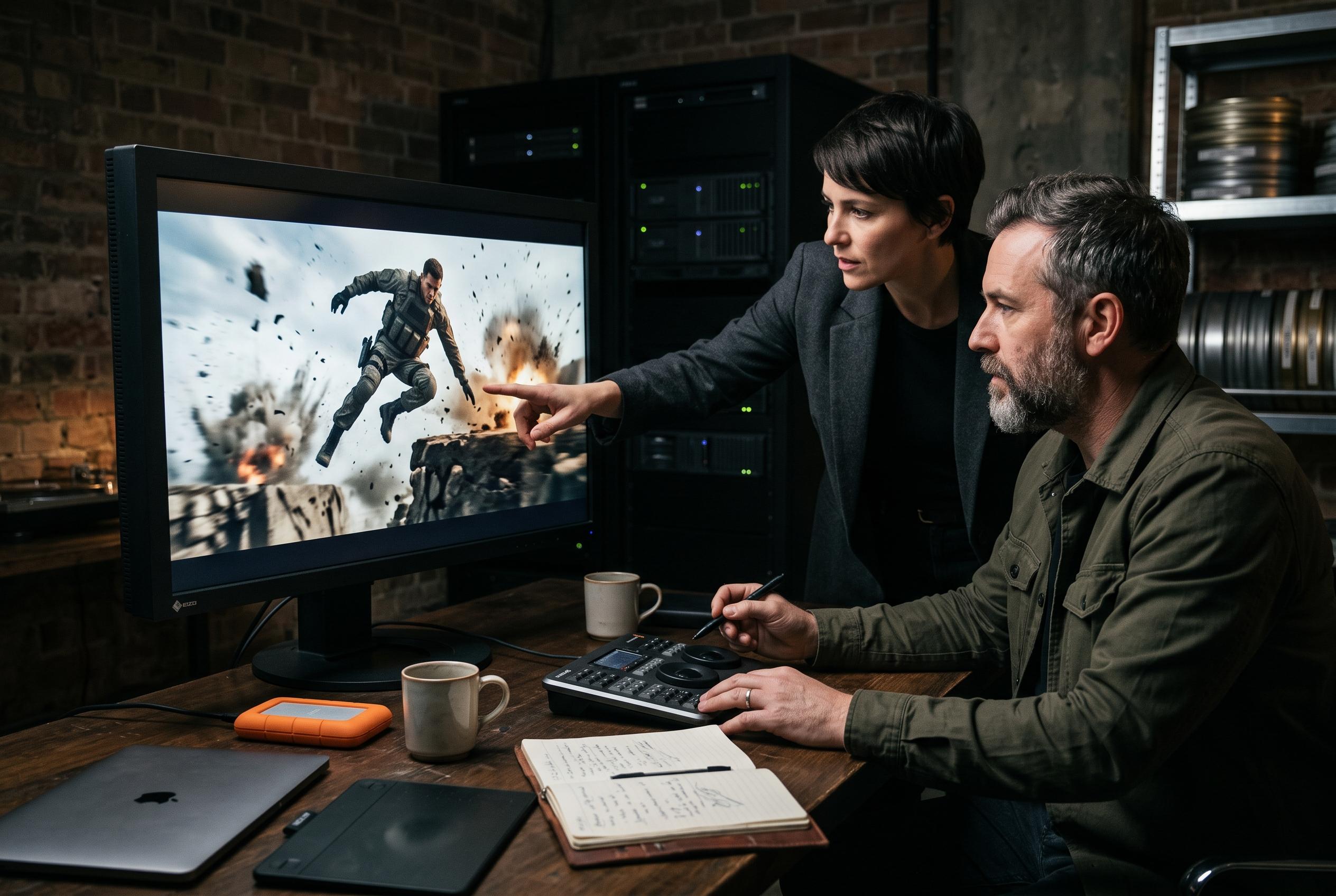

Emerging AI video technologies are revolutionising action film marketing by enabling faster, cost-effective pre-production and testing, transforming trailer and teaser creation amid rising dominance of short-form content.
AI video tools are beginning to reshape how action films are promoted, particularly at the earliest stage of campaign planning. The underlying appeal is speed: teams can turn a brief into moving imagery quickly, test multiple visual routes, and refine ideas before committing to a full shoot or edit. In practice, that matters most for trailers, teasers, motion posters and short social clips, where the first few seconds can decide whether an audience pays attention.
This shift reflects a broader change in video marketing. Lychee Video says short-form AI video now accounts for 67% of AI-generated content, while 21% of marketers regard short-form video as their highest-return format. WeVideo has also noted that video already dominates internet traffic and that short-form clips are widely seen as highly engaging. For action titles, that makes sense: the genre relies on immediate movement, tension and visual clarity, which suit compact formats built for feeds and ad placements.
The biggest operational gain is in pre-production. Startupik reports that tools including OpenAI Sora, Runway, Pika, Luma and Adobe Firefly are being used for concept videos, previs, background plates and short scenes, mainly because they allow multiple visual directions to be explored in hours rather than weeks. That is especially valuable for studios and independent creators trying to show investors, collaborators or distributors what a film might look like before principal photography begins.
Smaller teams stand to benefit most. The action genre often requires proof-of-concept material long before it can fund a major production, and AI-assisted workflows can help create mood boards, test a gritty or futuristic look, and produce campaign drafts without the cost of a large post-production pipeline. Recent commentary from the industry suggests that AI-generated video is no longer just a novelty: Artiroom says the market is expanding quickly as costs fall and quality improves, while other analysis points to stronger conversion rates for AI video ads than for static creative. Even so, those gains do not remove the need for human oversight.
That caution remains important. AI can accelerate creative iteration, but it does not replace choreography, performance, edit timing or directorial judgement. Startupik notes persistent concerns around continuity, reliability, editability, legal risk and copyright provenance. The most effective approach, then, is not full automation but a mixed workflow in which AI handles rapid experimentation and humans decide what is fit for release. That is the model the article on The Action Elite argues for: a faster, more visual planning process that strengthens marketing without diminishing the craft that gives action content its impact.
Disclaimer: This content is intended for informational purposes only. Readers are advised to exercise their own judgement, conduct due diligence, or consult a qualified expert before acting on any information provided.