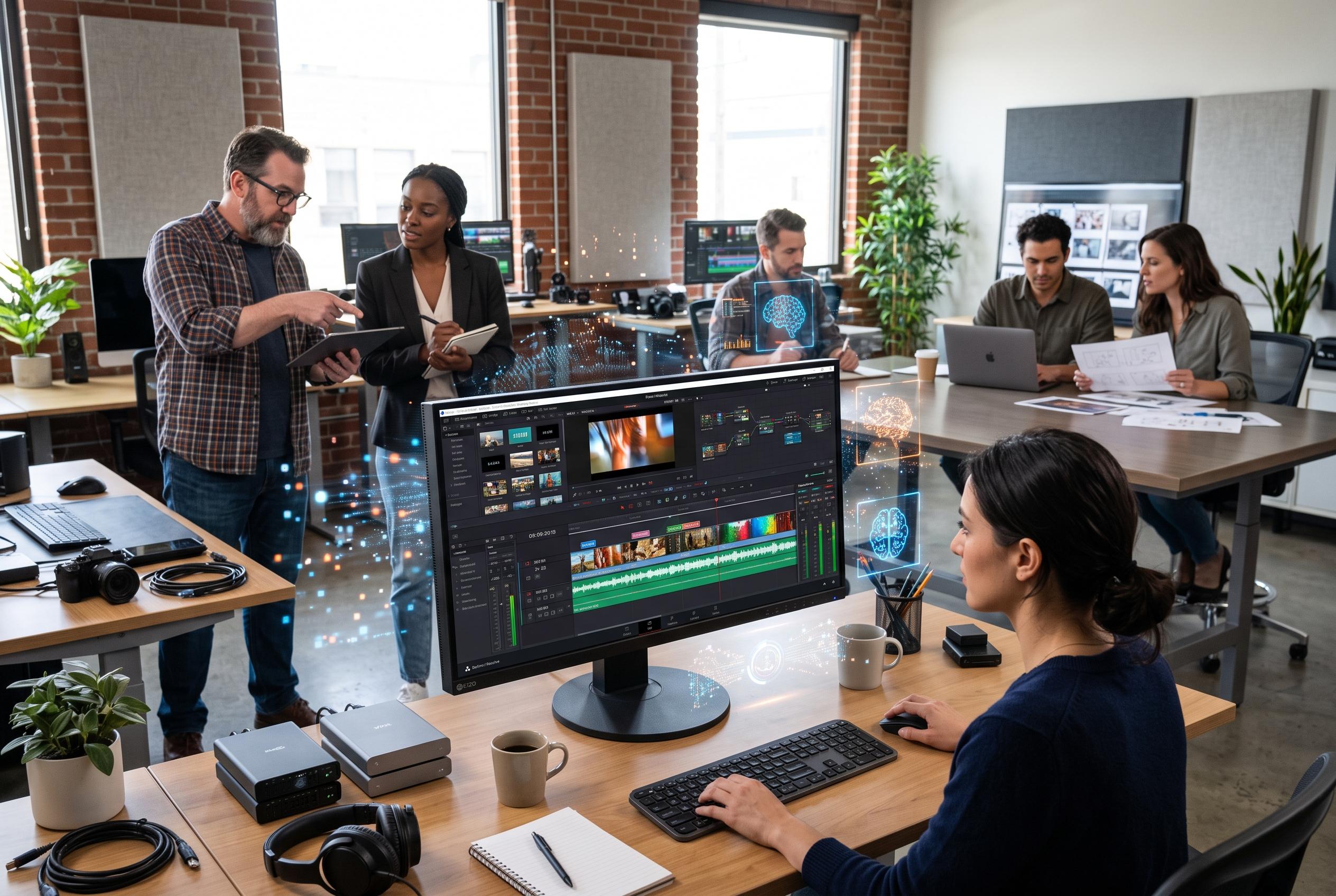

As creative teams face mounting pressure to generate more video content across varied formats and deadlines, AI-driven tools are becoming essential for speeding up production, maintaining brand consistency, and expanding personalised marketing at scale.
Creative teams are under growing pressure to produce more video, in more formats, with less time. According to HOLR Magazine, that is the main reason AI video tools are moving from novelty to necessity. They are helping teams shorten production cycles, expand output and keep creative work moving even when deadlines are tight.
The practical appeal is speed. Tasks that once took days can now be compressed through automation of scripting, editing and voice generation. That matters because video is rarely created in a single version any more. A campaign often needs multiple edits for different platforms, audiences and lengths, which makes manual production increasingly difficult to sustain.
AI tools are also changing the economics of small teams. Rather than adding headcount, studios can use software to absorb repetitive work and free people for higher-value decisions. HOLR Magazine notes that this is especially useful where brands need personalisation at scale. Yaron Kalish, chief executive and co-founder of Idomoo, argues that workflows built around scalable personalisation allow teams to move faster without losing relevance.
Brand control remains a central concern, however. Creative teams do not only want volume; they need consistent tone, style and messaging. Newer systems are being designed to learn from existing brand material and apply those patterns across future projects. Click Studio, for example, says it can ingest a brand’s website and documents so output better matches an established identity, reducing the back-and-forth that often slows approval.
The technology is also becoming more specialised. Autodesk is taking a hybrid approach in Flow Studio, combining traditional 3D production methods with AI-assisted rendering, rather than relying solely on prompts. Creative Bloq reported that the company’s 3D Editor and Canvas workflow gives filmmakers more direct control over scenes, characters and camera movement. That reflects a broader shift in the market: AI is increasingly being positioned as a production assistant rather than a replacement for craft.
For shorter-form social content, the emphasis is on speed and repeatability. Gling markets a tool for quickly adjusting pacing and cutting down edits, while TensorShots focuses on temporal consistency, meaning stable motion and smoother frame-to-frame continuity. Moovee.ai and Faktry are also targeting longer-form workflows, offering scene-by-scene production, reusable characters and export options for different aspect ratios. Together, these tools show how the category is splitting into use cases, from quick highlights to fuller narrative work.
The wider trend is clear. AI video tools are no longer just about reducing effort. They are reshaping how teams plan, collaborate and scale content. For organisations that need to publish quickly without sacrificing consistency, the question is no longer whether these tools are useful, but how deeply they should be built into the workflow.
Disclaimer: This content is intended for informational purposes only. Readers are advised to exercise their own judgement, conduct due diligence, or consult a qualified expert before acting on any information provided.