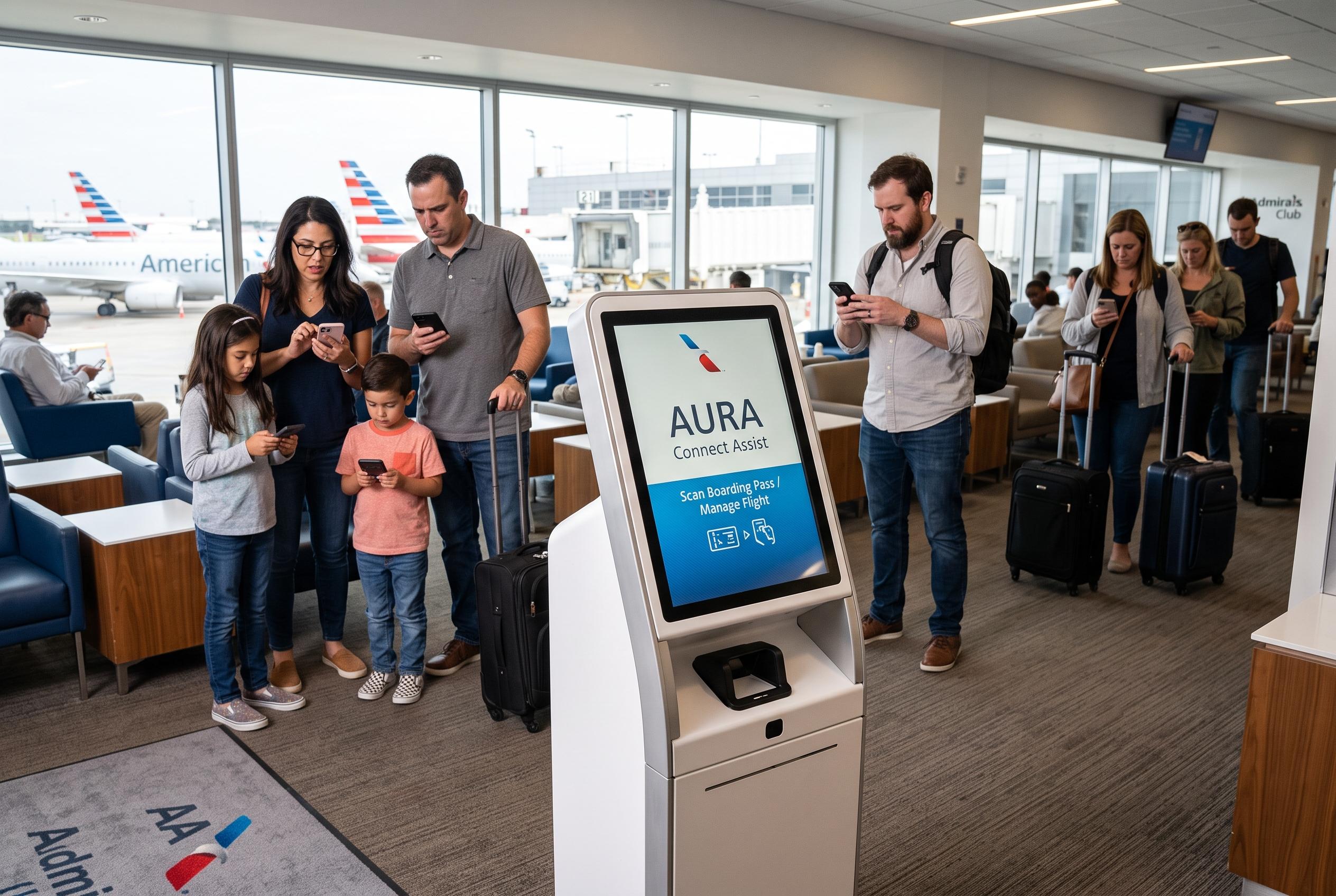

American Airlines is under scrutiny as its automated rebooking tools, AURA and Connect Assist, cause unrequested itinerary changes, raising questions about the balance between operational efficiency and customer trust.
American Airlines is facing fresh criticism over software that can automatically move delayed passengers on to later flights and remove their seat assignments without a request from the traveller. The complaints have centred on AURA and Connect Assist, the carrier’s automated rebooking tools, after passengers said they were shifted off flights even when they still had time to make their connections. American has said on its customer-service pages that, when delays or cancellations affect travel, it aims to rebook passengers on the next available flight at no extra charge.
The concern is not simply that the system sometimes makes mistakes, but that it appears to do so with little or no human oversight once a disruption crosses an internal threshold. That has left some travellers having to call the airline to reverse changes after their bookings were altered automatically. The company has been rolling out a wider set of digital tools to handle disruption, including app features meant to help customers change trips, track updates and access rebooking options more quickly. American has also said more recent app changes are designed to give passengers clearer explanations during delays and cancellations and more control over what happens next.
That approach reflects a broader airline industry push to move routine service tasks away from airport staff and towards software. American has said its digital upgrades are intended to reduce pressure on call centres and customer-service lines while speeding up recovery during irregular operations. The airline’s conditions of carriage also say that if a missed connection cannot be rebooked on an American flight until the following day, a partner airline may be used at no additional charge. In practice, though, the automated system has raised questions about how much discretion should be given to software when it affects a passenger’s confirmed seat and onward itinerary.
For passengers, the issue goes to trust. Airlines increasingly present automation as a way to make disruption less painful, and American has promoted its digital tools as a faster route to solutions during delays. Yet when a system is allowed to reassign a seat before a traveller reaches the gate, the benefit to operations can come at the expense of certainty for the customer. The latest backlash suggests that, even as carriers automate more of the travel experience, the tolerance for unexplained itinerary changes remains low.
Disclaimer: This content is intended for informational purposes only. Readers are advised to exercise their own judgement, conduct due diligence, or consult a qualified expert before acting on any information provided.