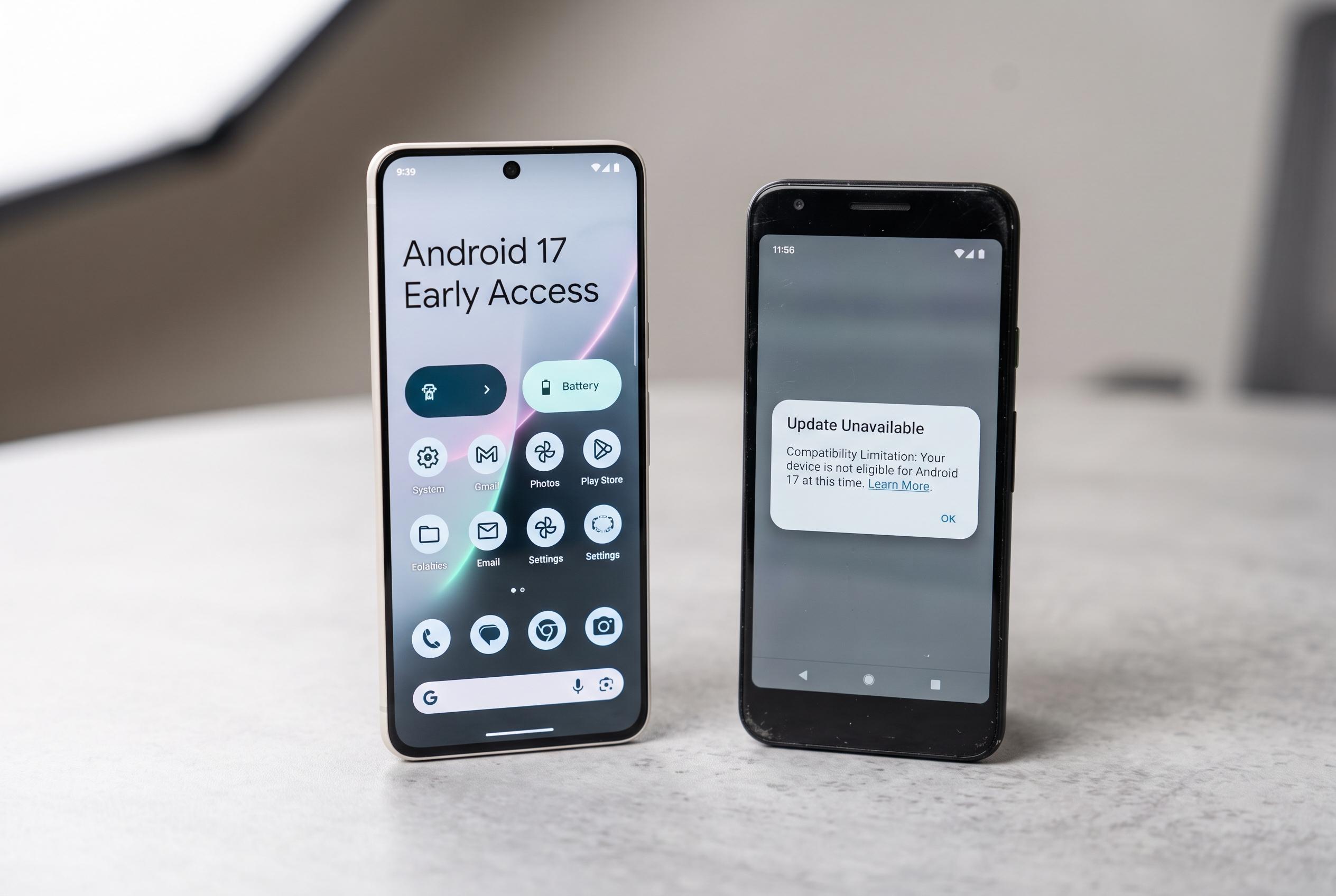

The gradual and uneven rollout of Android 17 highlights device compatibility challenges and brand-specific update strategies, with flagship models gaining early access while older hardware faces limitations, underscoring the evolving landscape of AI hardware demands.
Google’s Android 17 rollout is under way, but it is arriving unevenly across the Android market. According to Legit.ng, Pixel phones are first in line, while selected Samsung and Motorola models have joined the initial wave. Most other major brands, including OnePlus, Xiaomi, OPPO, Vivo and Honour, are still working through their own testing programmes.
The split is not only about when a phone gets the software, but also how much of it it can use. Google’s newer Gemini Intelligence features need at least 12GB of RAM, a recent flagship chip and support for Gemini Nano v3, which leaves some otherwise capable phones unable to access the full AI package. Legit.ng noted that devices such as the Pixel 9 Pro, Galaxy Z Fold 7, OnePlus 13 and Galaxy S25 Ultra can run Android 17 but still fall short of the AI requirement because of older on-device technology.
For Pixel owners, the rollout is comparatively straightforward. AndroidCentral reported that Google has made the stable build available to Pixel 6 and newer devices, covering a total of 20 eligible models. That includes the Pixel 6, 7, 8, 9 and 10 families, along with the Pixel Fold and Pixel Tablet.
There is, however, an important caveat for older hardware. Legit.ng reported that the Pixel 6 and Pixel 6 Pro have already been left out of Google’s August 2026 security update and will not receive Android 17 QPR2, with software support due to end in October 2026. The Pixel 6a has longer runway, with updates expected through July 2027, while the Pixel 5 and earlier models are not eligible at all.
Samsung’s schedule is more cautious. Legit.ng said the Galaxy Z Fold 8, Galaxy Z Fold 8 Ultra and Galaxy Z Flip 8 are already shipping with Android 17, but the Galaxy S26 family remains on the One UI 9 beta. The company began beta testing in May across six countries, and a stable release date has not yet been confirmed. Reports have pointed to late August, September or October, but those remain estimates until Samsung issues an official timetable.
Motorola is further ahead than many rivals. AndroidCentral reported that the company has started a stable Android 17 rollout on the Edge 2025, with more than 50 devices on the eligibility list. The update is expected to move first to newer premium handsets such as the Razr 70 and Edge 70 families before reaching a wider set of Moto G models. The new HelloUI build adds Live Updates, a Qira AI assistant, lock-screen customisation, a refreshed volume panel and other interface changes.
For users still waiting, the practical advice is simple: check the software update menu and install the latest build when it appears. Legit.ng said phones that remain supported should continue to receive security patches even before Android 17 arrives. The broader pattern is clear: Android 17 is no longer just a platform upgrade, but a marker of which devices can keep pace with Google’s latest AI hardware demands.
Disclaimer: This content is intended for informational purposes only. Readers are advised to exercise their own judgement, conduct due diligence, or consult a qualified expert before acting on any information provided.