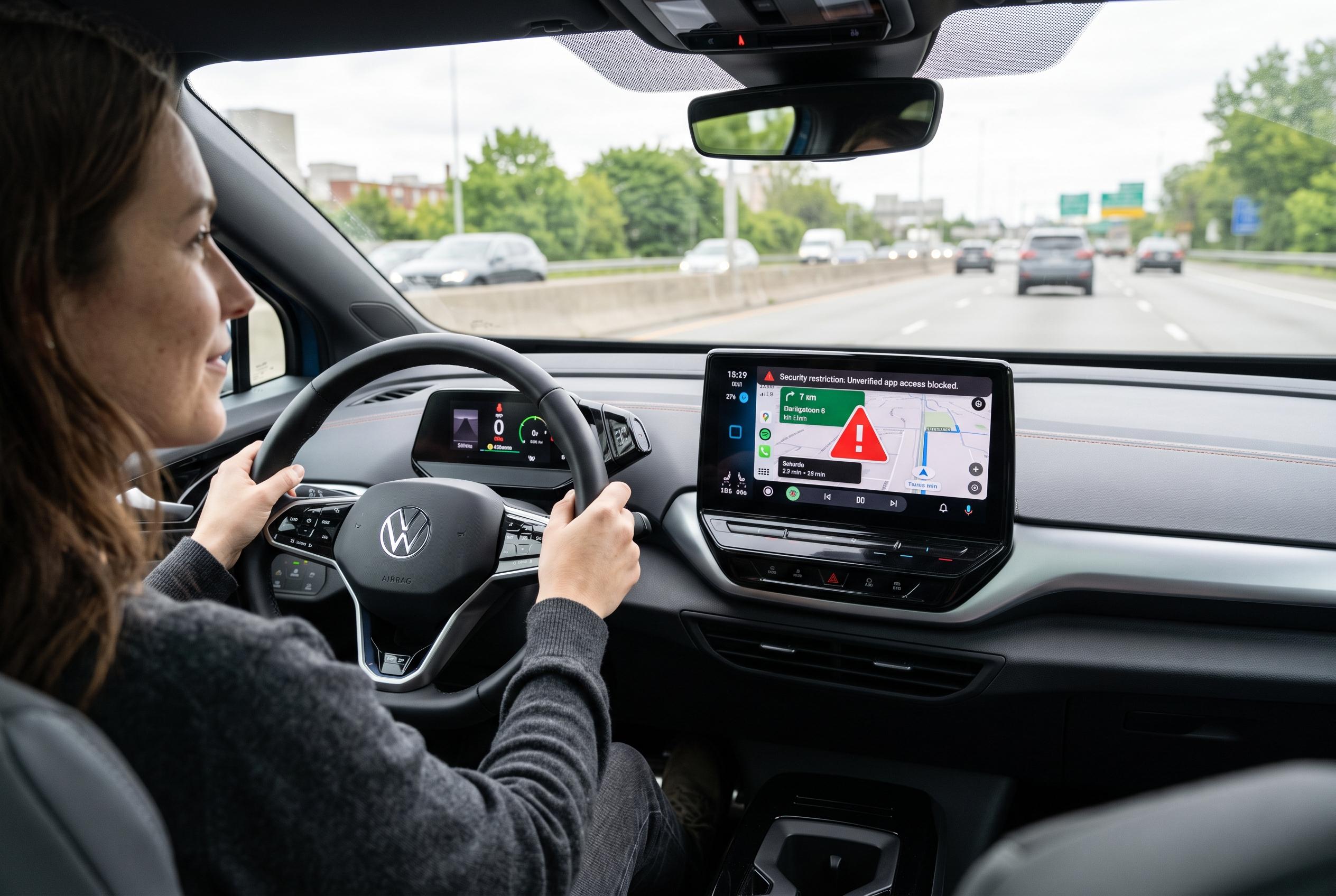

As Google tightens security and expands official in-car features, the appeal of sideloading unsupported apps on Android Auto diminishes, highlighting increasing safety and stability concerns for drivers seeking customised options.
Android Auto’s limited app catalogue remains one of its most frustrating constraints. If a developer does not specifically build a car-friendly version, the app will not appear on the dashboard, even when it works well enough on a phone. That can leave drivers wishing for options that are technically available on Android but still outside the official in-car ecosystem.
Sideloading can force those apps on to Android Auto, and that may sound appealing at first. It can open the door to browsers, YouTube viewers and a small number of unsupported games, but the trade-off is significant. Installing third-party software usually means enabling developer options, trusting outside tools and checking reputation on forums, because the process sits outside Google’s normal Play Store review system. That creates a clear security risk, including the possibility of malware, and it can also lead to unstable performance if the app was never built for a car interface.
The other problem is that sideloading depends on technical gaps that may not stay open for long. Google has already tightened parts of Android’s installation process in Android 14 by warning users when they try to update some core apps from unknown sources. More broadly, Android Central reported that Google plans to introduce developer identity verification for sideloaded apps in September 2026 in some regions, before making it a global requirement in 2027. That would make unverified sideloading much harder to use at scale.
At the same time, Android Auto itself is moving in the opposite direction, towards more official features. Automakers including BMW, Ford, Hyundai, Kia, Renault, Skoda, Volvo and Mercedes-Benz are beginning to support parked video playback, currently limited to YouTube. That reduces the practical case for sideloading, especially for functions that are better handled on a phone anyway. Browsing on a handset is usually faster and easier to control, and video on a dashboard remains a questionable use of the space. For drivers who like tinkering, the appeal of sideloading will remain. But as Android’s built-in features improve and Google clamps down on unverified software, the balance of risk and reward looks increasingly unfavourable.
Disclaimer: This content is intended for informational purposes only. Readers are advised to exercise their own judgement, conduct due diligence, or consult a qualified expert before acting on any information provided.