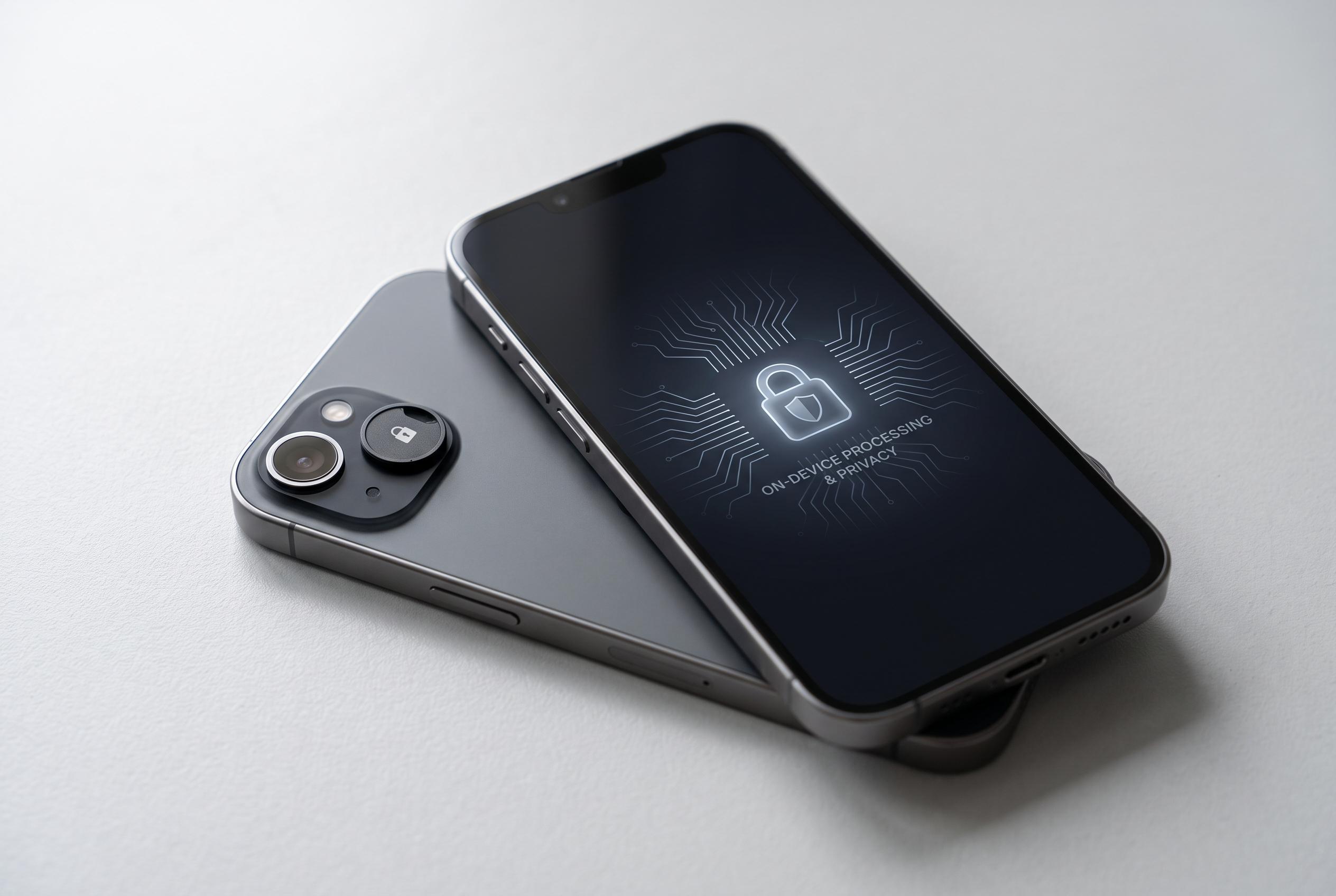

Apple’s latest AI features highlight a shift towards on-device processing, promising enhanced privacy while raising questions about always-on camera use and user data exposure.
Apple’s latest pitch suggests a subtle shift in how it frames privacy in artificial intelligence: less as a refusal to collect data, more as a promise to process as much as possible on the device itself. In the demo described by Computerworld, a man holds a book in front of cameras in the AirPods while a voice says, “With Visual Intelligence, your world becomes saveable.” The immediate use case is modest: identify the book and save it for later. But the broader implication is more significant, because always-on cameras inevitably raise questions about what is seen, what is retained and where the processing happens.
That matters because Apple has spent the past year presenting Apple Intelligence as a privacy-first AI system. According to Apple’s support material, the platform is built around on-device processing, with Private Cloud Compute used only when a task needs more power than the device can provide. Apple says the data sent to those servers is not stored and is used only to complete the request. Its privacy pages make the same claim, stressing that no one else, including Apple, should be able to access the information involved in a user’s request.
The company’s legal privacy notice adds more operational detail. It says Apple Intelligence can use context from the user’s apps, such as calendar entries and frequently used applications, while identifying only the data needed to complete a task. Apple also says users can enable transparency logging to see how requests are handled, including those sent off-device and those routed through Private Cloud Compute. That is an important distinction: Apple is not promising that AI never touches the cloud, but that cloud processing should remain limited, isolated and non-persistent.
The new Visual Intelligence and AirPods features fit neatly into that framework. Apple’s newsroom said Visual Intelligence lets users point the camera at places and objects to learn more about them, while Live Translation on AirPods extends Apple Intelligence into the earbud experience on supported devices. Together, the features show Apple trying to normalise AI as a practical assistant rather than a surveillance layer. Yet the privacy question remains unavoidable. If the cameras are always on or repeatedly activated to interpret the world, Apple will need to convince users that convenience does not come at the cost of exposure.
Disclaimer: This content is intended for informational purposes only. Readers are advised to exercise their own judgement, conduct due diligence, or consult a qualified expert before acting on any information provided.